
Camera Before, Camera After
Plenty of companies rod the line and tell you it’s clear. We run a camera down the line first so we can see what’s causing the backup: tree roots, grease, a collapsed section, a low spot that holds water or something that was flushed. Then we rod, and we run the camera again so you can see the difference for yourself.
That second look matters. If the camera shows a broken pipe or roots coming through a joint, you’ll know the clog is likely to come back and why, and you can decide what to do next with real information. Our Sewer Camera Inspection page explains what the footage can tell you.
How Sewer Rodding Works
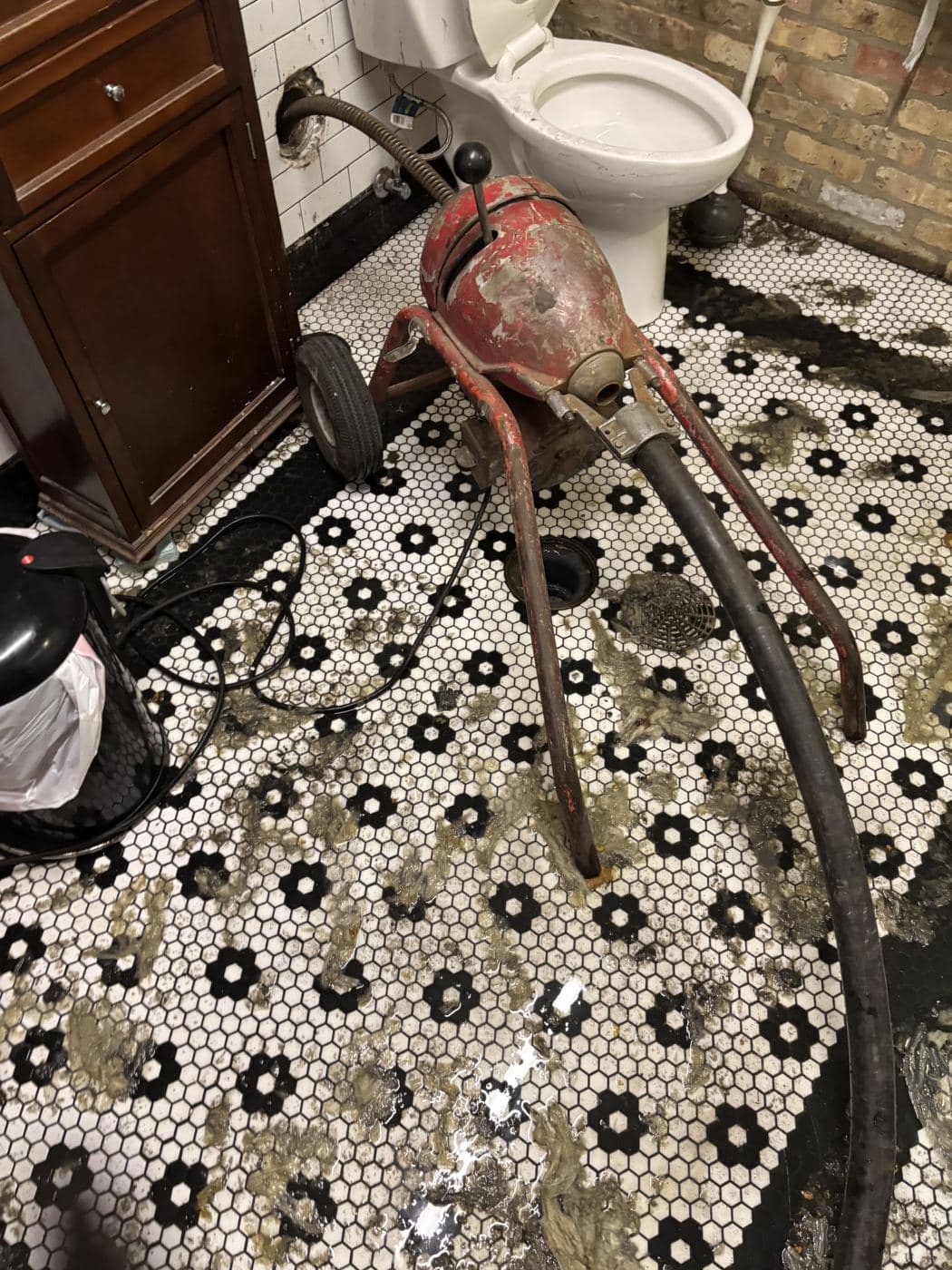
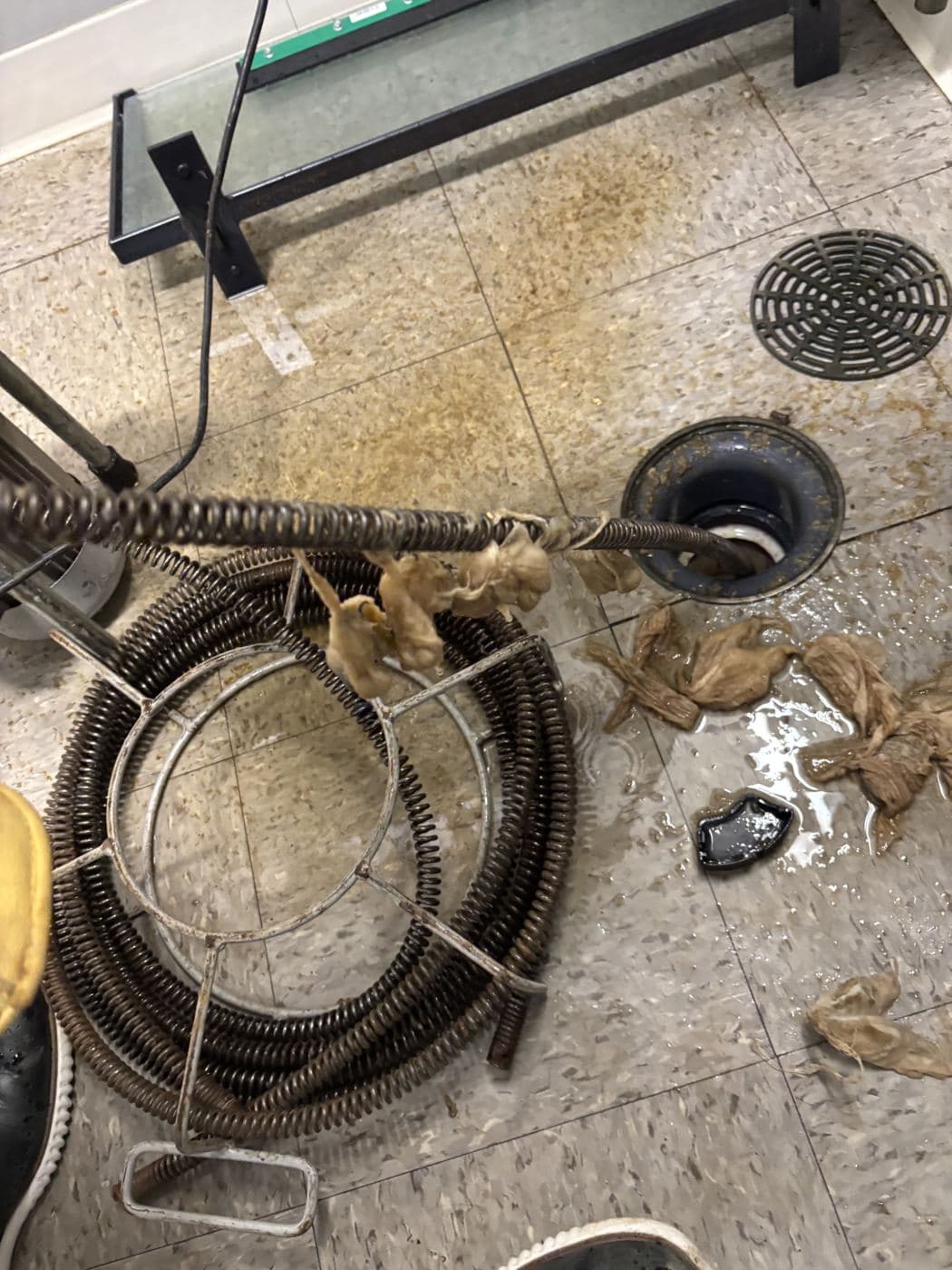
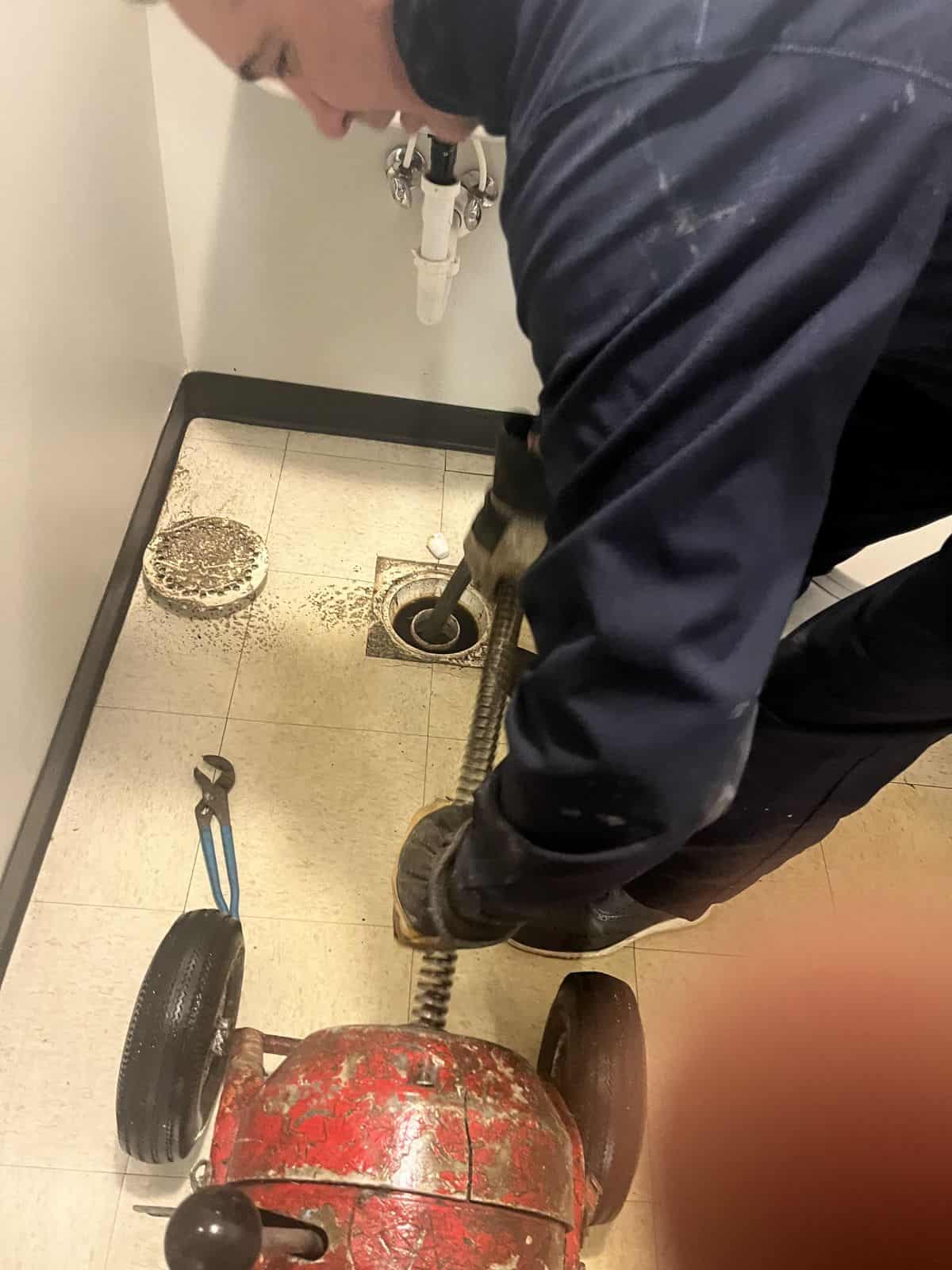
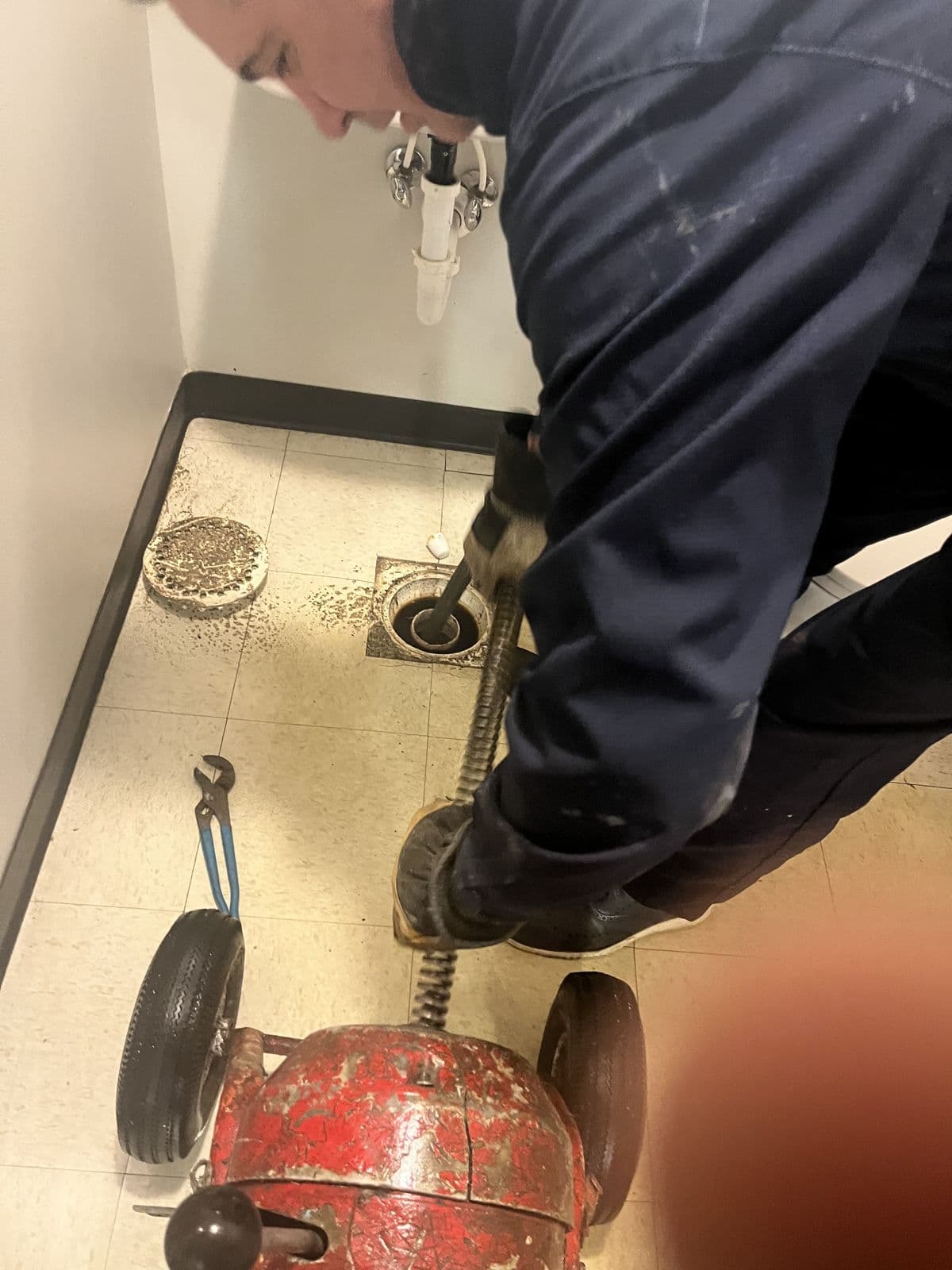
Rodding uses a steel cable spun by a machine, with cutting blades on the end sized to the pipe. The blades cut through roots, grease and paper packed into the line and open it back up to full flow. For a main sewer line, we rod from the cleanout or floor drain all the way to the street.
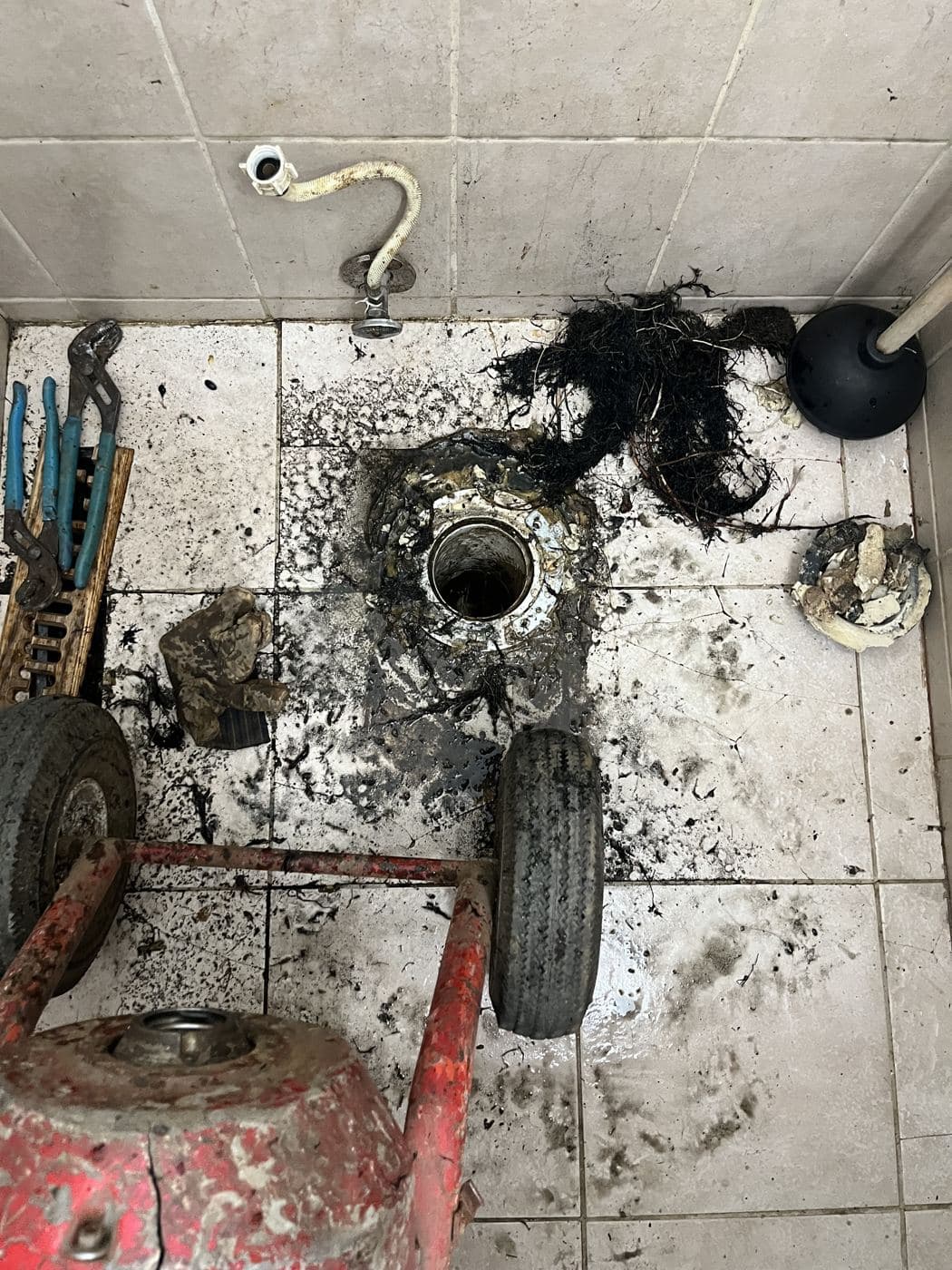
Roots are the most common reason main lines back up in our area. Many older homes in Des Plaines and along the North Shore still have their original clay sewer laterals, and the joints between clay sections let fine roots in. The roots grow toward the water, fill the pipe and catch everything that passes. When roots or grease are packed hard against the pipe walls, Hydro Jetting can scour the line cleaner than a cable can.
Our Warranty on Main-Line Rodding
When we rod a residential main sewer line to the street, the job carries a full one-year warranty. If the line backs up again within that year, call us and we’ll come back. Commercial rodding is not warrantied.
Every other repair we make carries at least a one-year warranty as well, and all of our work is backed by a 100% satisfaction guarantee.
Kitchen, Bathroom and Floor Drains
Not every clog is in the main line. Kitchen sinks fill with grease and food scraps, bathroom drains collect hair and soap, and basement floor drains catch lint from the laundry and silt from around the foundation. We clear these with smaller cables sized for each pipe, so the trap and the fixture aren’t damaged.
If more than one fixture is slow at once, or the lowest drain in the house is the one backing up, the problem is almost always the main line rather than the fixture. That’s worth a call before the next load of laundry sends water across the basement floor. If the camera finds a pipe that’s broken rather than clogged, we’ll walk you through your options for Sewer Repair & Replacement.
Signs You Need Drain Cleaning
- Water backing up into the basement floor drain or shower
- A toilet that gurgles when the washing machine drains
- Several fixtures draining slowly at the same time
- Sewer odor in the basement
- A toilet that clogs again and again
- Soggy ground over the sewer line in the yard