
What’s in Your Water
Most area municipalities treat Lake Michigan water before it reaches your home. That treatment doesn’t remove the calcium and magnesium that make water hard, and water systems add chlorine or chloramine so the water stays safe through miles of mains. The disinfectant does its job, but many people don’t like how it tastes or smells.
Hard water shows up as white scale on faucets and showerheads, spots on glasses, soap that won’t lather and dry skin after a shower. Inside the plumbing, it builds up in water heaters and fixture valves, where you can’t see it until something stops working.
A simple way to gauge hardness at home is to look inside a kettle or at the face of a showerhead. A chalky white crust that builds up within weeks means hard water, and the same crust is forming inside your water heater and pipes. That’s the scale a softener stops.
Whole-House Water Softeners
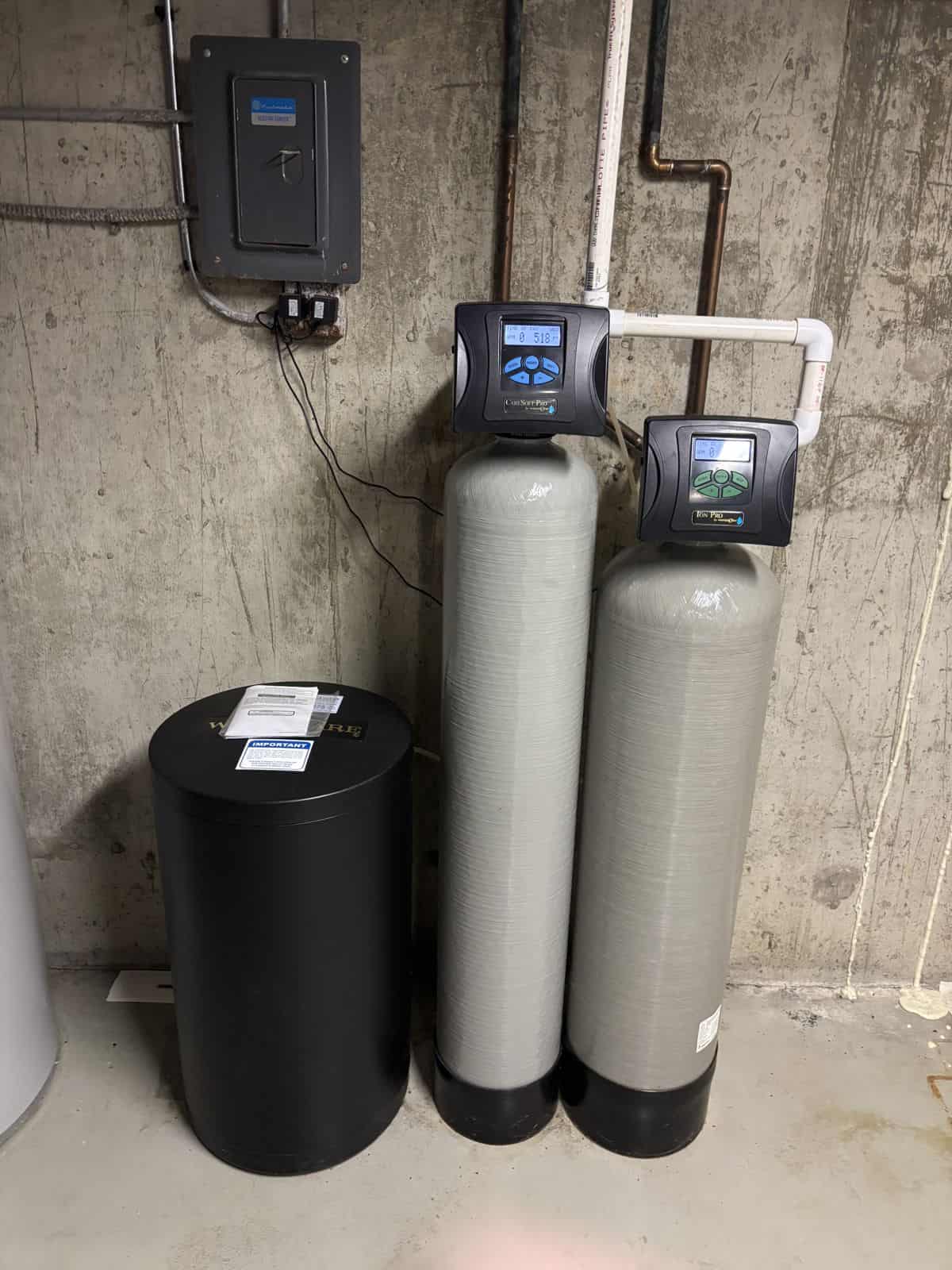
A water softener removes hardness minerals from all the water entering your home. It protects the water heater, faucets, shower valves and every appliance that uses water, and it makes cleaning noticeably easier. We size the softener to your household’s water use and install it on the main line with a bypass valve, so it can be serviced without shutting off your water.
Softening is especially worthwhile for Tankless Water Heaters, where scale in the heat exchanger cuts output and causes error codes, and it helps a standard tank from our Water Heaters service last longer.
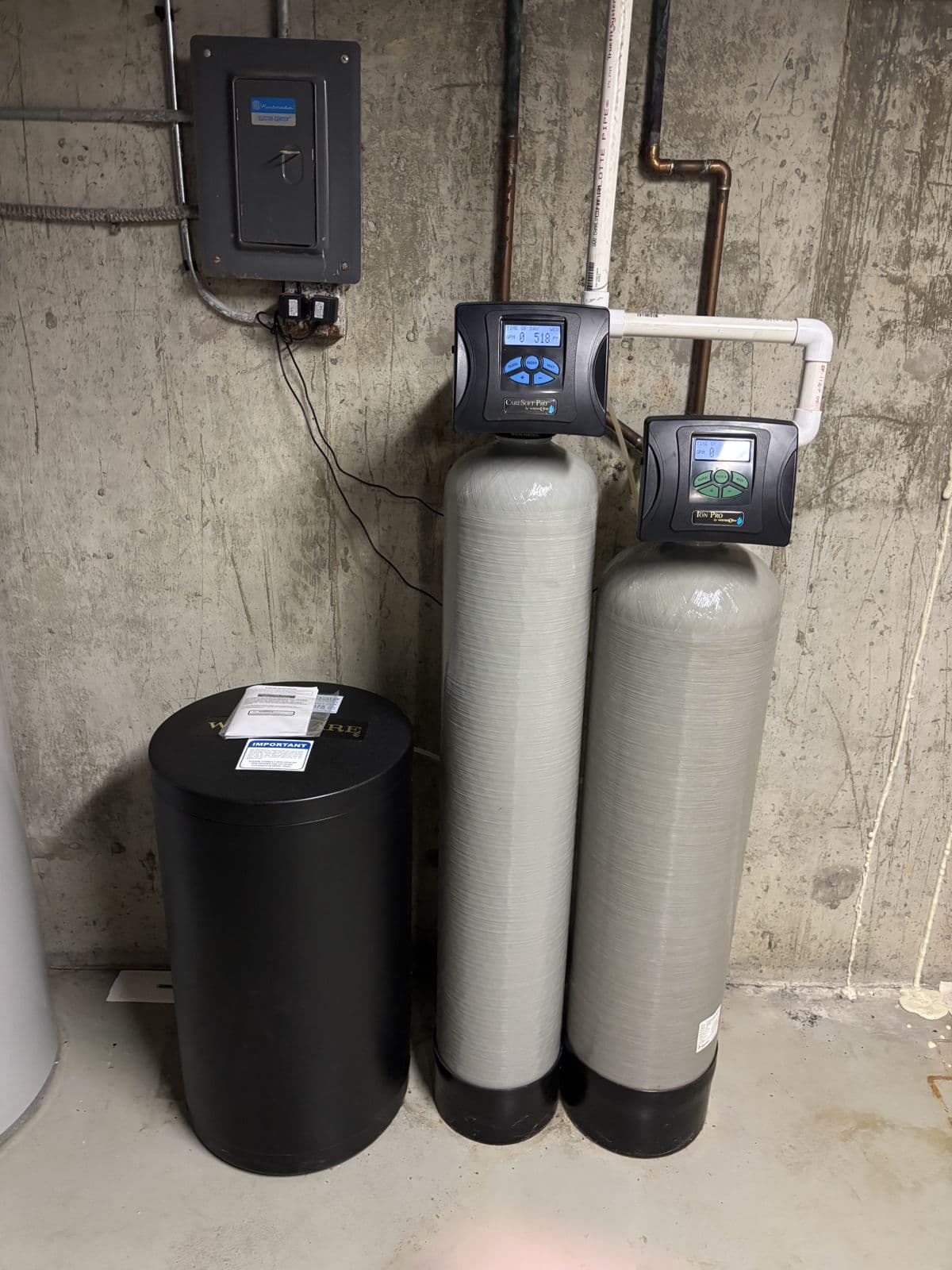
Filtration Options for Better-Tasting Water
Softening and filtering solve different problems, and many homes use both. We install:
- Whole-house filtration, which treats every tap and shower in the home
- Carbon filters, which reduce chlorine taste and odor
- Kitchen-sink filtration for cleaner drinking and cooking water at one tap
- Reverse osmosis systems, which push water through a very fine membrane for the most thorough filtration at the kitchen sink
- Whole-house water softeners to remove hardness minerals
Choosing the Right System
We start by asking what bothers you about your water: scale and spots, taste and smell, or both. Then we look at where the main line enters the house and how much room there is near it, and recommend a system that solves your problem without paying for treatment you don’t need. The technician writes a flat-rate price before any work starts, and there’s no fee for us to come out and talk it through.
Filters need changing and softeners need salt, and we’ll show you how to keep yours working. If old galvanized pipe is shedding rust into your water, a filter only treats the symptom, and Repiping the worst sections may be the real fix.
Signs You Could Use a Softener or Filter
- White scale on faucets, showerheads and glass shower doors
- Spots on dishes and glasses after washing
- A chlorine taste or smell in your drinking water
- Soap and shampoo that don’t lather well
- A water heater that pops or rumbles from sediment
- Buying bottled water because you don’t like the tap