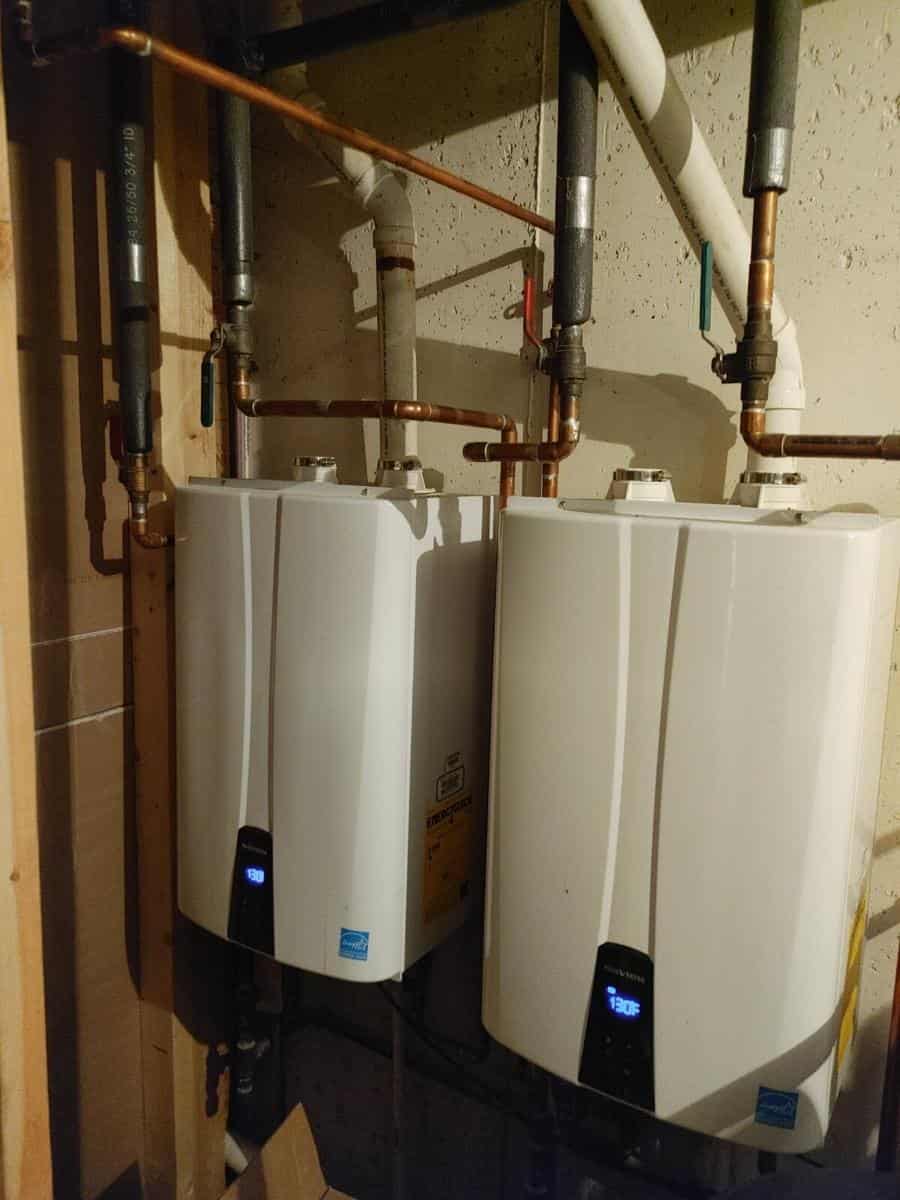

How a Tankless Water Heater Works
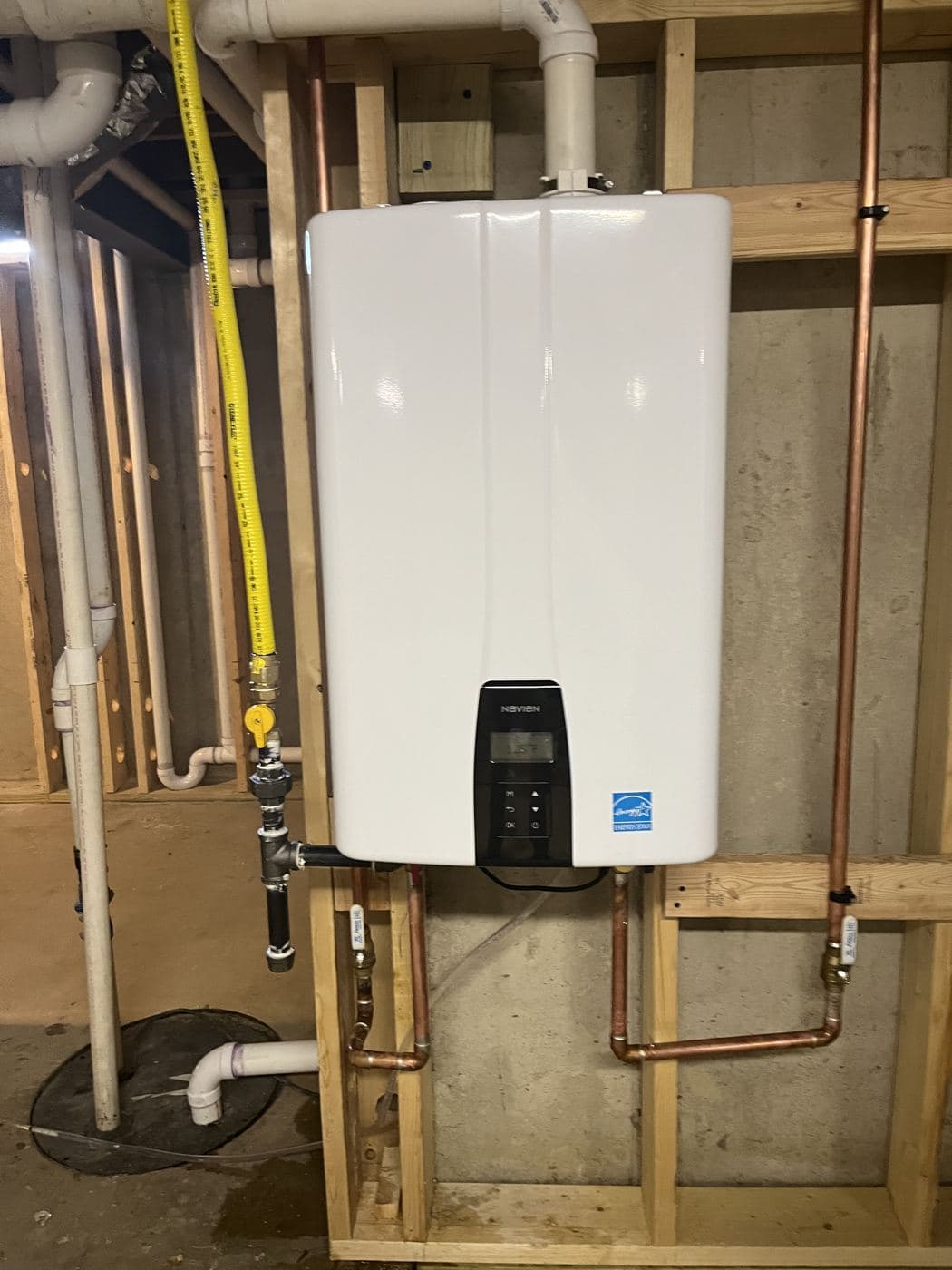
When a hot tap opens, water flows through a heat exchanger and a gas burner fires to heat it on the spot. When the tap closes, the burner shuts off. Nothing is kept hot overnight, which is where the energy savings come from, and the unit hangs on a wall instead of taking up floor space in the basement.
The trade-off is that a tankless heater can only make so much hot water at once, measured in gallons per minute. Run two showers and the dishwasher in January, when the water coming into the house is close to freezing, and an undersized unit falls behind. That’s why sizing is the most important part of the job.
Sizing a Tankless Unit for Illinois Winters
We size to your coldest month, not your average one. We count the fixtures you run at the same time, consider the temperature of your incoming water and choose a unit with enough output for real use. Larger homes and businesses sometimes need two units piped together, which also gives you a backup if one ever needs service.
Gas supply matters just as much. A tankless heater burns far more gas per minute than a tank heater, and the existing line often can’t deliver enough. We check the gas pipe size and meter, and if the line needs to be upsized, our Gas Line Installation & Repair team handles it as part of the same job.
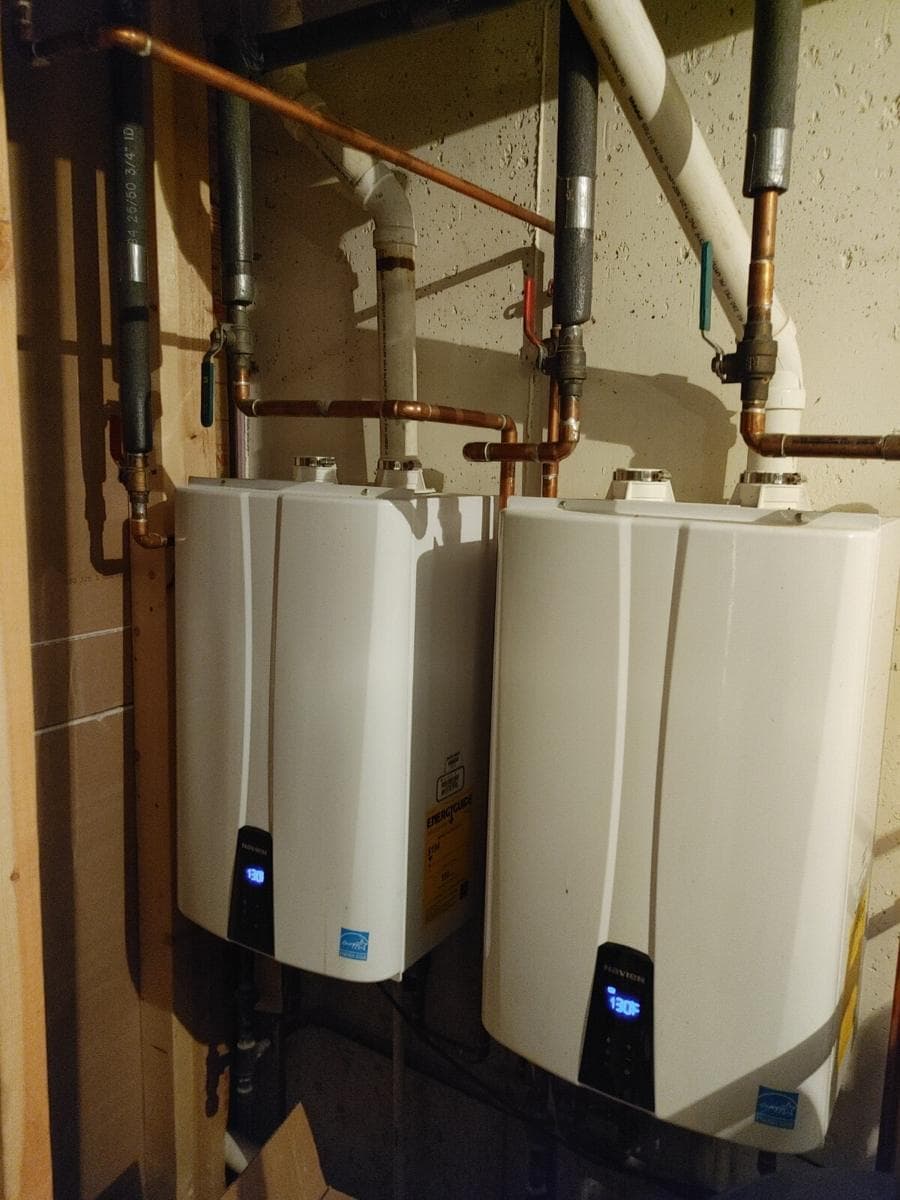
Tankless or Tank: An Honest Comparison
Tankless isn’t the right answer for every home. It costs more to install than a tank heater, it needs venting and gas capacity some houses don’t have, and it needs regular descaling. A good tank heater is still a sensible choice for many families, and our Water Heaters page lists our published starting prices for standard Bradford White tank models.
- Tankless: hot water that doesn’t run out, a longer service life and more floor space, at a higher upfront cost
- Tank: a lower upfront cost and simpler venting, with a set amount of stored hot water and a shorter service life
- Either way: there’s no fee for us to come look, and the flat-rate price is written before work starts
Descaling, Flushing and Tankless Repairs
Most homes here get treated Lake Michigan water and some are on wells, but either way the water carries calcium and magnesium. Inside a tankless heat exchanger, those minerals build scale that cuts output and triggers error codes. We flush tankless units with a descaling solution through the service valves, clean the inlet screen and check the burner and venting. A softener from our Water Filtration & Softeners service slows that buildup considerably.
When a unit shows an error code, fires and then shuts off, or delivers lukewarm water, we diagnose it and write the repair price before we start. Repairs carry at least a one-year warranty, and new units carry the manufacturer’s warranty with our installation labor backed by us.
Signs Your Tankless Water Heater Needs Service
- Hot water that turns cold in the middle of a shower
- Error codes on the display
- Water that takes longer than usual to get hot
- Lower hot-water flow at the taps
- Whistling or banging from the unit
- No descaling flush in more than a year