
Is There a Leak? Start at the Water Meter
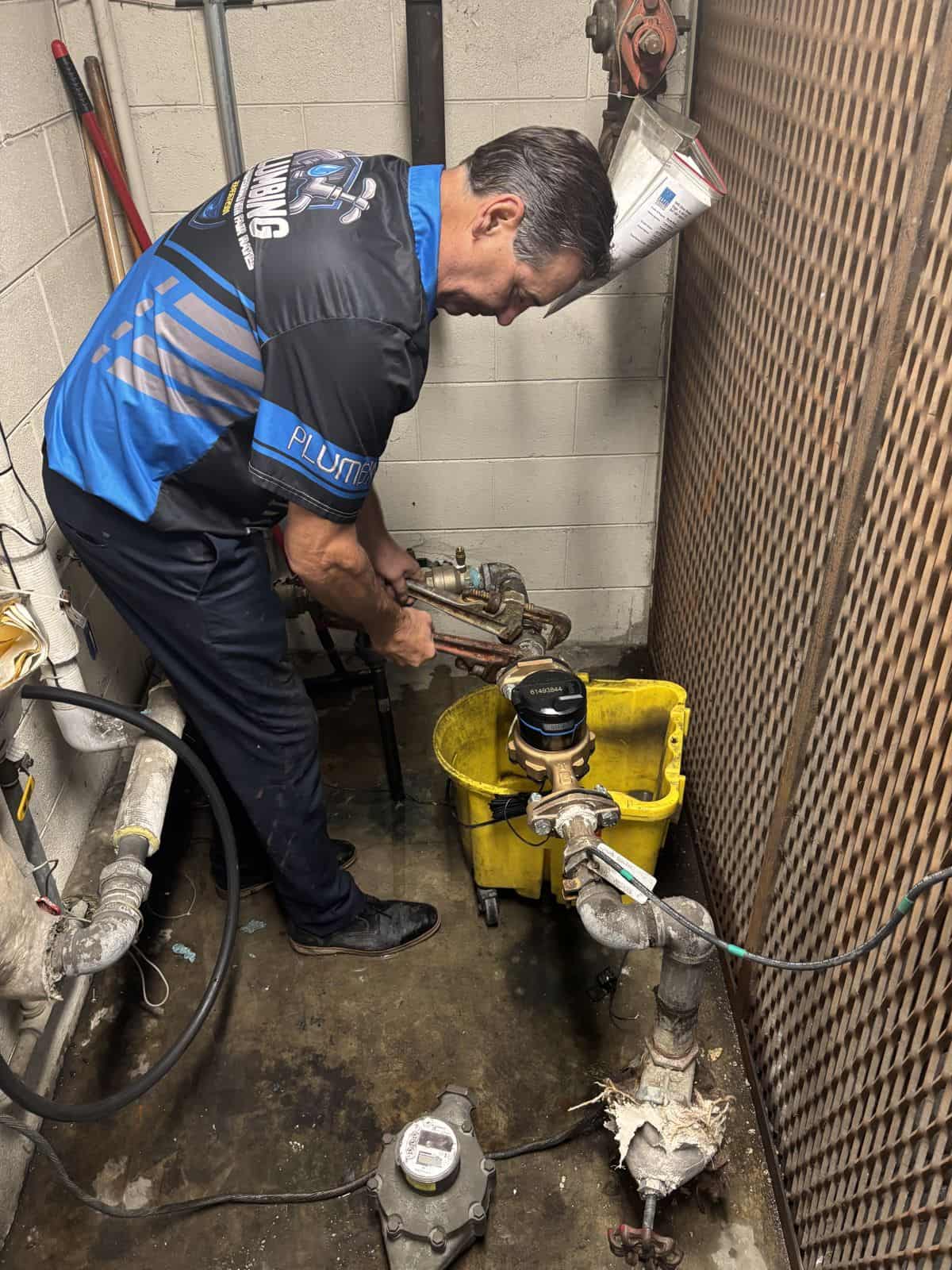
If you suspect a leak, there’s a simple check you can run before calling. Turn off every faucet and water-using appliance in the house, then look at your water meter. Most meters have a small dial or triangle that spins whenever water is moving. If it’s turning while nothing is running, water is going somewhere it shouldn’t.
A running toilet is the most common culprit and the easiest to rule out. Put a few drops of food coloring in the tank and wait about 15 minutes without flushing. Color in the bowl means the flapper is leaking. If the toilets check out and the meter still moves, it’s time for us to look.
How We Find Hidden Leaks
We work from the meter inward. By closing valves and isolating sections of piping, we narrow the leak down to a single line or area, then pressure-test that section to confirm it. Water stains, warm spots on a floor, the sound of running water and the way the pipes are laid out all help pinpoint where it is.
Leaks from drains behave differently from leaks in supply lines. A supply leak runs all the time and shows on the meter; a drain leak only drips when a fixture is used, so it won’t move the meter at all. If a ceiling stain only grows after someone showers upstairs, we test the tub drain, the overflow and the shower valve one at a time until the water shows us where it’s getting out.
The goal is one small, accurate opening instead of tearing out a wall to search. Once we know where the leak is, the technician explains what we found and writes a flat-rate price for the repair before anything is opened.
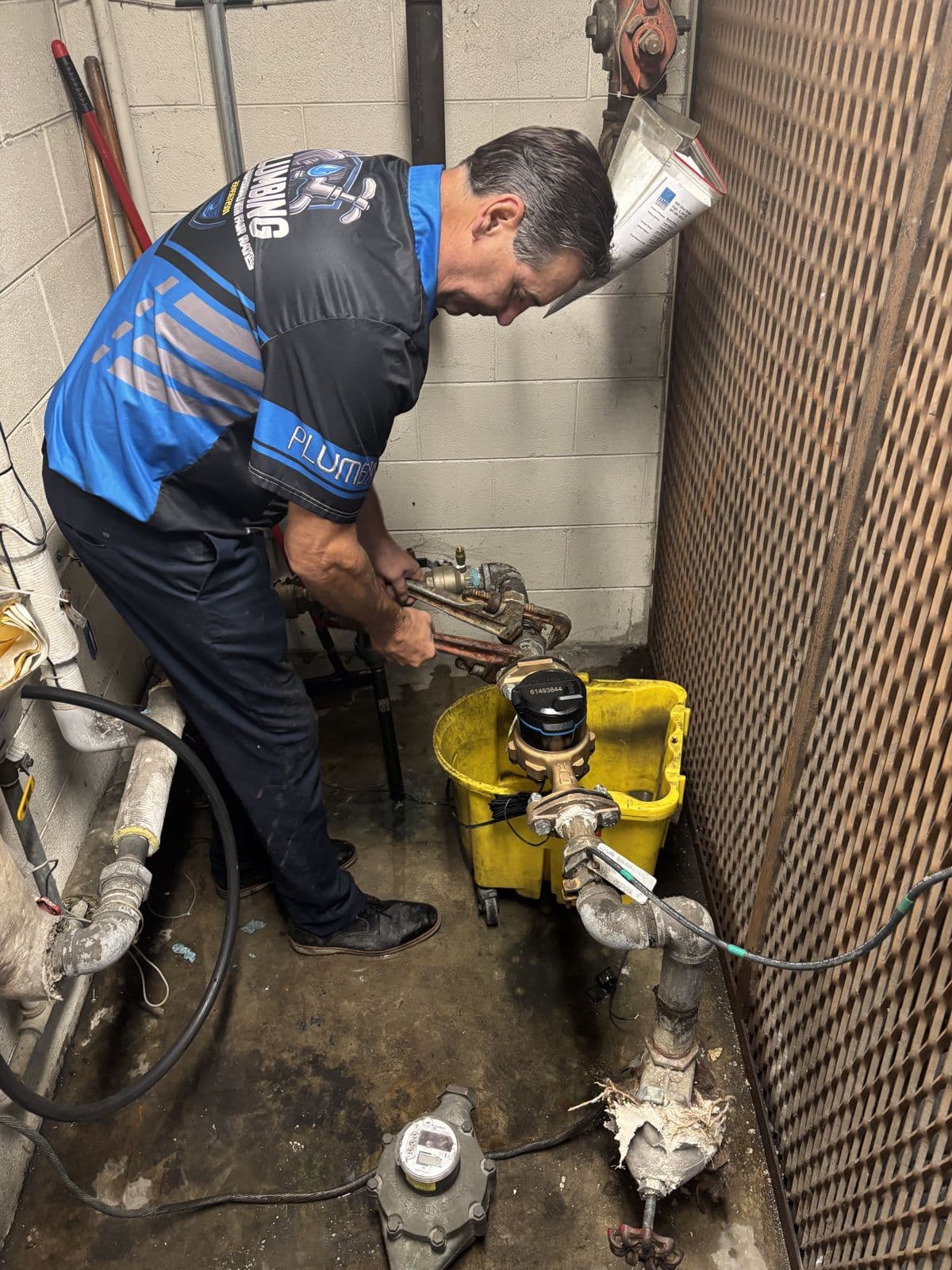
Common Leaks in Older Suburban Homes
Many homes in our area were plumbed with galvanized steel or early copper, and both wear out with age. These are the leaks we find most often:
- Pinhole leaks in aging copper pipe
- Galvanized steel rusting through at threaded joints
- Shower valves and tub drains leaking inside the wall
- Failed toilet wax rings soaking the subfloor
- Water lines on exterior walls that cracked during a freeze
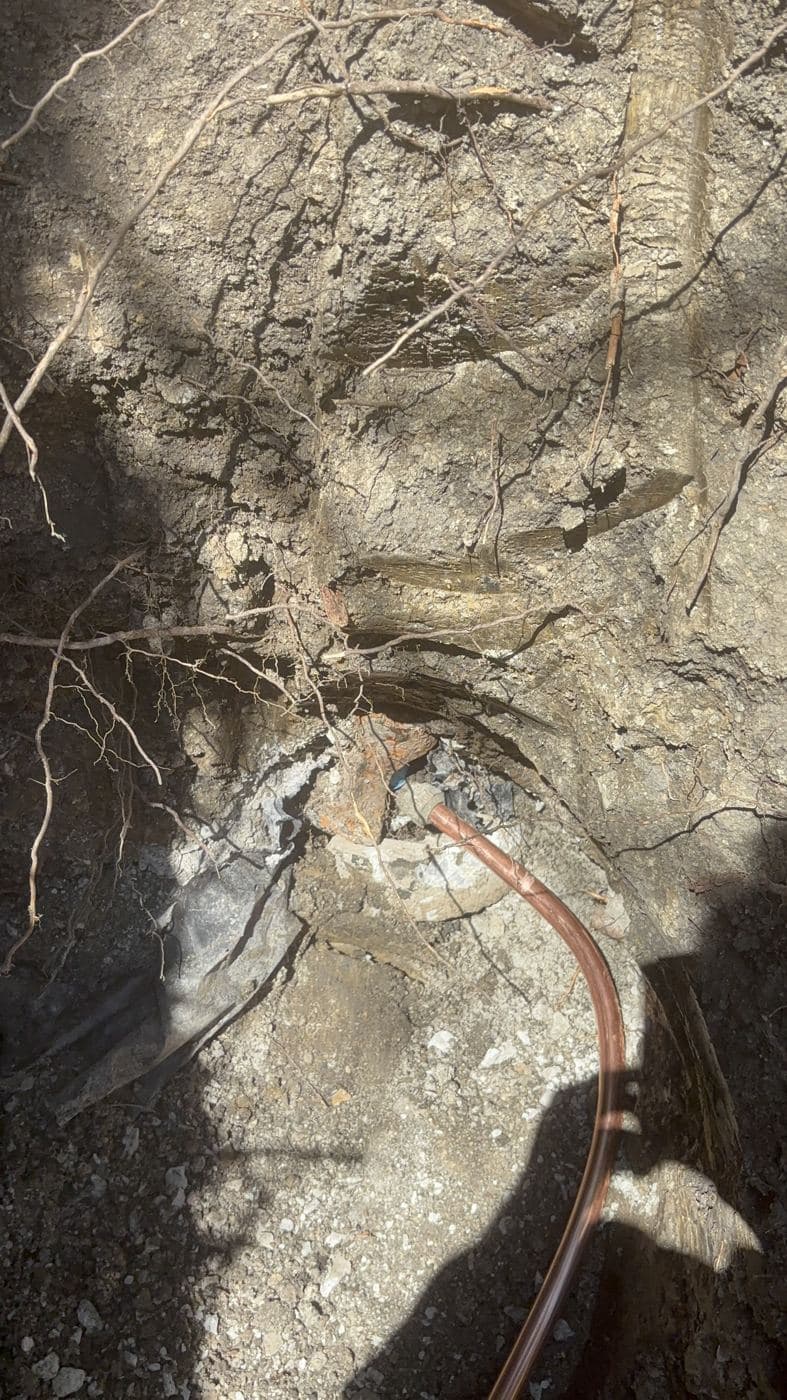
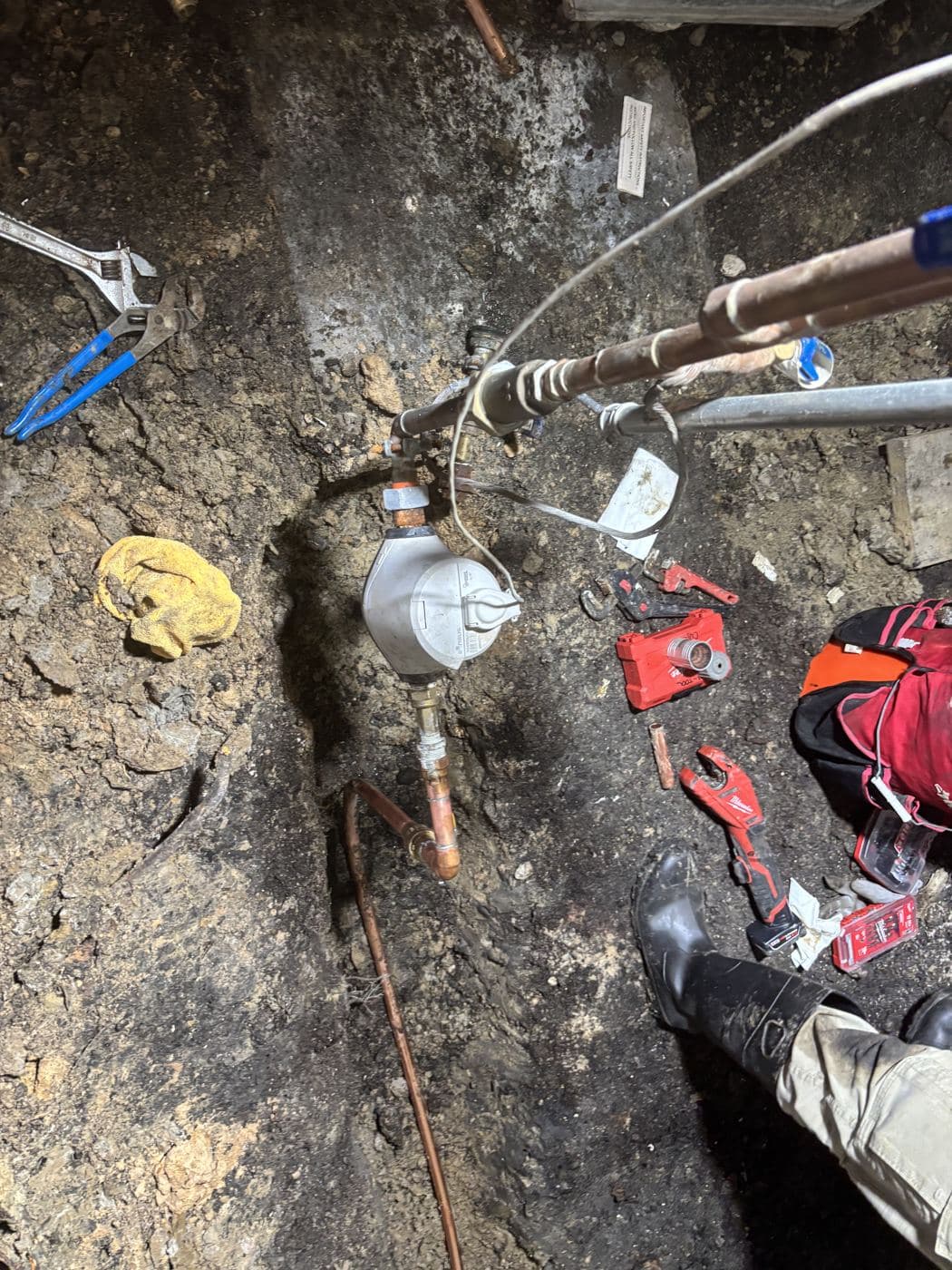
- Leaks on the main water line near the meter
Fixing the Leak and Preventing the Next One
Most leaks are fixed on the same visit as part of our standard Plumbing Repair work, and every repair carries at least a one-year warranty. If we find leaks in several places on the same run of pipe, fixing them one at a time gets expensive, and we’ll explain when Repiping that section is the better choice.
A leak that’s spraying, flooding or soaking through a ceiling shouldn’t wait. Shut off the main water valve and call our 24/7 Emergency Plumbing line, where a real person answers around the clock.
Signs of a Hidden Water Leak
- A water bill that’s climbed without any change in use
- The sound of running water when everything is off
- Water stains, bubbling paint or sagging drywall
- A musty smell or mold in one area
- Warm spots on a floor
- Low water pressure throughout the house