
Why Older Homes Need Repiping
Galvanized steel was a common choice for water lines in homes built before the 1960s. Over the decades, the zinc coating wears away and the steel rusts inside the pipe. The rust narrows the opening until pressure drops to a trickle, breaks loose as brown water, and eventually rusts through at the threaded joints.
Copper lasts much longer, but it isn’t permanent either. Water chemistry can cause pinhole leaks, and once they start appearing in several places on the same run, more are usually on the way.
Repipe or Keep Repairing?
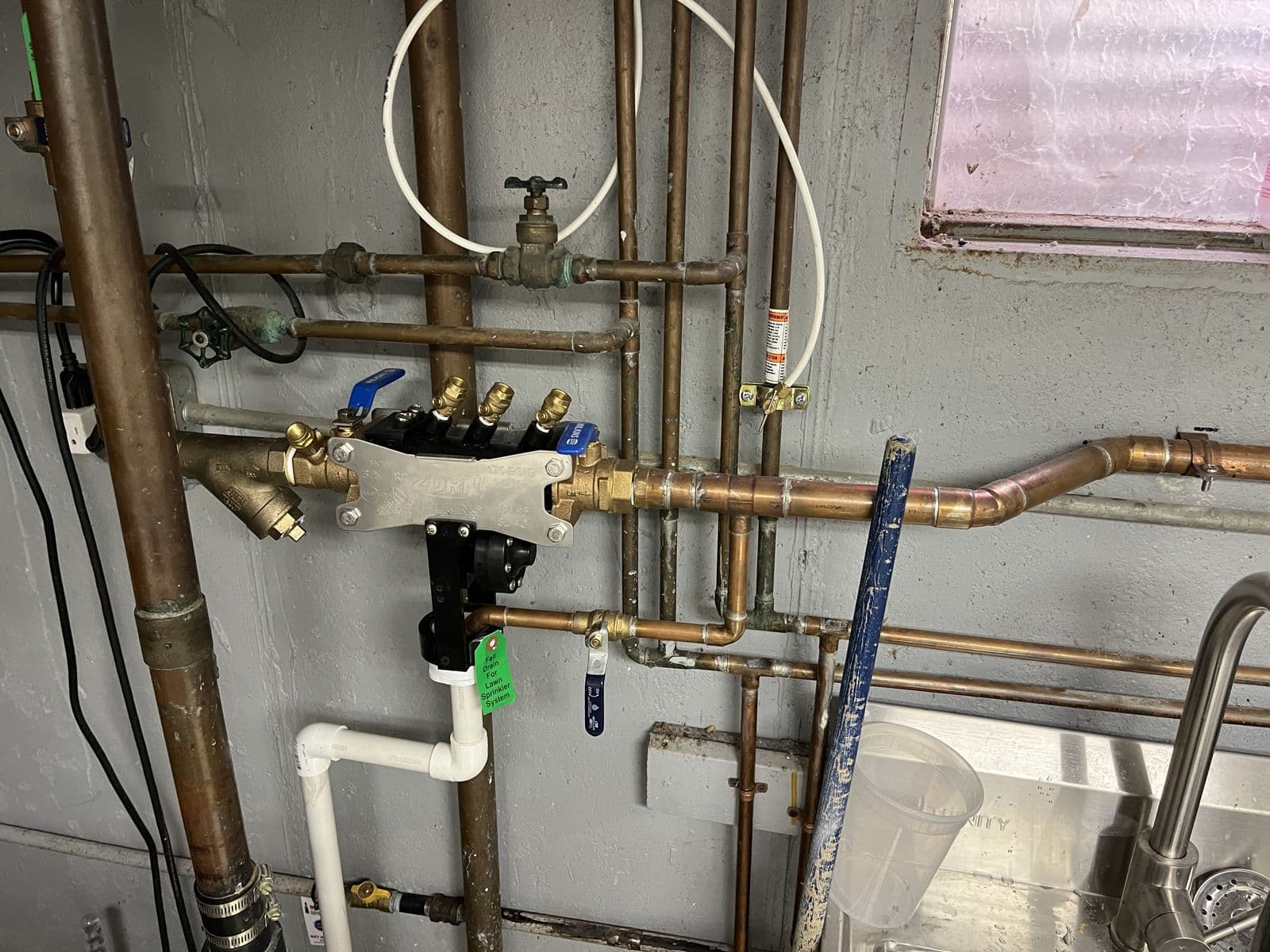
Repiping costs more than a single repair, so we only recommend it when the pipe has truly worn out. We look at the pipe material, how many leaks you’ve had, the water pressure at the fixtures and the condition of the exposed pipe in the basement. If a couple of repairs will hold for years, we’ll tell you that. If there are several leaks, Leak Detection helps us map how widespread the problem is before you decide.
Sometimes a partial repipe is the right answer, such as replacing the main supply line from the meter, the lines to one bathroom or the old galvanized risers while sound basement copper stays. You’ll get a written flat-rate price for each option, and if you’d like us to look at your home, request a free estimate.
How a Repipe Works
We plan the new pipe routes to reach every fixture with as few openings in finished walls and ceilings as possible, using the basement, closets and existing chases where we can. New lines are run and connected one area at a time so you’re without water for as little time as possible, and each section is pressure-tested before the old pipe is taken out of service.
We’ll explain which pipe materials meet code in your town and recommend the right one for your home. Where drywall has to be opened to reach pipe, we keep the openings small and neat. Tarps cover floors and furniture along the work path, and we leave every room cleaner than we found it.
Better Pressure, Cleaner Water
The difference shows up right away: stronger pressure in the shower, no rust when a tap first opens and no more waiting for the next leak. New piping also pairs well with a whole-house softener from our Water Filtration & Softeners service, which reduces the scale hard water leaves behind and helps protect the new pipes and fixtures.
Repiping work carries at least a one-year warranty, financing is available, and seniors receive 10% off labor. Single leaks and fixture problems that don’t call for a repipe are handled every day by our Plumbing Repair team.
Signs Your Home Needs Repiping
- Brown or rusty water when a tap first opens
- Low water pressure at several fixtures
- Repeated leaks on the same run of pipe
- Galvanized steel pipe visible in the basement
- Pinhole leaks in copper lines
- Green corrosion or crusty buildup on pipe joints