

The suburbs around Chicago are full of houses built long before modern plumbing materials: brick bungalows and Cape Cods from the 1920s through the 1950s, postwar ranches, older two-flats. The character is real, and so is the tradeoff. The pipe behind the walls is often decades past its expected life. Combine that with our winters and flat, clay-heavy soil, and older homes end up with a predictable set of problems. Here is what to watch for.
What is behind the walls of an older home
Most homes built before about 1960 in this area were plumbed with galvanized steel water lines and cast iron or clay drain and sewer pipe. Those were the standard materials at the time. None of them were designed to last a century.
Galvanized pipe has a zinc coating that protects the steel. Over 40 to 50 years that coating breaks down on the inside, rust and mineral scale build up, and the opening narrows until water barely trickles out. Copper looks similar from a distance but ages far better, which is why it became the standard replacement.
Cast iron drain pipe often lasts 50 to 75 years, but it corrodes from the inside and eventually cracks, especially along the bottom where waste flows. Many older homes also have a clay tile sewer lateral running to the street. Clay is brittle, shifts with the soil, and is an easy target for tree roots looking for water.
How to tell what you have
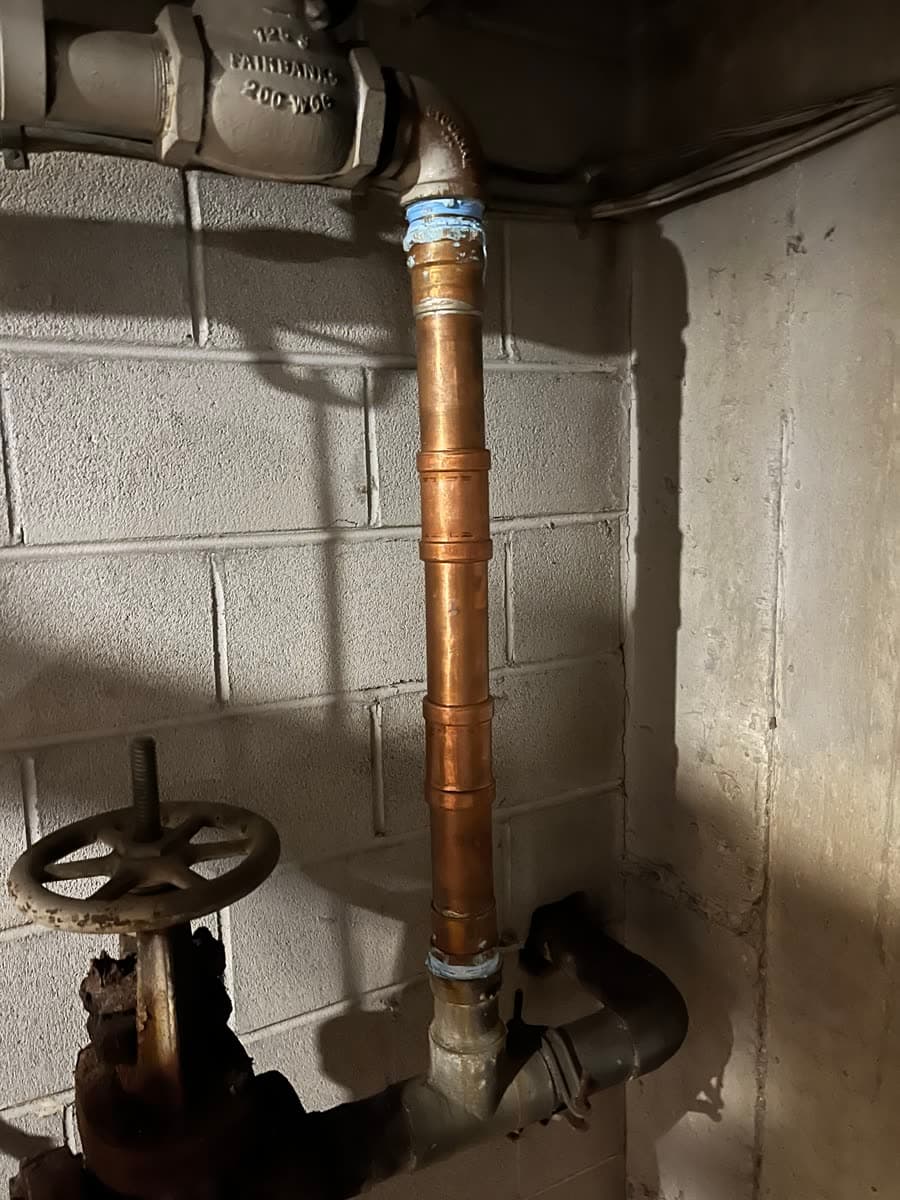
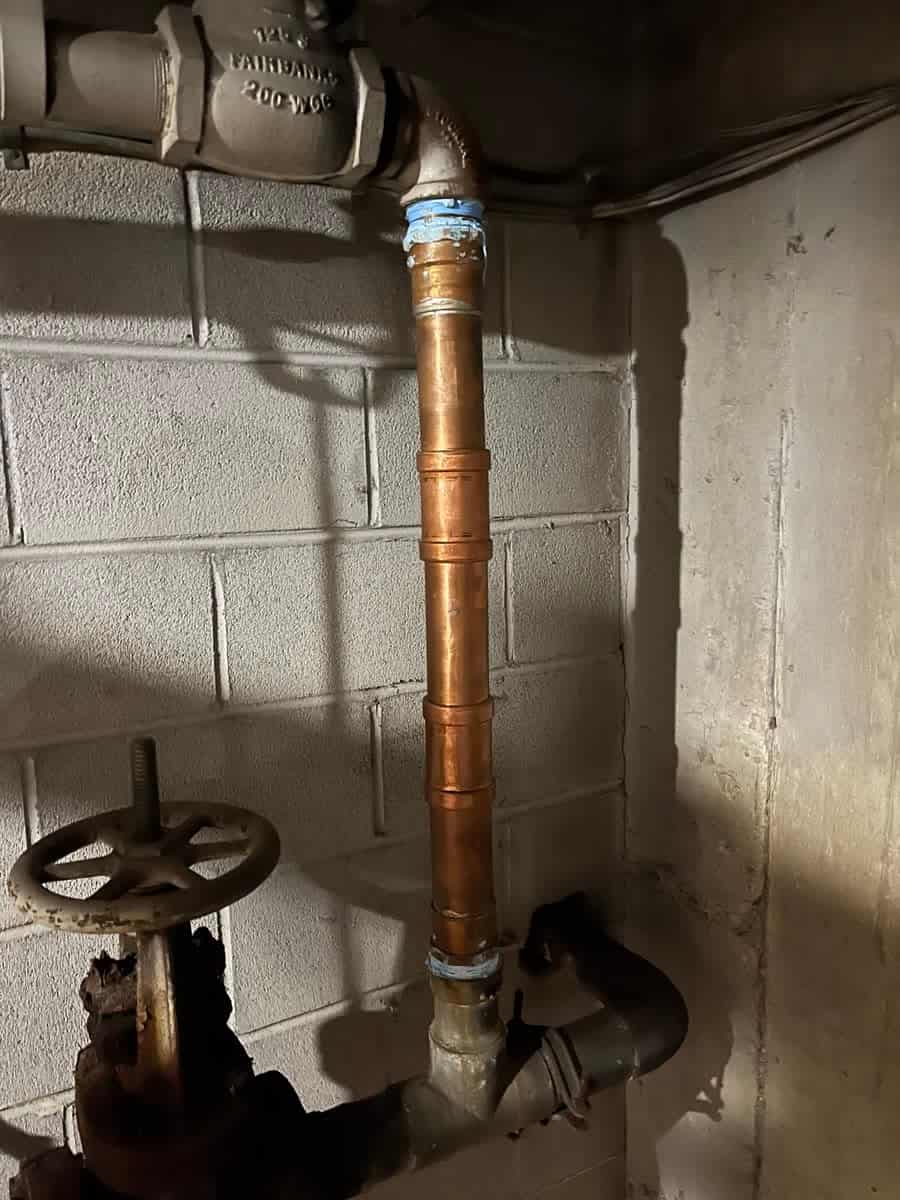
Look at the exposed pipe in the basement. Galvanized pipe is dull gray, slightly rough and joined with threaded fittings. Copper is reddish-brown with soldered joints. PEX is flexible plastic, usually red, blue or white. Cast iron drain pipe is thick, dark and heavy, often with bell-shaped joints. If your house was built before the early 1960s and the water lines were never replaced, there is a good chance some galvanized pipe is still there.
Warning signs worth taking seriously
Older plumbing rarely fails overnight. It warns you first, usually in ways that are easy to write off. Water pressure that has dropped slowly over months or years, especially upstairs, points to galvanized pipe closing up with scale. Rust-colored water when a tap first runs, then clearing, tells a similar story.
Slow drains at several fixtures at once usually mean the main line, not one clog. Gurgling from a toilet when another fixture drains, musty or sewer smells near the floor drain or cleanout, and flaking or reddish-brown residue on exposed pipe round out the list.
Any one of these alone may not be urgent. Several together, in a house with original plumbing, mean it is time for a professional look before a slow problem becomes a burst pipe or a backed-up sewer.
A typical older-home scenario
Picture a 1928 brick bungalow a few blocks from a parkway lined with mature trees. The kitchen sink has always drained a little slowly, the upstairs shower takes a minute to build pressure, and every few years the basement floor drain backs up after a heavy rain. None of it feels like an emergency.
In a house like this, two separate problems are usually happening at once: galvanized water lines narrowing with scale, and a clay sewer lateral partly blocked by roots from those parkway trees. A camera run down the cleanout typically finds roots or offset joints in the first stretch of clay pipe. Left alone, it tends to end with either no pressure upstairs or sewage at the floor drain on the worst possible night.
Why chemical drain cleaners are a bad idea in old pipe
Chemical drain cleaners generate heat and react with metal pipe that decades of corrosion have already thinned. Used repeatedly in cast iron or galvanized pipe, they speed up pitting and leaks instead of preventing them. A cheap bottle can help along a cracked joint that costs far more to fix. Mechanical rodding clears the same clog without attacking the pipe, which is why Drain Cleaning done with a machine is the safer choice in an older house.
What to do next
Write down when and where problems show up: low pressure at certain fixtures, slow drains in certain rooms, backups tied to heavy rain. If you have recurring backups or gurgling, have the main sewer line inspected with a camera. We run the camera before and after every sewer rodding, so you see the cause and the result.
If pressure has dropped gradually, ask for an assessment of the water lines. That pattern points to scale inside the pipe rather than a leak. You don't always need to replace everything at once. Replacing the worst runs first is often the sensible first step, and we can plan the rest in stages. Our Repiping page explains how we approach it.
We have worked on this mix of galvanized pipe, cast iron and clay sewer laterals since 1989, across Park Ridge, Des Plaines, the North Shore and the northwest suburbs. You get a flat-rate written estimate before any work starts, and every repair carries at least a 1-year warranty. Call (224) 567-2501.
Frequently Asked Questions
How do I know if my house still has galvanized pipe?
Look at the exposed water lines in the basement. Galvanized pipe is dull gray with threaded fittings, while copper is reddish-brown and PEX is flexible plastic. Homes built before the early 1960s often still have some galvanized pipe.
How often should an older sewer line be inspected?
Every two to three years for a home with clay or cast iron sewer pipe, and sooner if you notice slow drains, gurgling or backups. Homes near mature trees benefit from more frequent checks because roots keep growing.
Can I replace just one section of galvanized pipe?
Yes. Replacing the worst runs first is often a practical step. The untouched sections are aging on the same timeline, so plan for them later.
Why does my old house have low water pressure upstairs?
Most often it is galvanized pipe closing up with rust and scale inside. When pressure drops slowly over months or years rather than suddenly, scale is the usual cause rather than a leak.