

A weak shower or a kitchen faucet that takes forever to fill a pot is one of the most common complaints we hear. Sometimes the fix is as simple as cleaning a clogged aerator. Other times low pressure points to a bigger problem inside the walls or under the yard. Here is how to work through it in order, the same way a plumber would, before you call.
Why is my water pressure suddenly low?
Sudden low pressure is usually caused by a shutoff valve that is partly closed, a failing pressure regulator, a clogged aerator or showerhead, a hidden leak, or corrosion inside old galvanized pipe. The first step is working out whether the problem is at one fixture or the whole house.
If the drop happened overnight, think about whether any plumbing work was done recently or whether the town was working on a water main nearby. Hydrant flushing and main repairs can stir up sediment or change pressure for a while in nearby homes.
One fixture or the whole house?
Test at least three fixtures on different floors: a bathroom sink upstairs, the kitchen faucet, and a laundry tub or outdoor faucet. Turn each one on fully and note whether the water sputters, runs at a fraction of normal, or comes out clear but slow.
If only one fixture is weak, the problem is local to that fixture. If every fixture is weak, the cause is upstream: at the meter, the main shutoff, the regulator or the water line itself. That simple comparison keeps you from paying for repairs that won't solve the real problem.
The checks to run, in order
First, make sure the main shutoff valve is fully open. After a repair, a meter replacement or any work on the plumbing, a valve left even a quarter turn closed can cut pressure noticeably.
Second, take the aerator off the weak faucet and soak it in vinegar overnight to dissolve mineral buildup. Our moderately hard water leaves scale in aerators, showerheads and faucet cartridges, and this is the easiest fix there is.
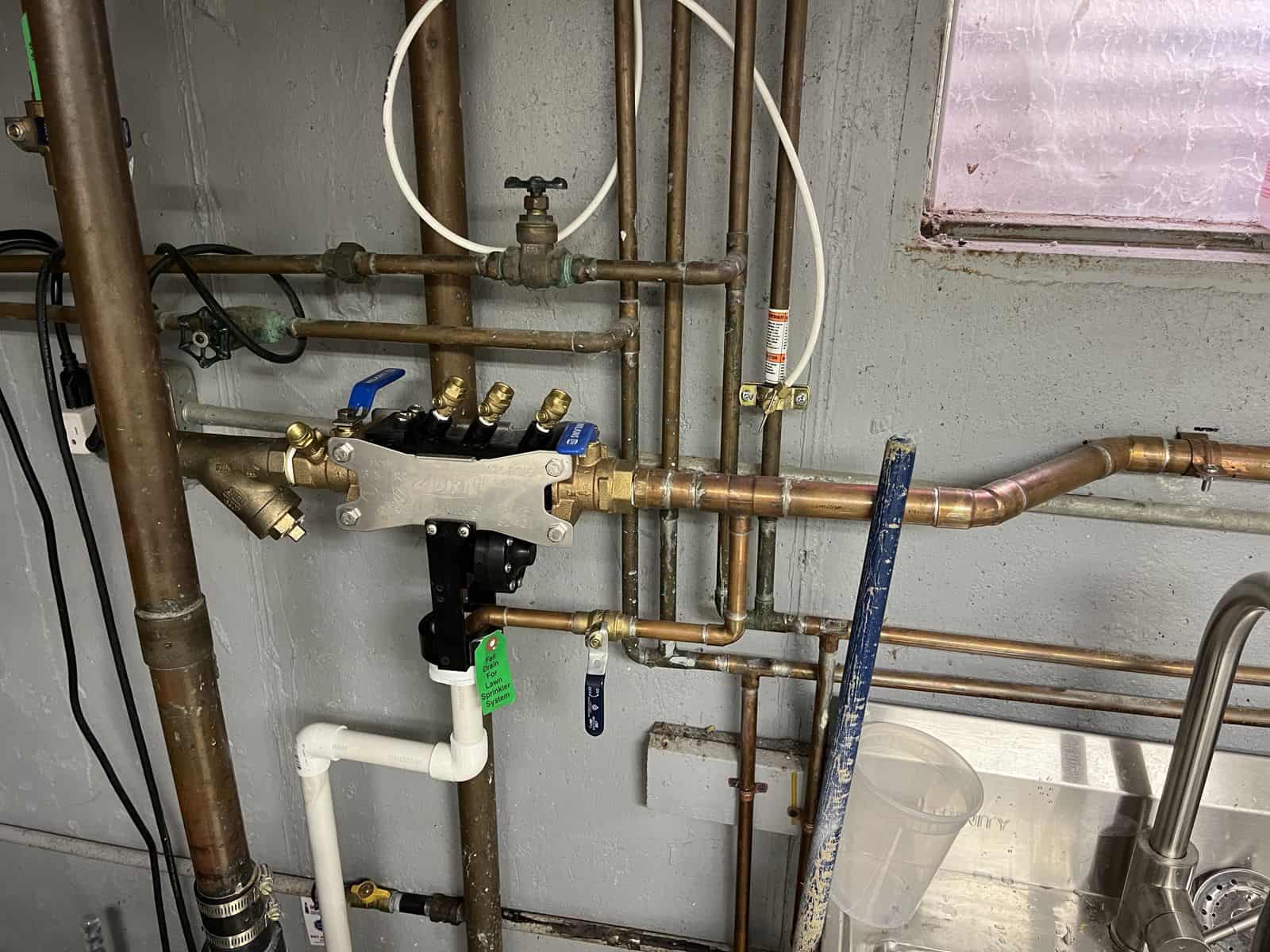
Third, test hot and cold separately. Low pressure on the hot side only usually points to a valve at the water heater or sediment inside the tank. Fourth, find the pressure-reducing valve near the main shutoff, if your home has one. Normal household pressure is roughly 45 to 60 psi. A worn regulator can choke the flow or let pressure swing.
Fifth, look for signs of a leak: soggy or extra-green spots in the lawn, damp basement walls, or the sound of running water when everything is off. Watch the water meter with every fixture closed. If it is still moving, water is going somewhere.
Old galvanized pipe: the slow pressure thief
Homes built before the 1960s often still have galvanized steel water lines. Rust and mineral scale build up inside over decades and narrow the opening, the way plaque narrows an artery. If your pressure has gotten worse gradually over months or years, especially upstairs, this is the most likely cause. There is no cleaning it out. The fix is replacing the worst runs first, and our Repiping page explains how we plan that in stages.
How winter plays a role
Low pressure often shows up weeks after a hard freeze. Exposed pipes in crawl spaces, outside walls and unheated garages can crack slightly in a cold snap and not leak until things warm up, pulling pressure away from the rest of the house. Water lines are supposed to be buried below the frost line, but older lines installed shallower, or ground that has shifted over the years, can partly freeze and restrict flow without bursting. If your pressure dropped during or right after a cold snap and never came back, have it checked.
When to call a plumber
If you have cleaned every aerator, confirmed the main valve is open and the whole house is still weak, the problem is almost certainly inside the walls or underground, where DIY troubleshooting stops being practical. We carry pressure gauges and camera equipment and can tell the difference between a five-minute fix and a bigger Plumbing Repair. If a hidden leak is the cause, our Leak Detection work finds it without tearing open walls on a guess.
Call (224) 567-2501. There is no service fee, you get a flat-rate written estimate before any work starts, and every repair carries at least a 1-year warranty. We work in Mount Prospect, Des Plaines and across the northwest suburbs.
Frequently Asked Questions
Can low water pressure damage my appliances?
Yes. Very low pressure can keep dishwashers and washing machines from filling properly, while pressure that is too high from a failing regulator strains supply lines and shortens the life of water heaters and fixtures.
What is normal water pressure for a house?
Roughly 45 to 60 psi. A plumber can check it with a gauge at an outdoor faucet or laundry connection.
Why is my hot water pressure low but cold is fine?
Usually a partly closed or failing valve at the water heater, or sediment built up inside the tank. A plumber can check both quickly.
Is low water pressure covered by homeowners insurance?
Usually not the pressure problem itself. Damage from a burst pipe or hidden leak often is, so document any water damage in case you need to file a claim.