
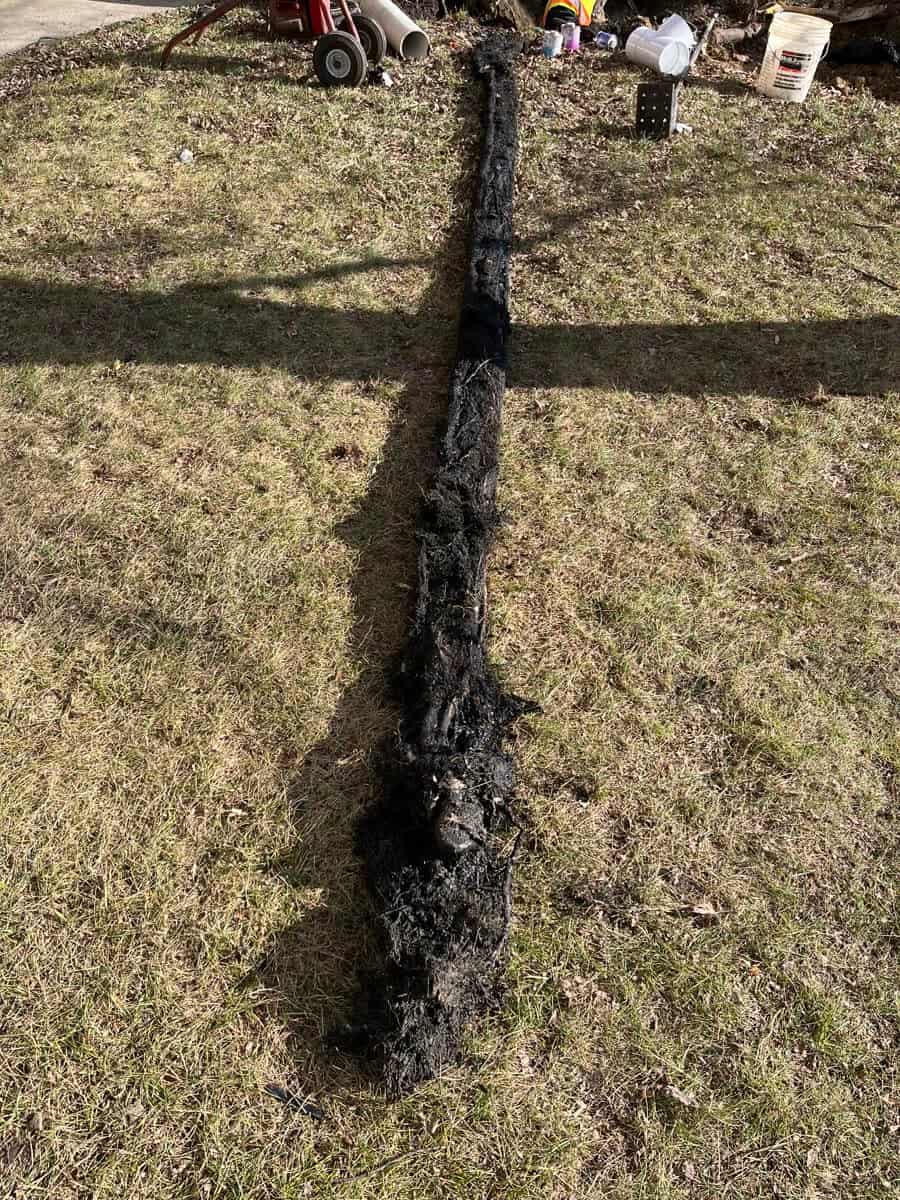

Tree-lined streets are one of the best things about living in Des Plaines and the towns around it. The same mature trees that shade your yard can also work their way into your sewer line, doing damage for years before you notice anything. Roots are one of the most common causes of sewer failure in older Illinois suburbs. Here is how it happens, what to watch for and when to act.
Why roots go after sewer lines
Roots are always looking for water and nutrients, and a sewer line carries both. A hairline crack or a slightly loose joint gives off enough moisture to draw roots toward it.
Once a root tip finds an opening, it grows inside the pipe, feeding on what flows past. Over time it branches into a mat that catches paper and grease, and as the roots thicken they push the crack wider. The older the pipe, the easier it is for roots to get in.
Pipe materials in local homes
Many homes here were built from the 1950s through the 1970s, so their sewers are often made of materials now past their expected life. Clay tile was standard in that era and is especially open to roots at its many joints. Cast iron corrodes and cracks over decades. Orangeburg, a fiber pipe used after World War II, breaks down badly with age. Even early plastic pipe can shift with the soil.
Freeze-thaw cycles make it worse. Ground movement from frost stresses the joints every winter and opens small gaps that roots find the next growing season.
Warning signs of roots in the line
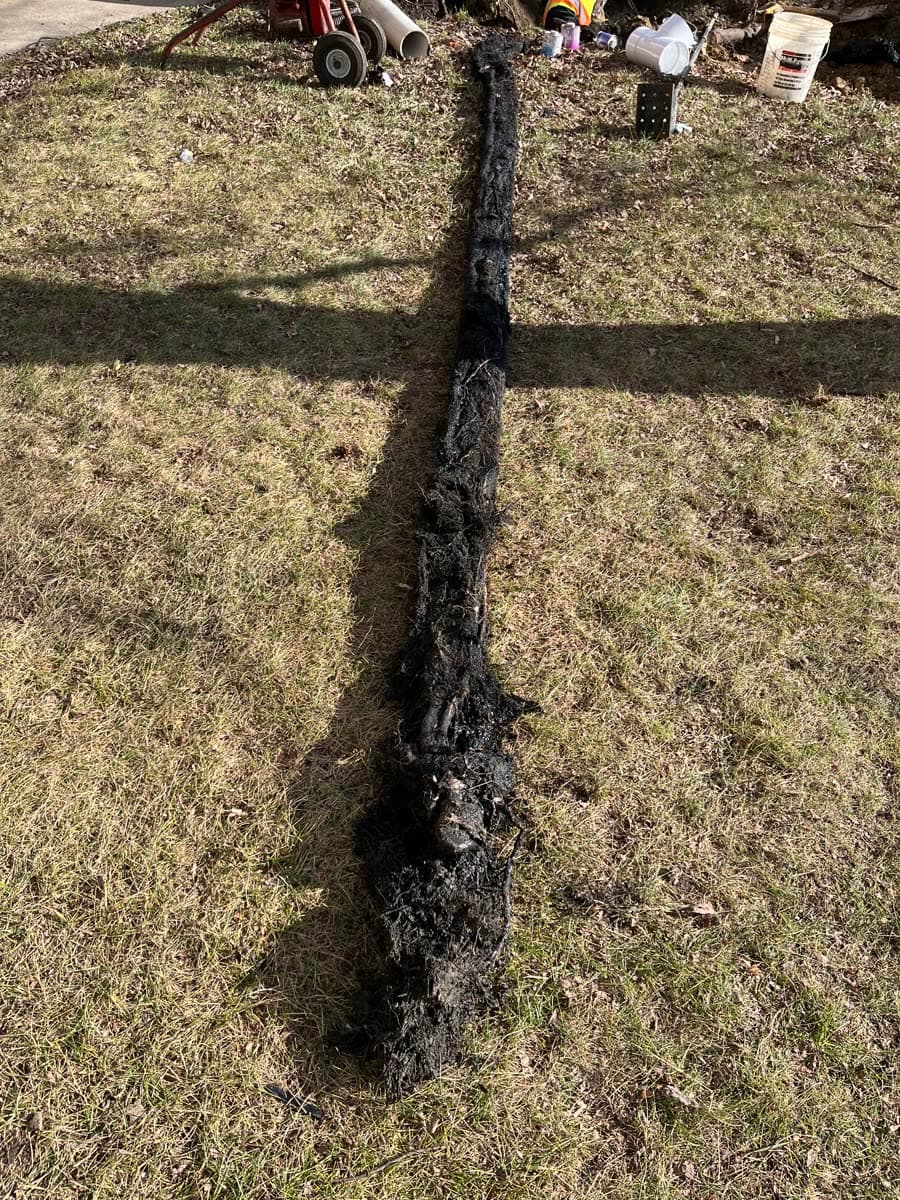
Root damage builds slowly, which is why so many people are caught off guard when the line finally blocks or collapses. Watch for slow drains at several fixtures at once, gurgling from drains or toilets after water runs elsewhere, sewer smell inside or over the sewer route in the yard, toilets that bubble when the washer drains, wet or extra-green strips of lawn between the house and the street, and clogs that keep coming back after being cleared.
Any one of these is worth checking. Several together almost always point to the sewer line.
How root damage progresses
Roots don't stay small. They keep growing with the tree. A partial restriction becomes a full blockage, and the pressure of growing roots can crack or collapse the pipe wall. Because a partly blocked line still drains slowly, people often live with sluggish drains for months. By the time sewage comes up the floor drain, the pipe may need repair rather than just cleaning.
Cutting roots out of a line that is still sound is a manageable job when it is caught early. Replacing a collapsed sewer means digging, restoring the yard and a much bigger bill. Lots here often have big oaks, maples, elms and silver maples nearby, so the risk is real for a lot of older properties.
What to do next
If you are seeing the signs above, or your home is more than about 40 years old and the sewer has never been inspected, start with a camera. A Sewer Camera Inspection shows exactly where roots are getting in, how heavy they are and whether the pipe around them is still intact.
If the pipe is sound, we rod the line to the street to cut the roots out, or hydro jet it to scour the walls clean. We camera before and after every rodding, so you see the result, and residential main-line rodding to the street carries a 1-year warranty. Because roots grow back, many homes with big trees nearby schedule cleaning every year or two, ideally in January or February before the spring growing season.
If the camera shows a cracked, broken or collapsed section, we walk you through the footage and give you a flat-rate written estimate for Sewer Repair & Replacement, from a spot repair at one bad joint to a new line. It also helps to know where your sewer runs and which trees sit near it, and to avoid planting new trees right over the line.
Local help since 1989
We have been clearing roots and repairing sewers in Des Plaines and the surrounding suburbs since 1989. We know the pipe materials and soil around here and what the seasons do to them. Call (224) 567-2501. We answer 24/7, give you a 2-hour arrival window and put tarps down before any work starts.
Frequently Asked Questions
How do I know if tree roots are in my sewer line?
Common signs are slow drains at several fixtures, gurgling toilets, sewer odor and clogs that keep coming back. A sewer camera inspection confirms it and shows where the roots are.
Can roots be removed without replacing the sewer?
Yes, if the pipe is still intact. Rodding or hydro jetting cuts the roots out, though they grow back over time, so many homes schedule regular cleaning.
Which sewer pipes are most likely to get roots?
Clay tile is the most vulnerable because of its many joints. Cast iron and old Orangeburg fiber pipe are also prone to roots as they crack and break down.
How often should a sewer with roots be cleaned?
Every year or two for most homes with big trees near the line. January or February is a good time, before roots start their spring growth.