
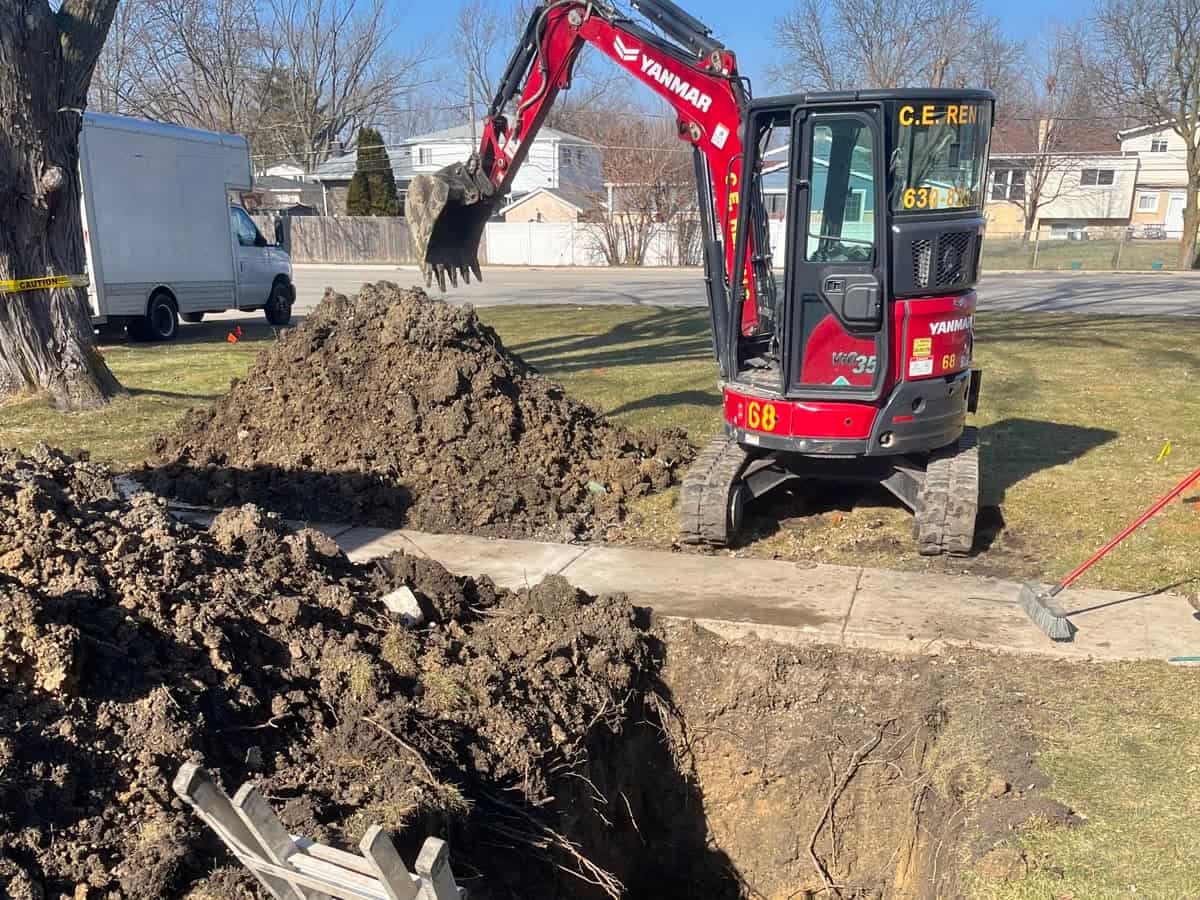

A damaged sewer line shuts down every drain in the house, threatens the basement and tends to show up at the worst time, like during a spring thaw or a holiday weekend. Knowing what causes sewer damage, and how it actually gets fixed, helps you catch problems early and make a sensible decision when a repair is needed.
Why our soil and climate are hard on sewer lines
Much of this area sits on heavy clay soil that swells when it gets wet and shrinks as it dries. That constant movement pushes on buried pipe joints year after year, especially in neighborhoods built before the 1970s, where clay tile sewer laterals are still common. Add a frost line that reaches 36 to 42 inches in a hard winter, and the ground around your sewer is almost always moving.
Many homes still have their original clay or cast iron sewer, some of it 60 to 100 years old. Those materials were durable for their time, but they were never meant to handle a century of freeze-thaw cycles, tree growth and modern water use.
What breaks a sewer line
Tree roots: parkway trees and mature landscaping send roots looking for water, and a sewer with even a hairline crack or loose joint is an easy target. Inside the pipe, roots grow into mats that trap paper and waste, and they widen the crack as they grow.
Aging clay and cast iron: the joints between clay sections were sealed with material that breaks down over decades, letting soil and roots in. Cast iron corrodes from the inside as gases in the sewer slowly eat through the wall.
Settling and sags: soil movement can make a section of pipe sink, creating a low spot called a belly. Waste collects in the dip instead of flowing through, causing repeat clogs even when the rest of the line is clear.
Grease and the wrong things flushed: grease, wipes and food scraps build up inside the pipe, and in a line already narrowed by roots or corrosion they can bring flow to a near stop. Storm surcharge: during heavy spring and summer storms the municipal sewer can back up under pressure, pushing water into private lines that already have reduced capacity.
Warning signs
Several slow drains at once, not just one sink. Gurgling from a toilet or floor drain when the washer or dishwasher empties. Sewer odor in the basement or yard. Unusually green or soggy strips of lawn over the sewer route. Water coming up at the basement floor drain during heavy rain. More than one of these together strongly suggests a problem in the main line rather than one fixture.
How a damaged sewer line gets repaired
It starts with a camera. We run a sewer camera through the line to find cracks, roots, sags or a collapsed section, and to measure how far the damage reaches. We camera every sewer before and after we rod it, so the footage shows the cause and confirms the result.
Next, the line is located and marked. With the camera footage and a locating transmitter, we mark the depth and path of the pipe before anyone digs. Then we choose the repair. A single broken joint or short section can often be fixed with a spot repair. A line that is collapsed, badly sagged or broken along its length usually needs full replacement.
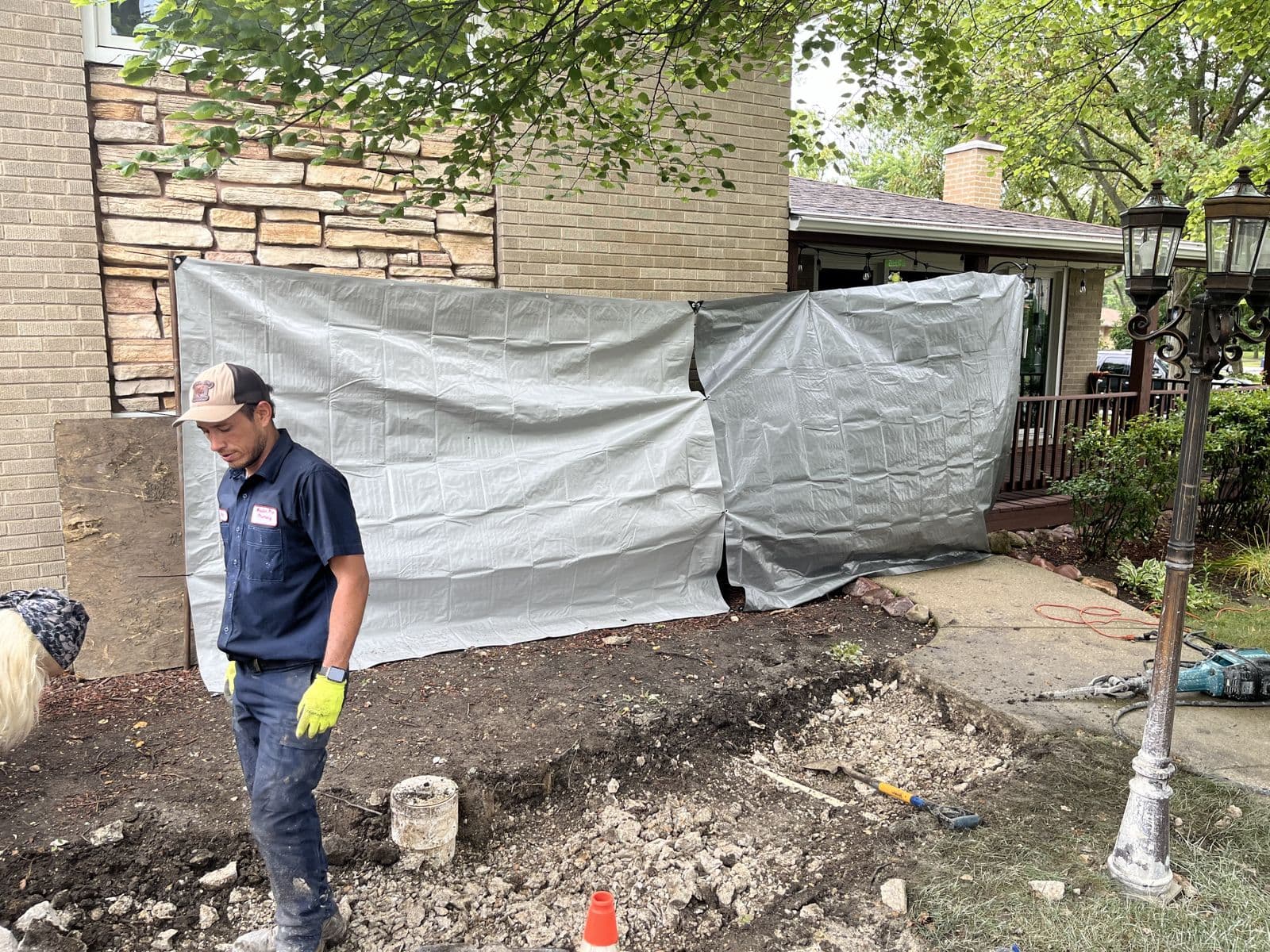
Finally, the repair is done, water is run through the system, and the camera checks the repaired section. Disturbed ground is backfilled and cleaned up. Our Sewer Repair & Replacement page walks through what to expect.
A common scenario in an older home
A homeowner in a 1920s brick two-flat notices the basement floor drain backs up every time it rains hard, while the upstairs plumbing works fine. The camera shows why: a section of clay sewer under the parkway has separated at a joint, and roots from a big silver maple have grown into the gap, catching paper and slowing flow to a trickle. Because the damage is limited to a short stretch near the property line, a spot repair fixes it. Another season or two of root growth and soil movement could have collapsed that section and turned a short dig into a much bigger one.
How often to have the sewer checked
Homes with clay or cast iron laterals should have a Sewer Camera Inspection every two to three years, or right away if slow drains keep coming back. Homes with big trees near the sewer path, or older homes that have never had the line scoped, should do it sooner. If you are buying a house, a sewer inspection is one of the most useful checks you can order, because a failing lateral is rarely visible from the surface.
Guessing gets expensive with sewers. Call (224) 567-2501 and we'll show you the footage, explain what we see in plain terms and give you a flat-rate written estimate. Residential main-line rodding to the street carries a 1-year warranty, and every repair carries at least a 1-year warranty.
Frequently Asked Questions
Can I clear a sewer backup myself with a store-bought snake?
Only a minor clog close to a fixture. A small hand snake won't reach or diagnose damage further down the main line, and repeated attempts on a root-filled or sagging pipe can push debris deeper.
Does homeowners insurance cover sewer line repair?
Usually not the pipe itself. Many insurers offer an optional sewer backup or service line endorsement, so check your policy or ask your agent.
What is a belly in a sewer line?
A belly is a section of pipe that has sunk, leaving a low spot where water and waste collect instead of flowing. It causes repeat clogs and usually needs that section replaced.
How do you find out what is wrong with a sewer line?
With a sewer camera. It shows roots, cracks, sags and collapsed sections and measures how far away they are, so the repair can be planned without guessing.