
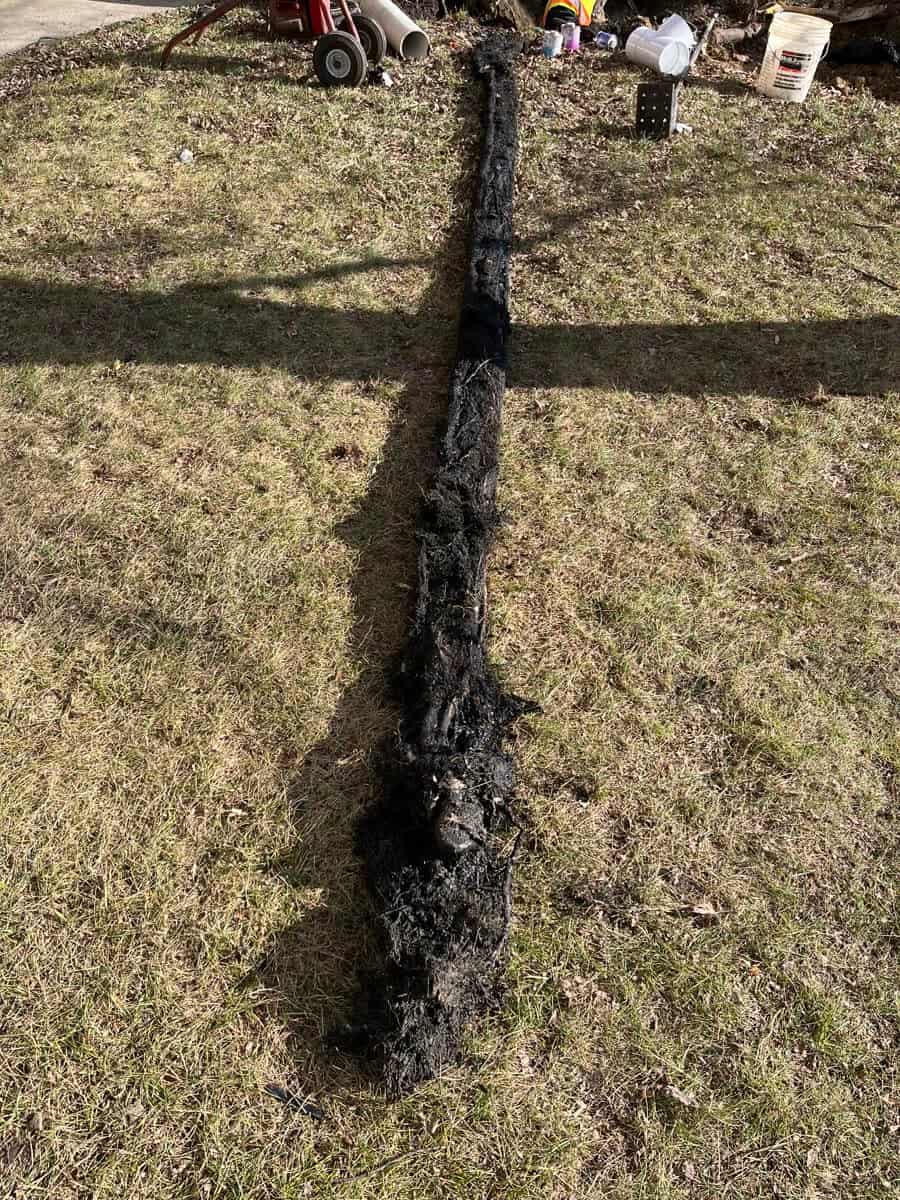

Most sewer trouble doesn't start in January. It starts years earlier, as a root hair slipping through a clay joint or a section of pipe settling a little lower each season. Winter is when those slow problems turn into water at the basement floor drain, usually on a weekend and usually when the ground is frozen hard. A camera inspection in the fall gives you time to act on what it finds while the soil is still workable.
Why winter makes sewer problems worse
Most sewer laterals sit below the frost line, but the soil above them still moves. Repeated freeze-thaw cycles between November and March push and settle the ground around joints that were never sealed tightly to begin with. A partial blockage also holds water, and in a shallow section or under an unheated garage that water can freeze.
Repairs cost more once the ground freezes, too. Frozen soil often needs extra equipment before anyone can dig, and some towns limit street openings in winter.
Then comes the thaw. Many older communities run combined sewers that carry both stormwater and wastewater. March snowmelt and spring rain through May push those systems hard, and a lateral that is already partly blocked has very little margin when the main in the street is running full. That is why we tell people to check the sewer in January or February at the latest, and fall is better still.
What a camera inspection actually finds
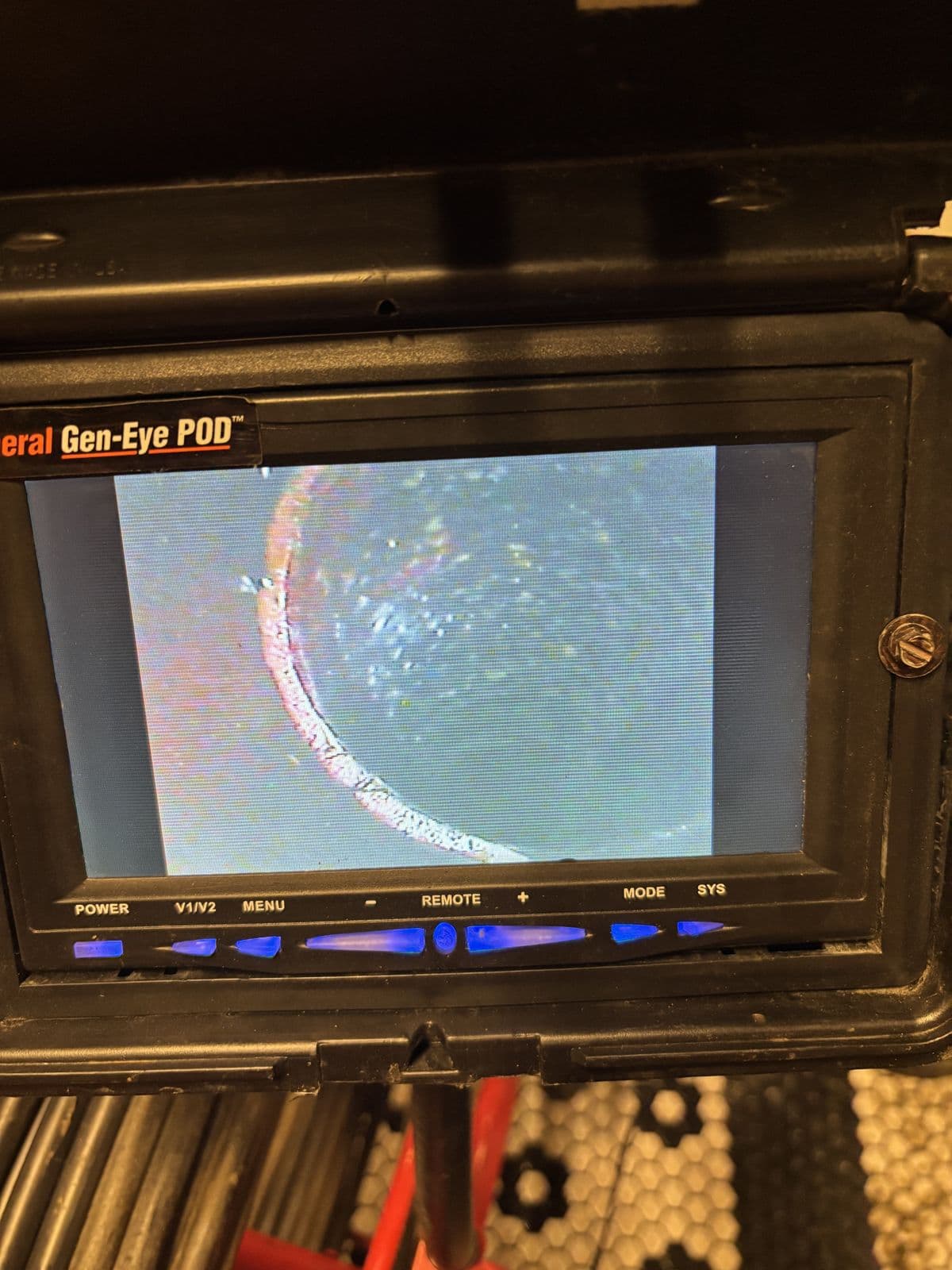
We run a waterproof camera on a flexible cable from a cleanout through your line to the street, record the inside of the pipe and measure the distance to each problem. These are the findings that matter most going into winter.
Roots: clay tile laterals in older homes are joined every few feet, and parkway trees like silver maples send fine roots into those joints. The roots thicken into mats that catch paper and grease. Offset or separated joints: ground movement can push one pipe section out of line with the next, leaving a lip that snags debris. A small offset is often fine to watch. A large one tends to get worse.
Sags, also called bellies: a section that has settled holds water instead of draining, collects solids, and in a shallow run is the part most exposed to cold. Corroded cast iron: old cast iron scales from the inside, narrowing the pipe and eventually cracking along the bottom. Grease: it coats the pipe walls and hardens as it cools.
Signs to act on before the ground freezes
If you notice any of these in late summer or fall, move an inspection to the top of the list: more than one drain running slow at the same time, especially on the lowest level; a toilet or tub that gurgles when the washing machine empties; water at the basement floor drain; sewer odor in the basement or near the cleanout; or soggy, extra-green strips of lawn over the sewer route.
Recurring clogs are the big one. A line that needs rodding every fall is telling you something about its condition, and the camera shows you what.
Same pipe, different calendar
Picture a 1920s bungalow with a mature maple in the parkway and the original clay lateral running about 60 feet to the main. The owners have the line rodded every couple of years, and it always clears. In October, a camera run after cleaning shows roots at three joints and a separated joint right under the tree. With dry, unfrozen soil, the repair can be scoped and scheduled on the owners' timeline.
If the same problem shows up in February, after sewage comes up through the floor drain, the owners face cleanup, a frozen dig and very little room to compare options. The defect is identical. Only the timing changed.
How we handle a pre-winter inspection
Every time we rod a sewer, we run the camera before and after, so you see what caused the problem and that the line is actually clear. If roots or grease are the main issue, cleaning may be all the line needs for now, and residential main-line rodding to the street carries a 1-year warranty. If the camera shows a broken or sagging section, we walk you through the footage and lay out your options for Sewer Repair & Replacement with a flat-rate written estimate.
You can read more about the process on our Sewer Camera Inspection page. For homes with clay or cast iron laterals, an inspection every two to three years is sensible, and every year if the line has known root problems.
Book between September and early November and there is time to finish any cleaning or repair before the freeze. Call (224) 567-2501. We serve Des Plaines, the North Shore, the northwest suburbs and parts of DuPage.
Frequently Asked Questions
Can a sewer line freeze in Chicagoland?
It is uncommon for a properly buried line that drains freely. Shallow sections, lines under unheated garages and sags that hold standing water can freeze during long stretches of single-digit cold, and partial blockages make it more likely.
Who is responsible for the sewer line between my house and the street?
In most local communities, the property owner is responsible for the lateral from the house to the connection at the main, including the part under the parkway. Rules vary by town, so check with your village or city.
Is a camera inspection worth it if my drains seem fine?
Yes, for homes with original clay or cast iron laterals. Roots and offset joints often do real damage before any drain slows down, and an inspection is especially useful before buying a home.
When is the best time to schedule a sewer inspection?
Fall, between September and early November, is best. It leaves time to finish cleaning or repairs before the ground freezes and before the March snowmelt and spring rains load the sewers.