

Most people never think about their sewer line until something goes wrong. By the time sewage comes up through a basement drain, the problem has usually been building for months. A sewer camera inspection lets you see what is happening inside the pipe before a small issue turns into a big repair.
How a sewer camera inspection works
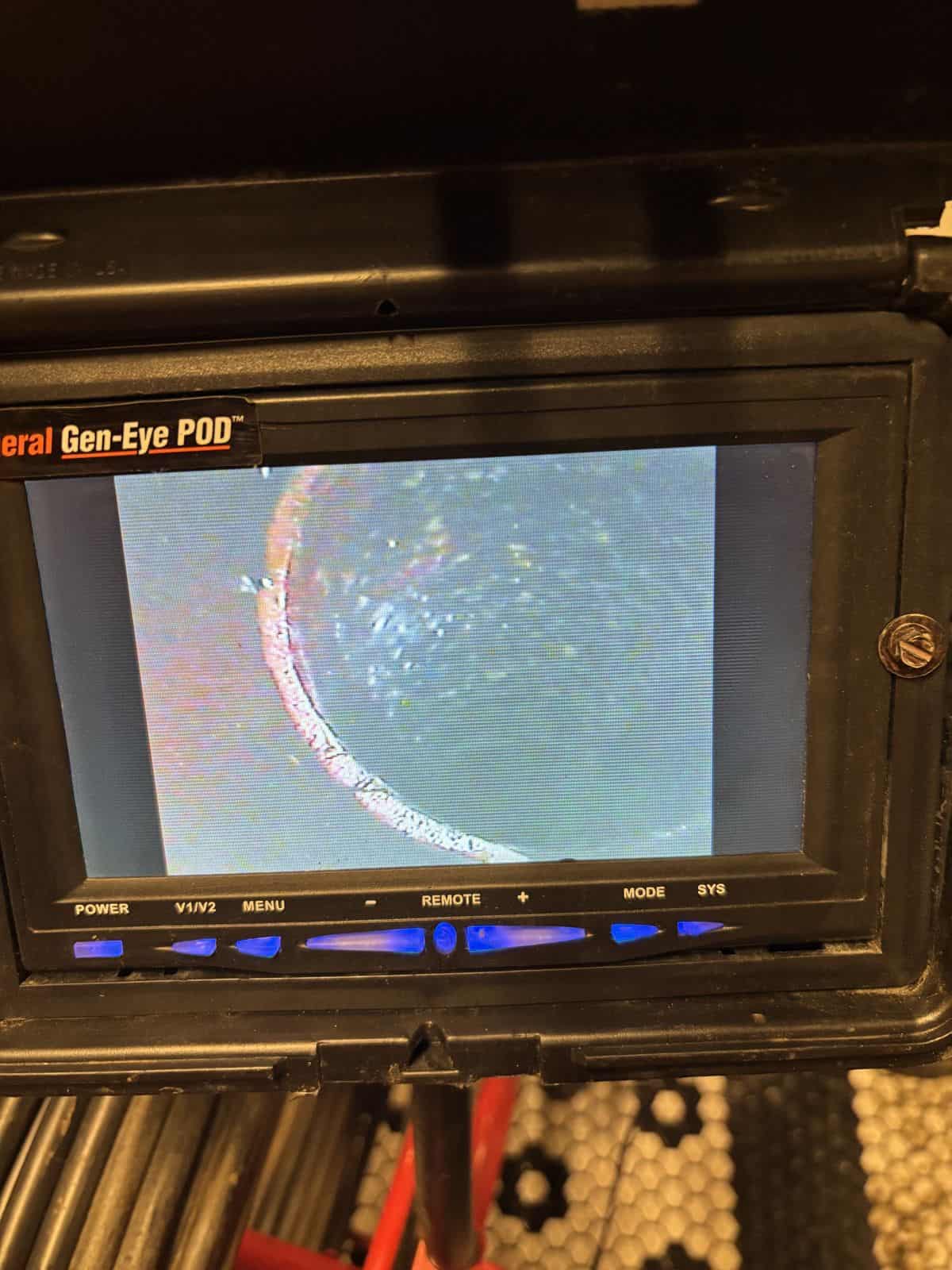
A waterproof camera on a flexible cable is fed into the sewer through a cleanout or other access point. It sends live video to a monitor, so you and the plumber can see the inside of the pipe as the camera travels. A locator in the camera head lets us mark where and how deep a problem is from above ground.
Most inspections follow the line from inside the house out to the connection with the municipal sewer. There is no digging, it usually takes less than an hour, and the footage can be recorded so you have a record of the pipe's condition.
What a camera can find
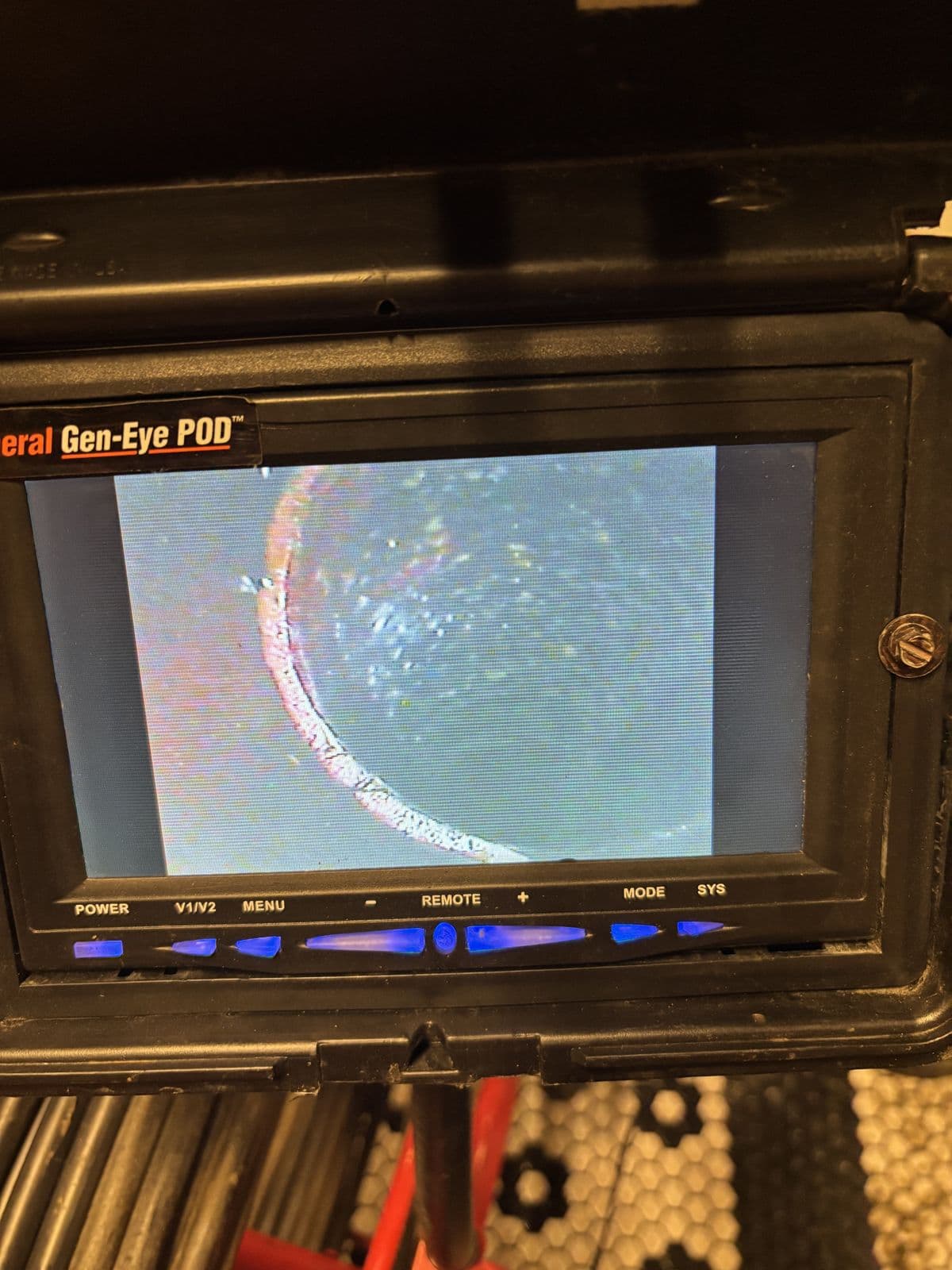
Roots growing into joints or cracks. Grease and debris narrowing the pipe. Cracked, collapsed or offset sections. Corrosion in old cast iron and deteriorating clay. Bellies, where the pipe has sunk and holds waste. Objects stuck in the line. Bad connections or poor slope left by past repairs.
Each of those needs a different fix. Without a camera, you are guessing at the cause, and possibly paying for the wrong solution.
Why older suburban homes carry more risk
Many homes around Des Plaines were built between the 1940s and 1970s, and many still have their original clay tile or cast iron sewer laterals. Those pipes were built to last a long time, but not forever.
Mature oaks, elms and maples line a lot of local streets, and their roots go looking for water, which makes sewer joints a frequent target. Freeze-thaw cycles through winter and early spring put more stress on joints that are already old. If your home was built before 1980 and the sewer has never been inspected, it is overdue.
Signs you need one now
Several drains slow or backing up at the same time. Sewer smell from floor drains or basement fixtures. Toilets gurgling when a sink or washer drains. Sewage backing up into a basement tub or floor drain. Clogs that return within weeks of being cleared. Soggy or extra-green strips of lawn over the sewer path. These are symptoms of a sewer under stress, and they tend to get worse quickly.
When it makes sense without symptoms
Before buying a home, especially one built before 1980. A pre-purchase inspection can keep you from inheriting a sewer that needs major repair, and it is one of the most overlooked items in a home inspection. Also worth doing: after a big clog has been cleared, to confirm the line is really clear; if large trees grow near the sewer path; every few years on an older property; and after heavy flooding or construction nearby.
If you have a lot of trees near the line, ask about scheduling the inspection in January or February. That leaves time to clean or repair the line before the March snowmelt and spring rains load the sewers.
What happens after the inspection
We walk you through the footage and explain your options in plain terms. Not everything the camera finds needs immediate action, and we'll tell you what should be fixed now and what can be watched.
Common next steps include Drain Cleaning to cut roots and restore flow, hydro jetting to clear grease and scale, or a spot repair or replacement for sections that are broken or collapsed. Because we camera before and after every sewer rodding, you also see proof that the line is clear when we're done.
Learn more on our Sewer Camera Inspection page, or call (224) 567-2501 to book one. We serve Niles, Des Plaines, the North Shore and the northwest suburbs, with flat-rate written estimates and no service fee.
Frequently Asked Questions
How long does a sewer camera inspection take?
Usually less than an hour for a typical home. A line that needs cleaning before the camera can see may take longer.
Do I need a sewer camera inspection before buying a house?
Yes, especially for a home built before 1980. A failing sewer lateral is rarely visible from the surface, and the repair can be costly.
Does a sewer camera inspection require digging?
No. The camera goes in through a cleanout or other access point, and a locator in the camera head shows where any problem is from above ground.
Can a camera inspection find tree roots?
Yes. Roots at joints and cracks show up clearly on camera, along with how far into the line they are.