
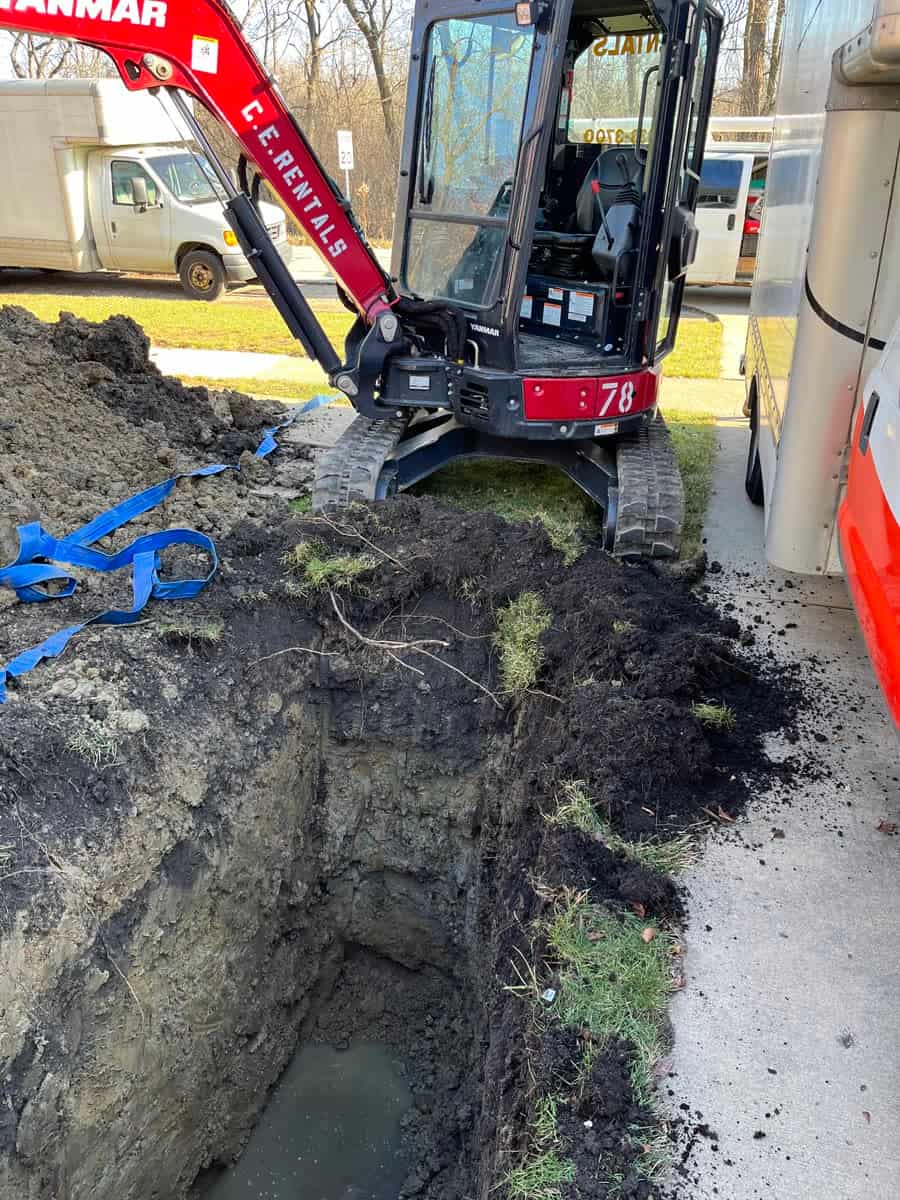

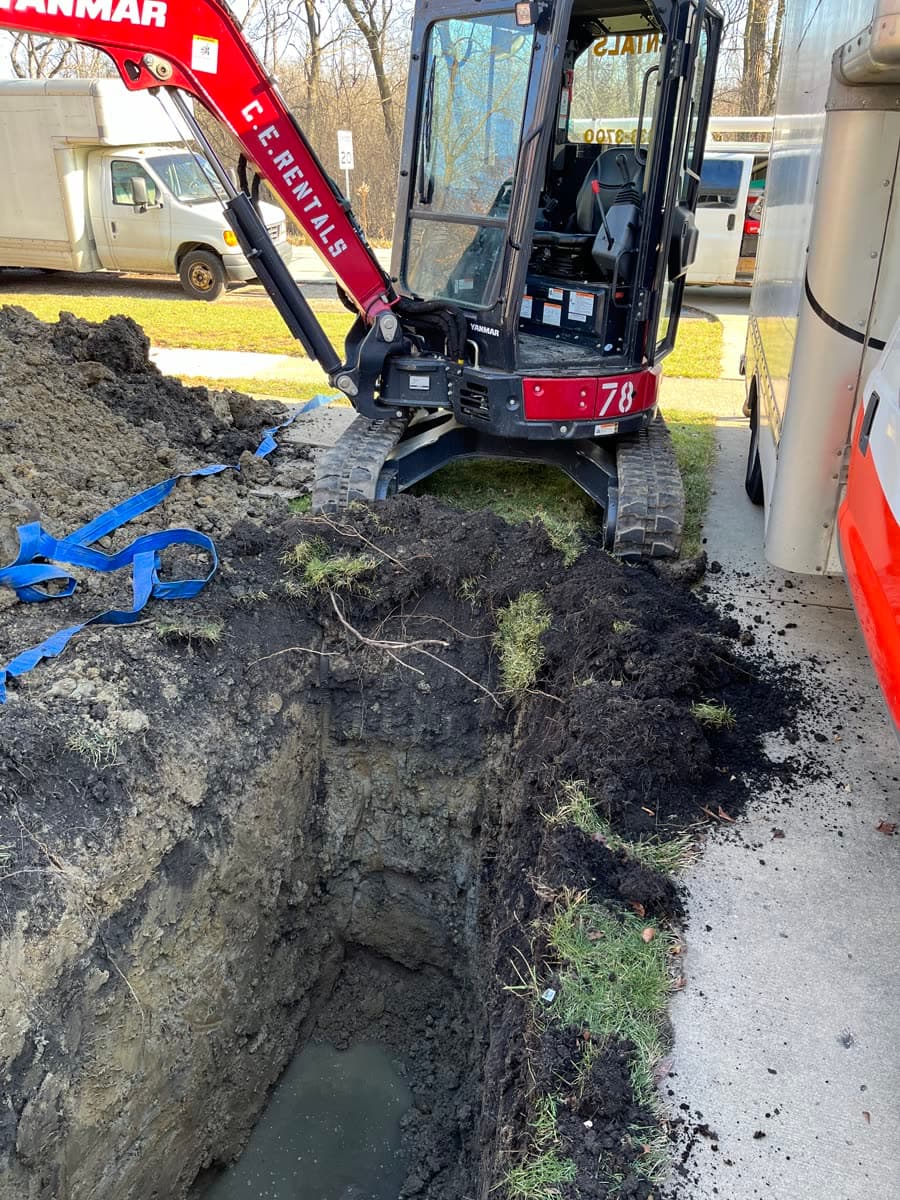
Sewer problems don't fix themselves. In Cook County, changing seasons, heavy rain and freeze-thaw cycles put extra stress on underground pipe. Catch the problem early and you can avoid major damage, a bigger dig and real health risks. Here are the clearest signs your sewer line needs attention.
What damages sewer lines here
Freeze-thaw cycles move the ground and crack pipe. Heavy rain overloads the sewers and shifts the soil. The clay soil in much of the county swells when wet and shrinks when dry. Tree roots go looking for water and break into joints. And many older homes still have clay or cast iron sewer pipe that is wearing out. In these conditions a small problem can grow quickly.
1. Slow drains all over the house
One slow drain is usually a clog in that fixture. Several slow drains at once point to the main line. Watch for sinks, tubs and showers all draining slowly, water backing up in the lowest fixtures, and gurgling when water drains. That pattern usually means a blockage or break in the main sewer.
2. Repeated backups
Recurring backups are one of the most serious signs. Toilets backing up without warning, sewage coming up through floor drains, or water appearing in one fixture when another drains all mean the line isn't carrying waste away. If that is happening, call right away. It isn't a wait-and-see situation.
3. Sewer odors
You shouldn't smell sewer gas inside or outside your home. A rotten-egg smell near drains, odors in the basement or yard, or a smell that comes back after cleaning often means a cracked or leaking sewer pipe, or a dry trap or failed seal letting gas in.
4. Soggy or sunken spots in the yard
A leaking sewer feeds the soil above it. Look for wet patches when it hasn't rained, unusually green or fast-growing strips of grass, and areas of lawn that are starting to sink. All of these point to wastewater leaking into the ground.
5. Pests near drains
A broken sewer line gives rodents and insects a way in and something to eat. More flies, cockroaches or signs of rodents around floor drains and in the basement can trace back to a damaged line.
6. Cracks in the foundation or driveway
A leaking sewer washes away soil, and the structures above it can settle. New cracks in foundation walls, uneven sections of driveway or sidewalk, and floors that seem to be settling can all start underground.
What to do next
If backups are severe, stop running water. Skip chemical drain cleaners, which can make pipe damage worse. Then have the line inspected.
We start with a camera to find exactly where the problem is and whether it is a blockage, a crack, a sag or a collapse. If it is a blockage in a sound pipe, rodding the line to the street may be all it needs, and residential main-line rodding carries a 1-year warranty. We run the camera before and after every rodding so you see the result. Our Sewer Camera Inspection page explains the process.
If the pipe is broken, we show you the footage and give you a flat-rate written estimate for Sewer Repair & Replacement, from a spot repair at one bad joint to a new line. Every repair carries at least a 1-year warranty.
Call (224) 567-2501. We answer 24/7 and serve Des Plaines, the North Shore, the northwest suburbs and parts of DuPage.
Frequently Asked Questions
How do I know if my sewer line is broken?
Common signs are several slow drains at once, repeated backups, sewer odors, soggy or sinking spots in the yard and pests near drains. A sewer camera inspection confirms it.
Can a sewer line be repaired without replacing all of it?
Often, yes. If the damage is limited to one joint or a short section, a spot repair fixes it. A line that is broken or sagging along its length usually needs replacing.
Should I use drain cleaner for a sewer backup?
No. Chemical drain cleaners won't reach a main line problem and can make damaged pipe worse. Stop running water and call a plumber.
What causes sewer lines to break?
Tree roots, aging clay and cast iron pipe, freeze-thaw movement and the clay soil swelling and shrinking are the most common causes here.