

Spring weather in Cook County is hard to predict. Heavy rain, melting snow and fast temperature swings often combine into ideal conditions for a flooded basement. Understanding how and why basements flood is the first step toward keeping yours dry. Here are the causes, the warning signs and the practical steps that make a difference.
Why basements flood so often here
Spring here runs on March snowmelt followed by rain through May. Snowmelt raises groundwater, frequent storms saturate the soil, and the clay soil common in the area drains slowly. Older sewer systems can back up under the load, and freeze-thaw cycles weaken pipes and foundations along the way. Put together, water often has nowhere to go but into the basement.
The most common causes
Most basement floods come from one or more of these: a sump pump that fails or can't keep up during a storm, a clogged or broken drain or sewer line, a sewer backup when the public system overloads, cracks in the foundation, poor grading or gutters that dump water at the foundation, and burst pipes from temperature swings. Figuring out whether the water is coming from inside the plumbing, outside, or both is the first job.
Early warning signs
Basements rarely flood without warning. Watch for musty smells or dampness, water stains on walls or floors, new cracks in the walls or floor, slow drains or gurgling pipes, a sump pump that runs too often or not at all, and small leaks or corrosion on pipes. Any of these is a good reason to have things checked before the next storm.
Keep the sump pump ready
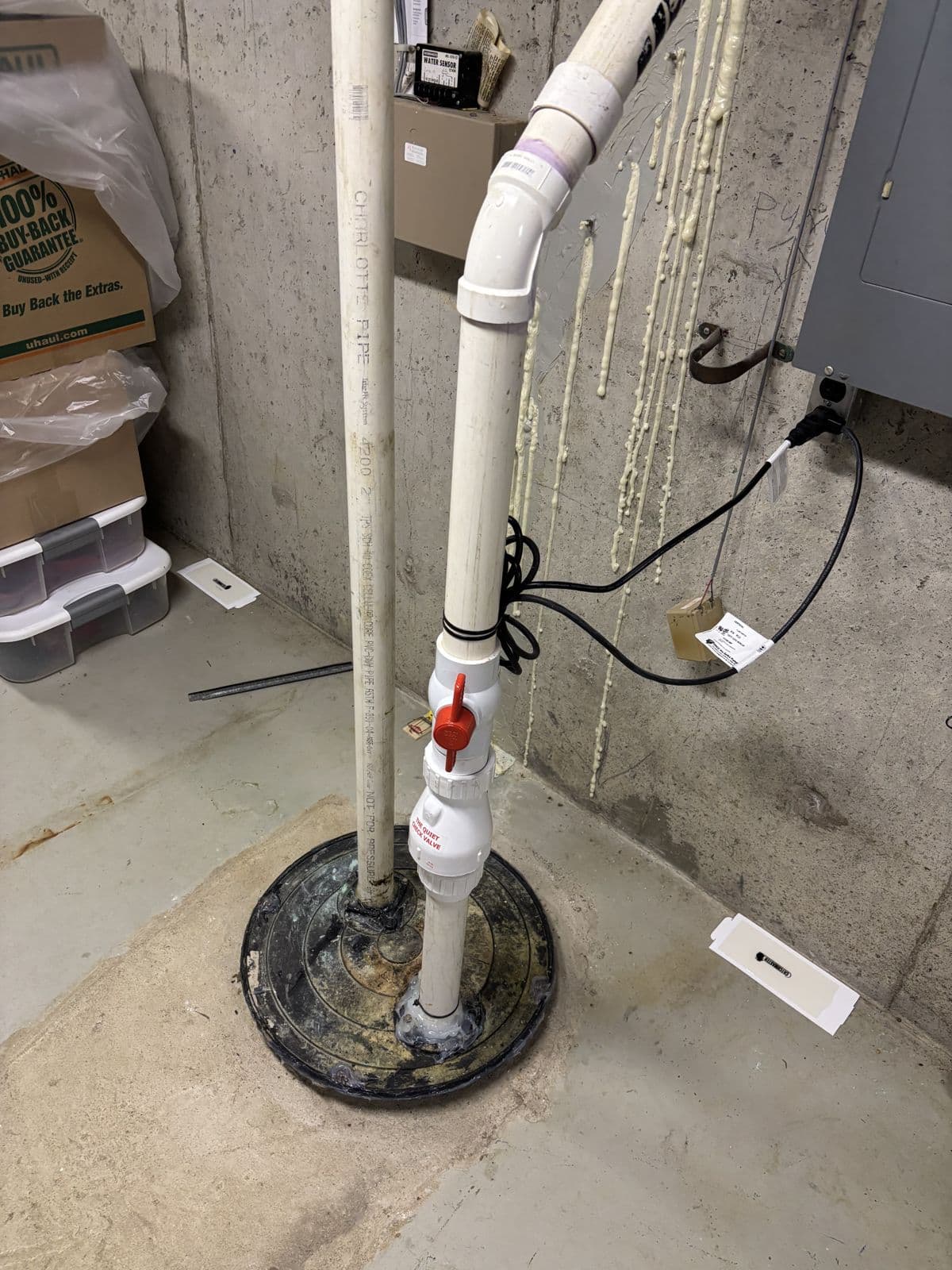
The sump pump is your main defense. Test it in January or February, before the spring season, by pouring a bucket of water into the pit and making sure it starts, empties the pit and shuts off. Clear debris from the pit, and replace an aging pump before it fails.
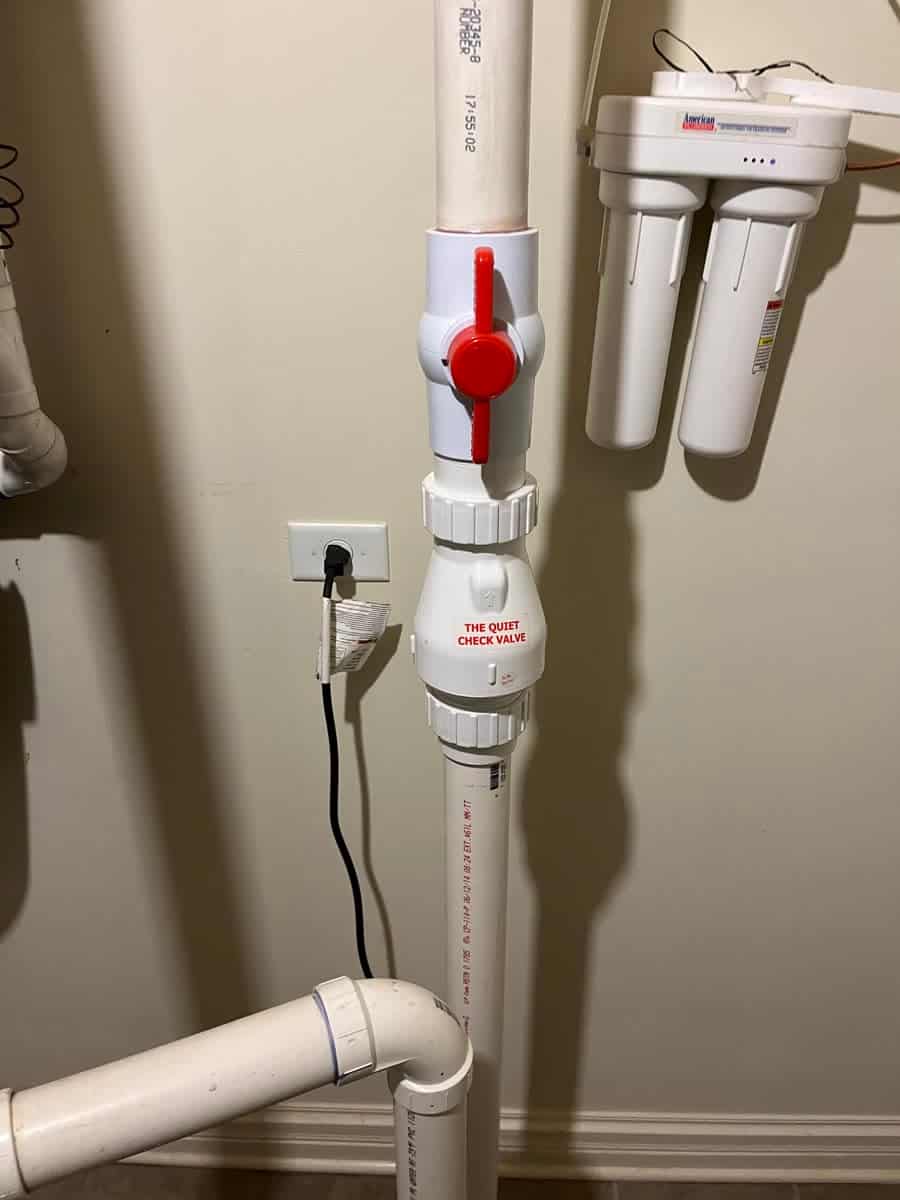
Add a battery backup, because the storms that fill the pit often knock out power. And check the discharge pipe near the pit: solid glued joints hold up to a pump that runs all night, while a rubber fitting can work loose under pressure. We install Pro Series sump pumps and battery backups. Our Sump & Ejector Pumps page explains how we set them up.
Move water away from the foundation
Clean gutters and downspouts, and extend downspouts at least five to six feet from the house. Make sure the yard slopes away from the foundation, and fix low spots where water pools after rain. Make sure the sump discharge drains away from the house too, not right back toward it. Seal small foundation cracks, and have larger ones looked at by a foundation professional.
Prevent sewer backups
Keep grease, wipes and debris out of your drains, and have the main sewer line cleaned and camera-inspected before spring if your home is older or has big trees nearby. A line with roots or a sag has far less room when the public sewer is running full. Our Drain Cleaning includes a camera run before and after every sewer rodding. Some homes with repeated storm backups also add a backwater valve or overhead sewer, which is worth asking about.
If water starts coming in
Shut off power to the flooded area if you can do it safely. Stay out of standing water, especially if it may be sewage. Find and stop the source if you can. Then call for help, and start drying and ventilating once it is safe.
Call (224) 567-2501. We answer 24/7, serve Des Plaines, Mount Prospect and the northwest suburbs, and give you a flat-rate written estimate before any work starts.
Frequently Asked Questions
What is the most common cause of basement flooding?
A sump pump that fails or can't keep up during a storm, followed by sewer backups when the public sewer overloads. Poor grading and gutters that dump water at the foundation also play a big part.
When should I test my sump pump for spring?
In January or February, before the March snowmelt and the spring rains that run through May.
How far should downspouts extend from the house?
At least five to six feet, and the ground should slope away from the foundation so the water doesn't flow back.
What should I do if my basement starts flooding?
Shut off power to the area if it is safe, stay out of the water, stop the source if you can, and call a plumber. Sewage water needs proper cleanup.