
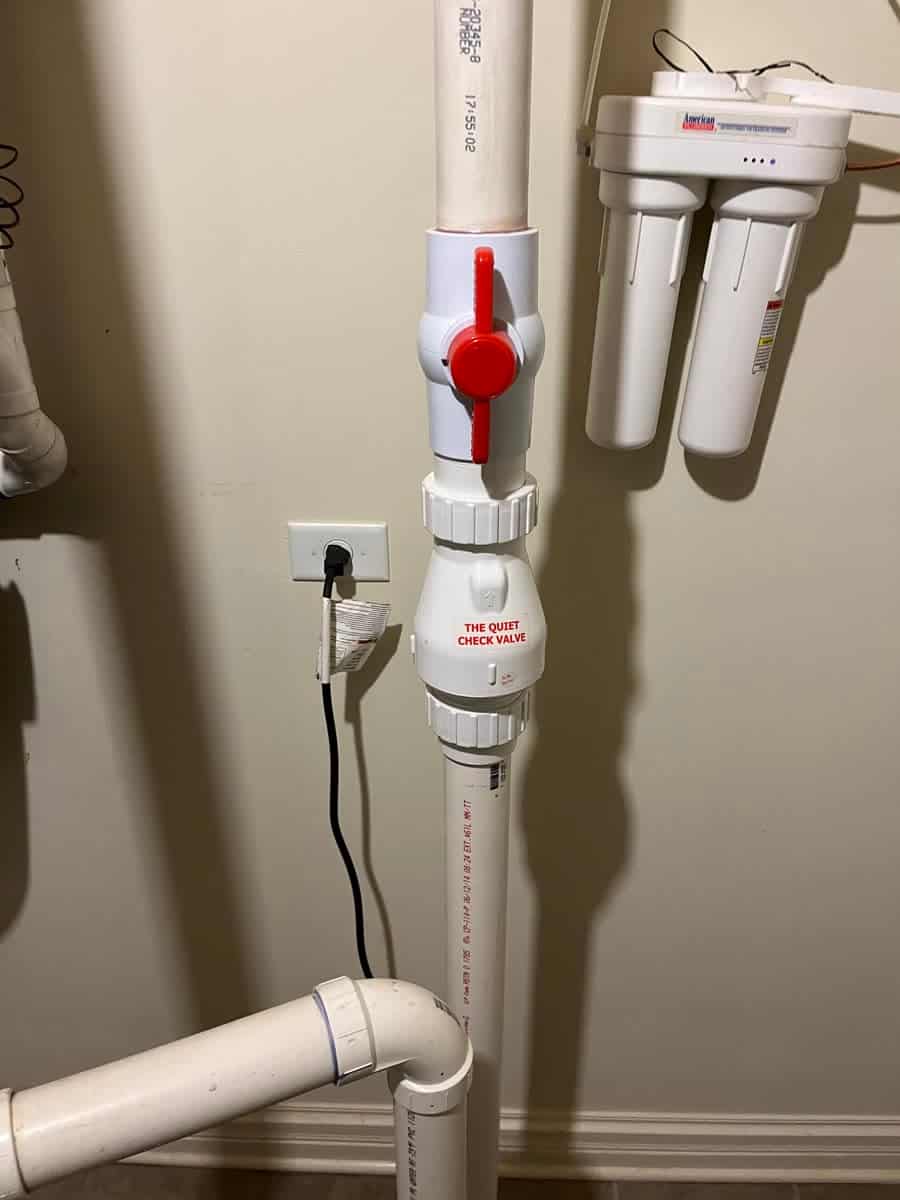

Fall brings cooler weather, falling leaves and rain systems that roll through with little warning. For anyone with a basement, it also means the sump pump that has sat mostly idle since spring is about to go back to work. A pump that struggled in April but seemed to recover often fails completely under the heavier rain of a fall storm. Catching the warning signs now is far cheaper than drying out a finished basement later.
Why fall storms are hard on sump pumps here
The clay-heavy soil across Cook, Lake and DuPage counties doesn't drain like sandy soil does. After a wet summer, water sits close to the surface and the ground stays saturated into October. When a storm drops two to four inches of rain in a few hours, that water heads straight for your foundation.
Many older towns also run combined sewers, which is why local rules generally prohibit tying a sump discharge into the sanitary sewer. The discharge has to go to the yard or a storm sewer, well away from the foundation. A pump working overtime, combined with a discharge line that is undersized, clogged with leaves or improperly connected, is a common recipe for a wet basement.
Test it twice a year
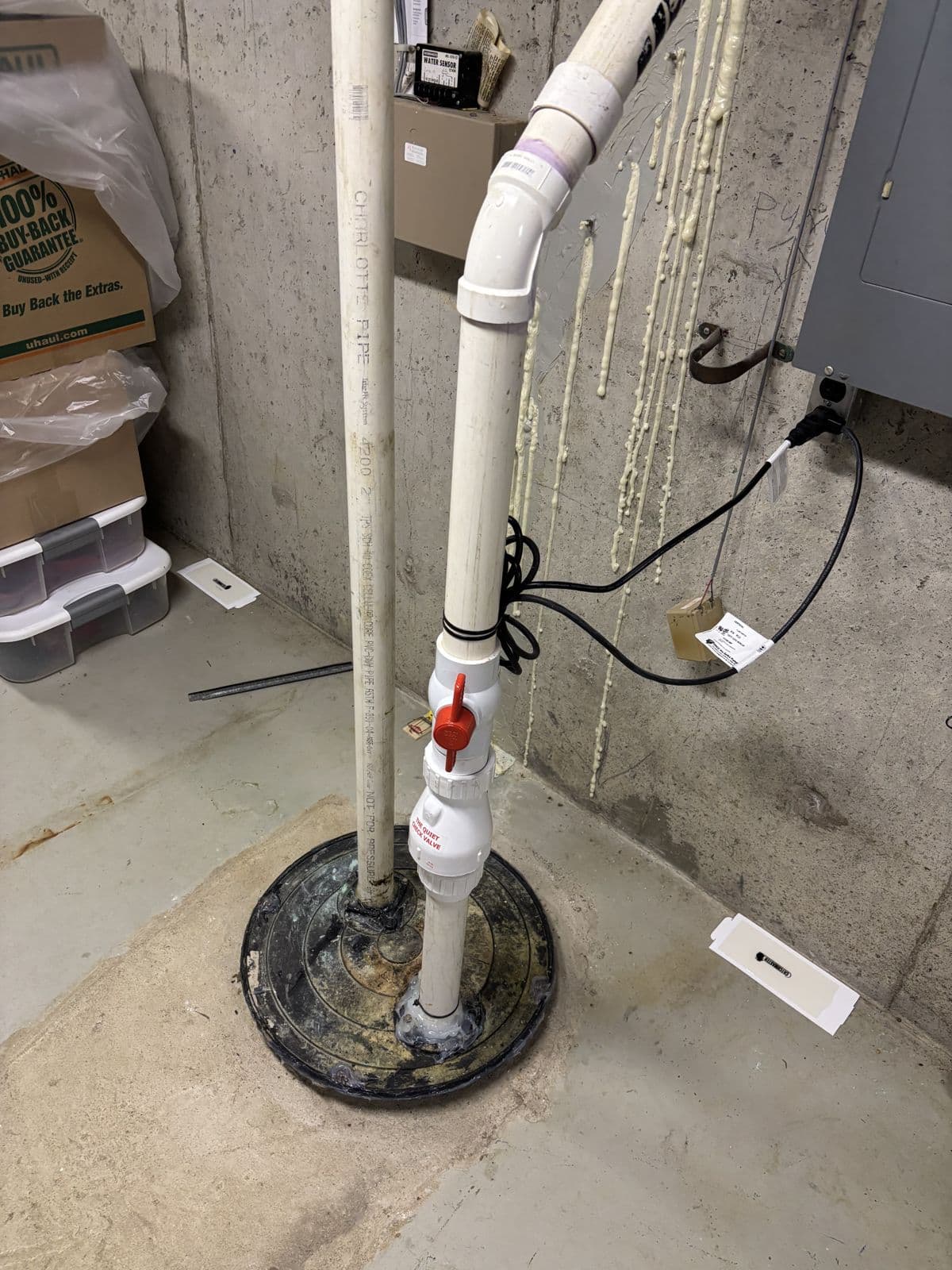
Test your sump pump at least twice a year: once in January or February, ahead of the March snowmelt and spring rains, and again in early fall. Pour about five gallons of water into the pit and watch. The pump should start within a few seconds, empty the pit and shut off cleanly.
That test tells you more than looking at the pump ever will. A pump that hesitates, drains slowly or switches on and off rapidly is already in the early stages of a failure, and it gets worse, not better, once it has to run for hours during a downpour.
Warning signs and what they usually mean
Short cycling: if the pump kicks on every few minutes when it hasn't rained, the float switch is often sticking, or the check valve is letting water run back into the pit after each cycle so the pump keeps restarting.
Grinding or rattling: a healthy pump hums. Grinding usually means a worn impeller or one jammed with grit, which is common in pits that haven't been cleaned in a year or more. Heavy vibration, with the pump shaking against the side of the pit, often points to the same problem or a failing bearing.
Running without shutting off: this points to a failed switch, a pump too small for the water coming in, or a discharge line that is partly blocked. Rust, corrosion or age: most pumps are good for roughly seven to ten years. Rusty water in the pit, a corroded housing, or not knowing how old the pump is are all reasons to have it checked before storm season.
A failure that didn't have to happen
Picture a raised ranch with a finished basement that doubles as the family room. The pump has handled light summer rain fine, but nobody has watched it work through a real downpour in a couple of years. A fall storm stalls overhead and drops three inches overnight. The pump runs almost nonstop for the first time all year, the motor overheats, and the float switch that was already sticking gives out at 2 a.m. By morning there is water across the carpet. A five-minute test in September would have found that switch.
How we repair and install sump pumps
When a pump needs replacing, we install Pro Series sump pumps sized for the water your pit actually takes on. We connect the discharge with glued PVC and unions. A rubber coupling goes on fast, but it can slip or split when the pump runs hard, and that is the last place you want a leak. Our Sump & Ejector Pumps page has the details.
We also check the check valve, clean the pit, and confirm the discharge drains well away from the foundation. Every repair carries at least a 1-year warranty, and you get a flat-rate written estimate before we start.
Is a battery backup worth it?
A battery backup is a bridge through a power outage, not a replacement for a healthy main pump. A typical battery keeps a backup pump running for several hours, less if the storm is heavy and the pump never rests. For homes with finished basements, offices or mechanical equipment downstairs, especially in neighborhoods where storms knock out power, it is money well spent. Ask for a battery rated for sump duty, a backup pump that can move as much water as the main one, and a high-water alarm.
If your test turns up a slow start, a strange noise or a pump that won't stop, call (224) 567-2501 before the next storm. We answer 24/7, and if the pump quits during a storm our 24/7 Emergency Plumbing line is the number to call.
Frequently Asked Questions
How long does a sump pump usually last?
Most residential sump pumps last seven to ten years. Homes with a high water table or a pump that cycles often tend to land at the short end of that range.
Is it legal to discharge a sump pump into the sewer in Illinois?
Generally no. Most local towns prohibit connecting a sump discharge to the sanitary sewer because it overloads the system during storms. The discharge usually has to go to the yard or a storm sewer, and rules vary by town.
Can I test my own sump pump?
Yes. Pour about five gallons of water into the pit and confirm the pump starts, empties the pit and shuts off. Have it checked if it is more than five years old, has never been serviced, or the test shows a slow start or odd noise.
Why shouldn't a sump discharge use rubber couplings?
They can slip off or split when the pump pushes water hard. Illinois doesn't allow them on sump discharges, so we glue the line in PVC and add unions.