

Heavy rain, fast snowmelt and saturated ground push water toward your foundation quickly around here. If your sump pump has been sitting idle, there is a real chance it won't perform when you need it. Testing it takes about five minutes and a bucket of water, and it is one of the most useful things you can do to protect a basement.
Why the flood risk is higher here
Flat land and clay-heavy soil limit natural drainage across the area, and the Des Plaines River has a long history of flooding. Many neighborhoods sit in or near low-lying ground.
Spring is the big season: March snowmelt followed by rain through May. Summer storms can drop several inches in a short time too. When that happens the soil saturates and groundwater rises fast, and a pump that is even slightly out of shape can fail under the load. That is why we recommend testing in January or February, before spring arrives, and again before fall storms.
What a sump pump actually does
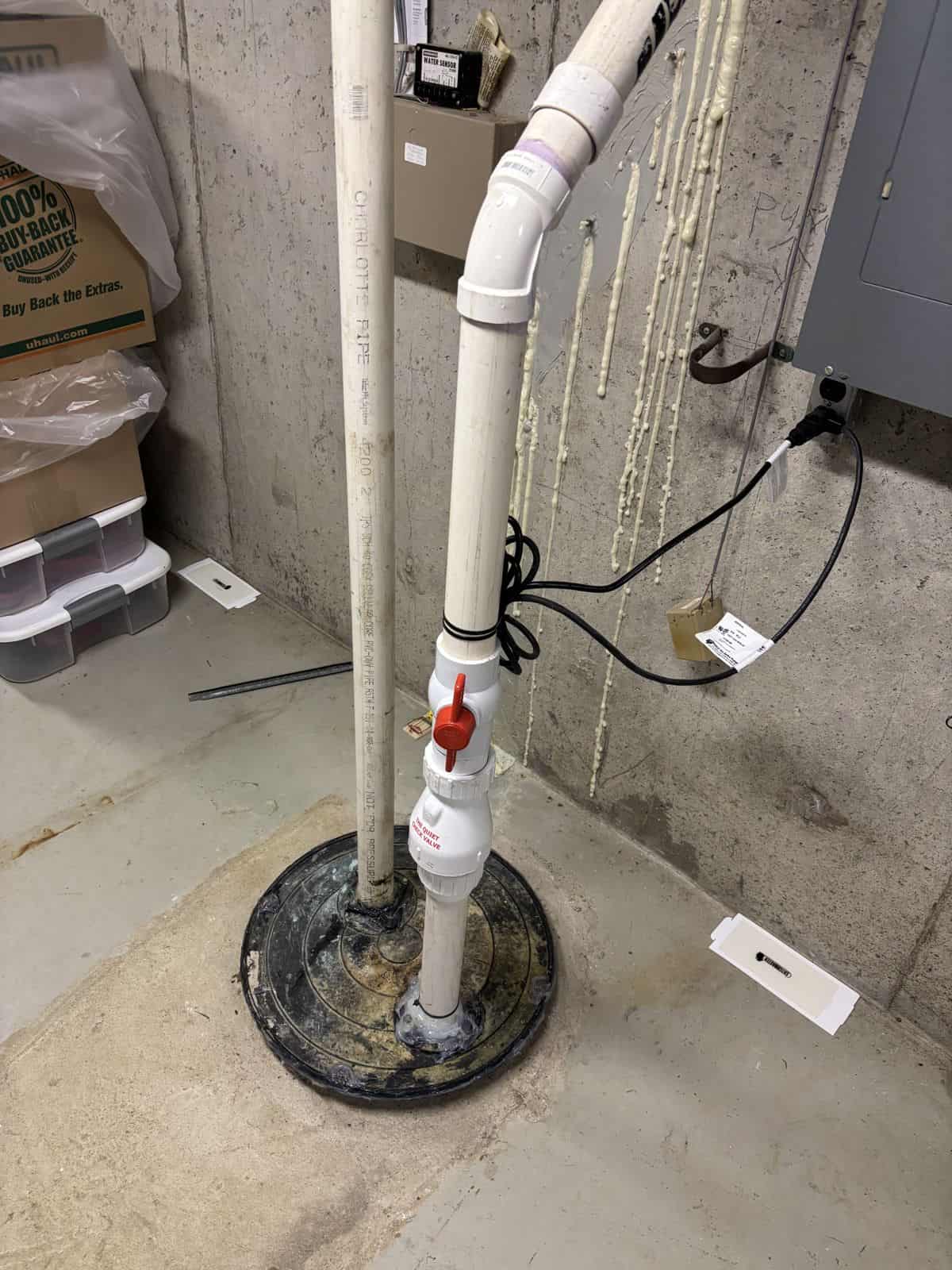
The pump sits in a pit, called a sump basin, at the lowest point of the basement. As groundwater collects in the pit, a float switch rises and turns the pump on, and the pump pushes the water out through a discharge pipe away from the foundation. A check valve on that pipe keeps the water from running back into the pit.
It is a simple system, but every part has to work at the same moment. One stuck float or blocked pipe is enough to flood a basement.
How to test your sump pump
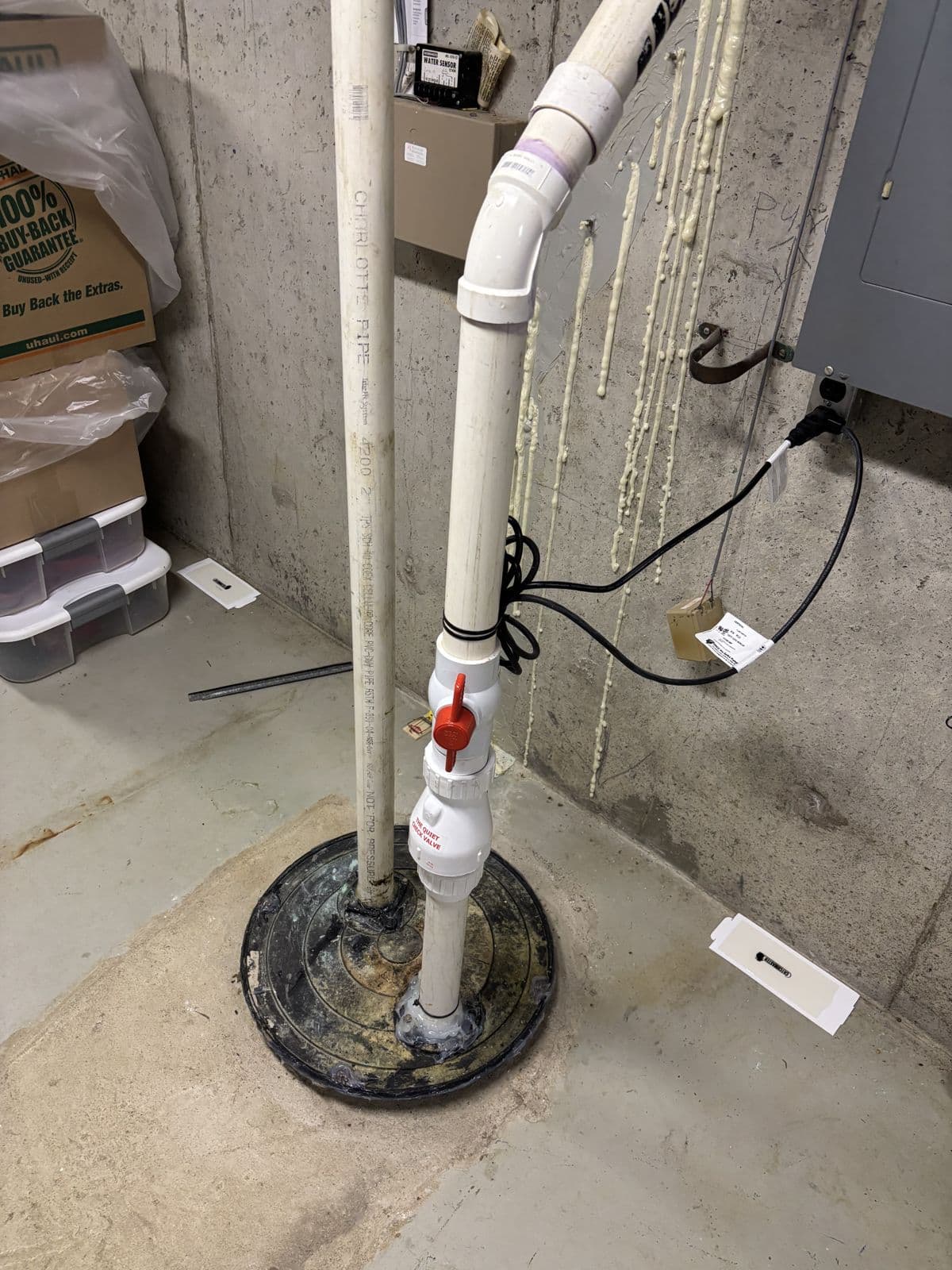
Find the pit, usually in a corner of the basement, and take off the cover. Make sure the pump is upright and the float can move freely without catching on the pit wall or the cord.
Slowly pour a five-gallon bucket of water into the pit until the float rises and the pump starts. Watch it run. It should start within a few seconds, empty the pit and shut off cleanly once the water is down.
Then go outside and find where the discharge pipe ends. Water should be coming out well away from the foundation, and the pipe shouldn't be cracked, disconnected or buried in leaves. If you have a battery backup, unplug the main pump and repeat the test to make sure the backup takes over.
Signs the test turned up a problem
The pump doesn't start at all. It runs but the water level doesn't drop. It hums, grinds or rattles. It starts and stops rapidly. There is rust, corrosion or a lot of debris in the pit. The discharge pipe is cracked, loose or draining right next to the house. Or the pump is seven to ten years old and has never been serviced.
Any one of these deserves attention before the next big storm. Don't assume a pump that struggled in a bucket test will hold up for hours in a downpour.
Look at how the discharge is connected
While you are at the pit, look at the discharge pipe right above the pump. It should be glued PVC, with a union so the pump can come out for service. A black rubber sleeve held on with hose clamps is a weak spot: it can slip or tear just when the pump is working hardest, and Illinois doesn't allow it there. When we find one, we swap it for glued PVC and a union.
Backup pumps
A main pump is only as reliable as its power supply, and the storms that load your pit are the same ones that knock out power. A battery backup pump gives you a second line of defense when the main pump loses power or can't keep up. If you don't have one, now is the time to consider it.
When to call a plumber
Call if the pump fails the bucket test, the float never triggers, the discharge line is damaged or routed wrong, the pump is old and showing wear, or you want a backup installed. We install Pro Series sump pumps and battery backups, clean the pit, check the check valve and make sure the pump is sized for your basement. Read more on our Sump & Ejector Pumps page.
We work in Des Plaines, Arlington Heights and across the northwest suburbs and North Shore. Call (224) 567-2501. We answer 24/7, there is no service fee, and you get a flat-rate written estimate before we start.
Frequently Asked Questions
How do I test my sump pump?
Pour about five gallons of water into the pit. The pump should start within a few seconds, empty the pit and shut off cleanly, and water should come out of the discharge pipe well away from the house.
How often should I test my sump pump?
At least twice a year: in January or February before the spring snowmelt and rains, and again before fall storms.
What does it mean if my sump pump runs but the water doesn't go down?
Usually a clogged intake, a worn impeller, a stuck check valve or a blocked discharge line. The pump needs to be checked before the next storm.
Do I need a battery backup sump pump?
If you have a finished basement or anything valuable downstairs, yes. Storms that fill your pit often knock out power, and a backup keeps water moving when the main pump can't.