

Winters here don't ease in. One week you are raking leaves, the next you are scraping ice, and somewhere in between the ground freezes hard enough to crack a pipe that was fine in October. Outdoor plumbing, and the pipes that feed it, are the first casualties of an unprepared cold snap. The repair almost always costs more than the hour it takes to winterize properly.
Why outdoor plumbing freezes first
Buried water lines here sit around 42 inches deep because frost can reach that far into the soil. Outdoor faucets sit right at the surface, connected to a pipe that often runs through an uninsulated rim joist or outside wall. That spot, where warm framing meets the cold exterior, is where freezing starts. Add freeze-thaw swings, above freezing by day and in the teens overnight, and old fittings get stressed even when nothing freezes solid.
Older homes are the most exposed. Many were built with simple hose bibs that have no shutoff inside the house and no slope to drain water back out of the pipe.
When to do it
Have outdoor plumbing finished by mid-to-late October, before overnight lows start dropping into the 20s. Early October is for shutting off and draining hose bibs and disconnecting hoses. By the first hard freeze, usually sometime in November, everything outside should already be dry. A quick check during a long January cold snap is worth doing too.
Shutting down a hose bib the right way
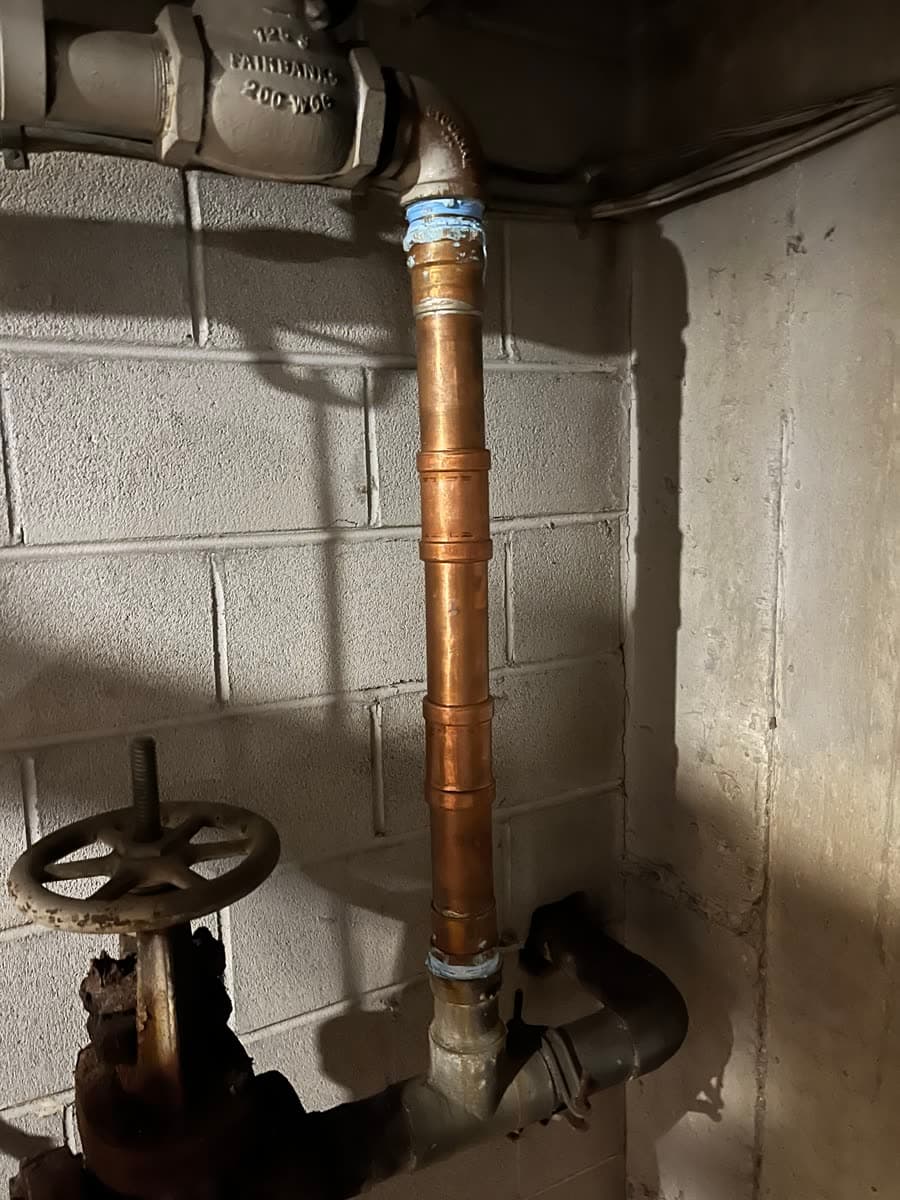
Skipping the inside shutoff is the most common winterizing mistake, and it causes the most damage. Turning off only the outside faucet leaves water trapped in the pipe behind it, and that is the water that freezes, expands and splits the pipe inside your wall.
Find the shutoff valve for each hose bib, usually in the basement or crawl space near where the line leaves the house, and close it all the way. Open the outside faucet and leave it open all winter, so leftover water and expanding ice have somewhere to go. If the inside valve has a small bleeder cap, open it briefly to drain what is left. Disconnect the garden hose, drain it and store it inside. A hose left attached traps water against the faucet and undoes everything else.
If a hose bib has no inside shutoff at all, plan to add one. A frost-free sillcock with a proper shutoff is a modest Plumbing Repair job compared with opening a finished wall to fix a split pipe.
A forgotten hose bib
Picture a brick bungalow with a single hose bib on the north side that nobody uses after Labor Day. The hose stays connected all winter, tucked behind a shrub. By February, a week of single-digit nights works through the brick, the trapped water freezes, and a joint splits inside the wall. Nobody notices until a March thaw sends water down the basement wall.
That pattern repeats every spring. The damage happens in January, the discovery happens in March, and five minutes in October would have prevented it.
Sump discharge lines and other outdoor plumbing
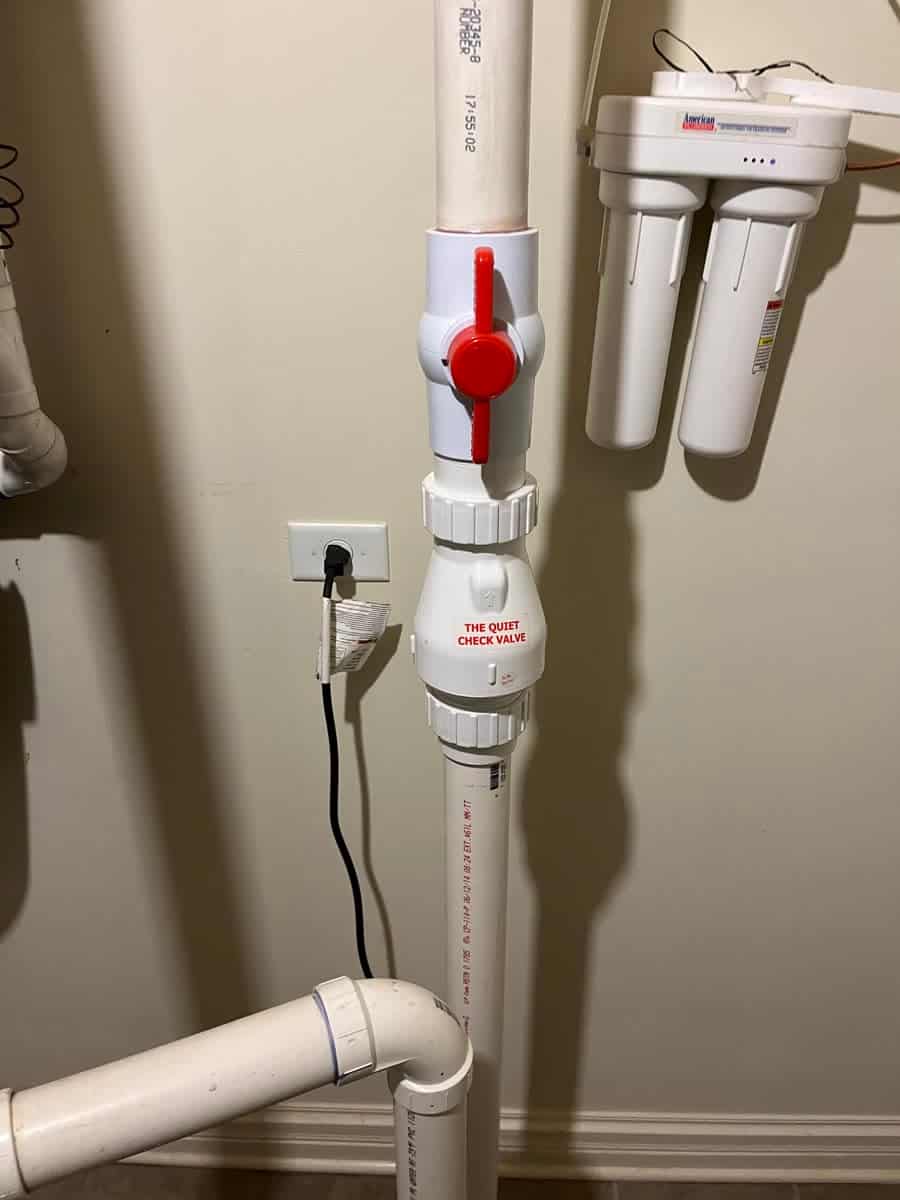
The pipe that carries water away from your sump pump often runs above ground or just under the surface before it drains into the yard. If that line freezes solid, the pump can run perfectly and the basement still floods, because the water has nowhere to go. Make sure the discharge runs downhill, drains completely between cycles and is clear of leaves before winter. Indoors, the section of discharge near the pump should be glued PVC with unions, not a rubber sleeve held on with hose clamps. Our Sump & Ejector Pumps page explains how we set these up.
Outdoor kitchens and bar sinks need the same drain-and-shutoff treatment as a hose bib, plus insulation on any exposed supply line. Underground sprinkler systems hold water along their full length and need to be blown out with compressed air before the freeze. That takes the right compressor volume and pressure, so it is a job for the company that services your irrigation system.
Are foam faucet covers worth it?
Foam covers are sold as a complete winterizing answer, and that oversells what a foam dome can do. A cover slows heat loss from wind, but it does nothing about water already sitting in the pipe behind it. Skip the inside shutoff and the cover won't stop that water from freezing.
On a hose bib that has already been shut off and drained, a good cover adds real protection during the coldest stretches. Choose one with a strap that seals snugly against the house, and treat it as the last step, not a substitute.
Before the first freeze
Walk the outside of the house in early October. Check every hose bib for a working inside shutoff, confirm hoses are off, and look for any water line running along an outside wall or through an unheated garage. Seal gaps where cold air gets in, and move lines off outside walls where you can. If anything is unclear, call (224) 567-2501. We answer 24/7 and give you a flat-rate written estimate before any work starts.
Frequently Asked Questions
Do I need to winterize frost-free hose bibs?
Yes, though the risk is lower. A frost-free sillcock moves the shutoff point inside the heated wall, but it still freezes and splits if a hose is left connected, because the hose traps water in the stem.
When should outdoor plumbing be winterized in the Chicago area?
By mid-to-late October, before overnight lows regularly drop into the 20s. Waiting for the first frost warning is cutting it too close.
What should I do if an outdoor pipe froze overnight?
Shut off the water to that line if you can reach the valve, and warm it only with gentle heat like a hair dryer. If you see bulging, dripping or water stains, the pipe has likely split and needs a plumber.
Can a frozen sump discharge line flood my basement?
Yes. If the discharge line freezes solid, the pump runs but the water has nowhere to go, so the pit overflows. Keep the line sloped, draining and clear of debris before winter.