
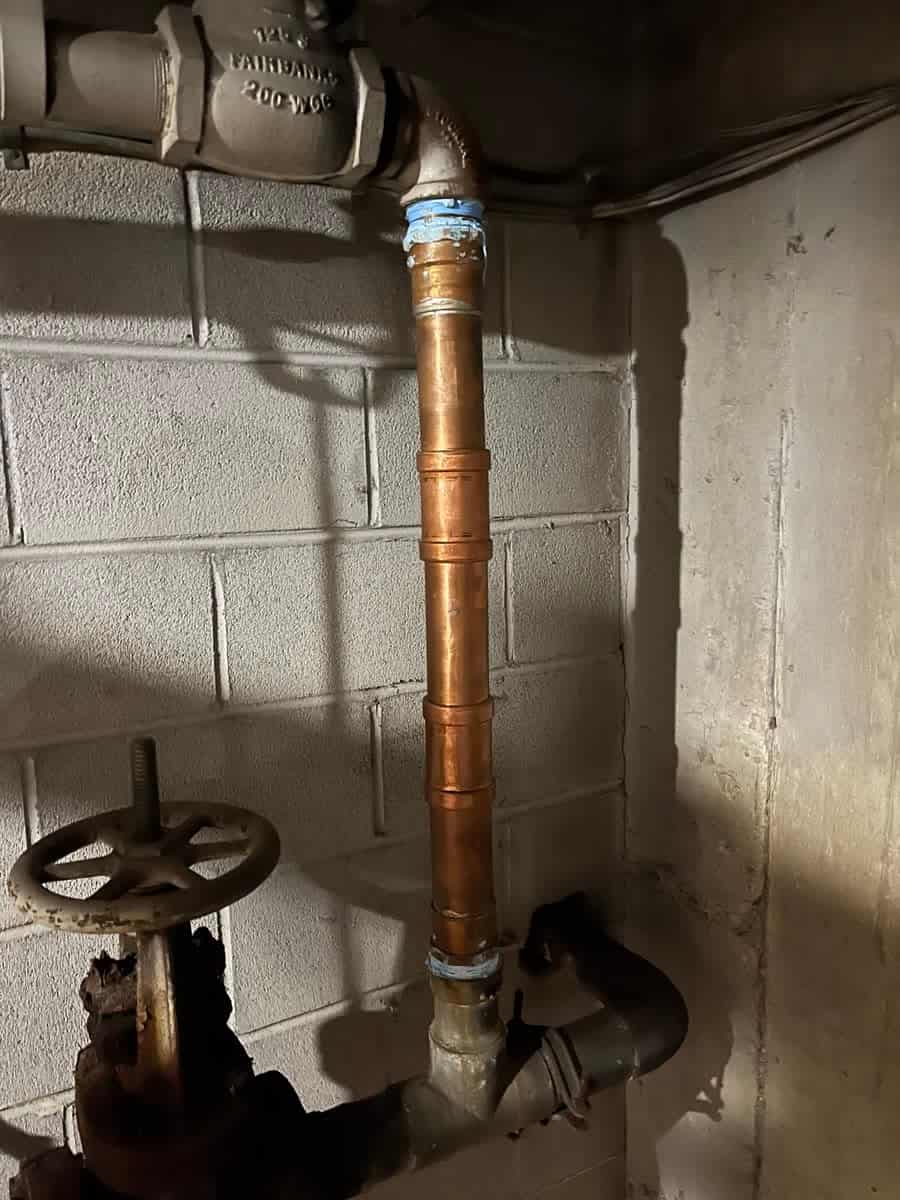

Every winter brings a few nights when the wind comes off the lake, the temperature drops below zero, and frozen pipe calls start before sunrise. A frozen pipe is an inconvenience. A burst pipe can soak drywall, flooring and a finished basement in an afternoon. Most freezes are preventable, and the steps that matter most cost very little.
Why pipes here are so vulnerable
The danger zone starts sooner than most people think. Once it stays around 20°F outside for several hours, pipes in uninsulated or drafty spaces can start to freeze. Average January lows here sit in the teens, and a polar vortex pushes well below zero.
The houses add to the risk. Brick bungalows, older two-flats and postwar Cape Cods often have kitchen sinks on outside walls, open wall cavities that let cold air travel, and rim joists with little or no insulation. Ranches and split-levels with crawl spaces, or plumbing that runs through an attached garage, have the same problem.
Freeze-thaw cycles matter too. A pipe that partly freezes, thaws and freezes again can weaken at a joint long before it splits.
Where pipes freeze first
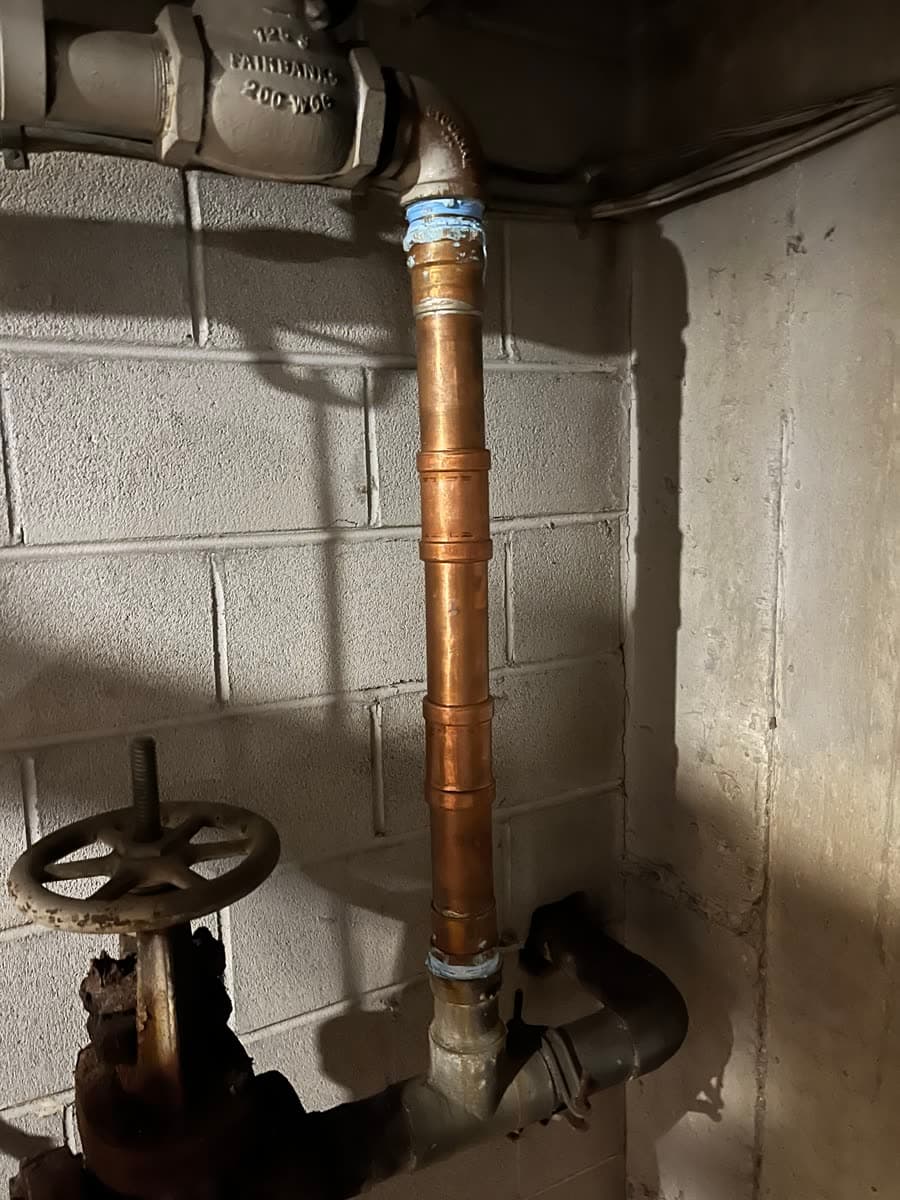
Outdoor faucets are the most common. A standard hose bib holds water right at the outside wall, and even a frost-free one can trap water and split inside the wall if a hose is left connected. You won't see that leak until spring.
Rim joists and sill plates come next. Where water lines run along the top of the foundation wall, gaps around the sill let in outside air. A thin draft aimed at a copper line on a windy night is enough to freeze it.
Kitchen sinks under a window, plumbing in attached garages, and lines in additions built over crawl spaces round out the list. Any pipe exposed to moving cold air, not just cold temperatures, is at the highest risk.
The three fixes that work best
First, seal the openings to the outside. Spray foam or caulk around the rim joist, the sill plate, dryer vents and anywhere a pipe or wire passes through the wall stops the drafts that freeze lines. Keep foam away from gas and vent piping clearances.
Second, make sure every hose bib has a shutoff valve inside the house. In the fall, close that valve, open the outside faucet to drain it, and disconnect the hose. If a hose bib has no inside shutoff, that is worth adding before winter.
Third, keep water lines off outside walls. A pipe that freezes every winter is telling you it is in the wrong place. Rerouting it inside the heated part of the house is the permanent fix, and it is a common job on our Plumbing Repair list.
What temperature to keep the house
Keep the thermostat at 55°F or higher all winter, including overnight and while you travel. That keeps most interior plumbing safe, but pipes inside outside walls can still freeze during subzero wind. On the coldest nights, open the cabinet doors under sinks on outside walls and let those faucets drip.
The drip matters more than people expect. Ice usually doesn't burst a pipe where it forms. Pressure builds between the ice and the closed faucet, and the pipe splits at a weak spot. A thin, steady stream relieves that pressure. On a single-handle faucet, set it in the middle so both hot and cold move.
Leaving for a winter trip? Shut off the main water valve and open a low faucet to relieve pressure. Have your furnace or boiler serviced before the season too. A heating failure is the most common reason a whole house freezes.
About heat tape
Heat tape is sold as a set-and-forget answer, but it is a powered heating element wrapped around your pipes. Old constant-wattage cables have caused fires when they were overlapped or covered with the wrong insulation, and none of them work during a power outage, which is exactly when an ice storm tests them. If you do use it on a line you can't reroute, choose a listed self-regulating cable, plug it into a GFCI-protected outlet, and check it every fall.
What to do if a pipe freezes anyway
If one fixture slows to a trickle or stops on a frigid morning, find your main shutoff valve and make sure you can turn it. Open the affected faucet so melting water has somewhere to go. Warm the pipe gently with a hair dryer or warm towels, working from the faucet back toward the frozen section. Never use an open flame or torch.
Once water flows again, check the line and nearby walls and ceilings for drips. If water is spraying or spreading, shut off the main and call us at (224) 567-2501. Our 24/7 Emergency Plumbing line is answered around the clock, and we repair burst lines across the northwest suburbs, the North Shore and parts of DuPage.
Frequently Asked Questions
What temperature should I keep my house to prevent frozen pipes?
Keep the thermostat at 55°F or higher all winter, including overnight and while you are away. Pipes in outside walls can still freeze in subzero wind, so also open sink cabinets and let those faucets drip.
At what outdoor temperature do pipes start to freeze?
Pipes in uninsulated or drafty spaces can start to freeze once it stays around 20°F outside for several hours. A direct draft on the pipe makes it happen faster.
Can PEX pipe freeze?
Yes. PEX handles expansion better than copper and is less likely to split, but it still freezes, and its fittings can crack. Protect PEX the same way as any other water line.
Should I let my faucets drip during a cold snap?
Yes, on faucets fed by pipes in outside walls or other cold spots. A thin, steady drip relieves the pressure that builds between the ice and the closed faucet, which is what splits pipes.
Is it safe to thaw a frozen pipe with a torch?
No. An open flame is a fire hazard and can damage the pipe and fittings. Use a hair dryer or warm towels, and open the faucet first so melting water can escape.