
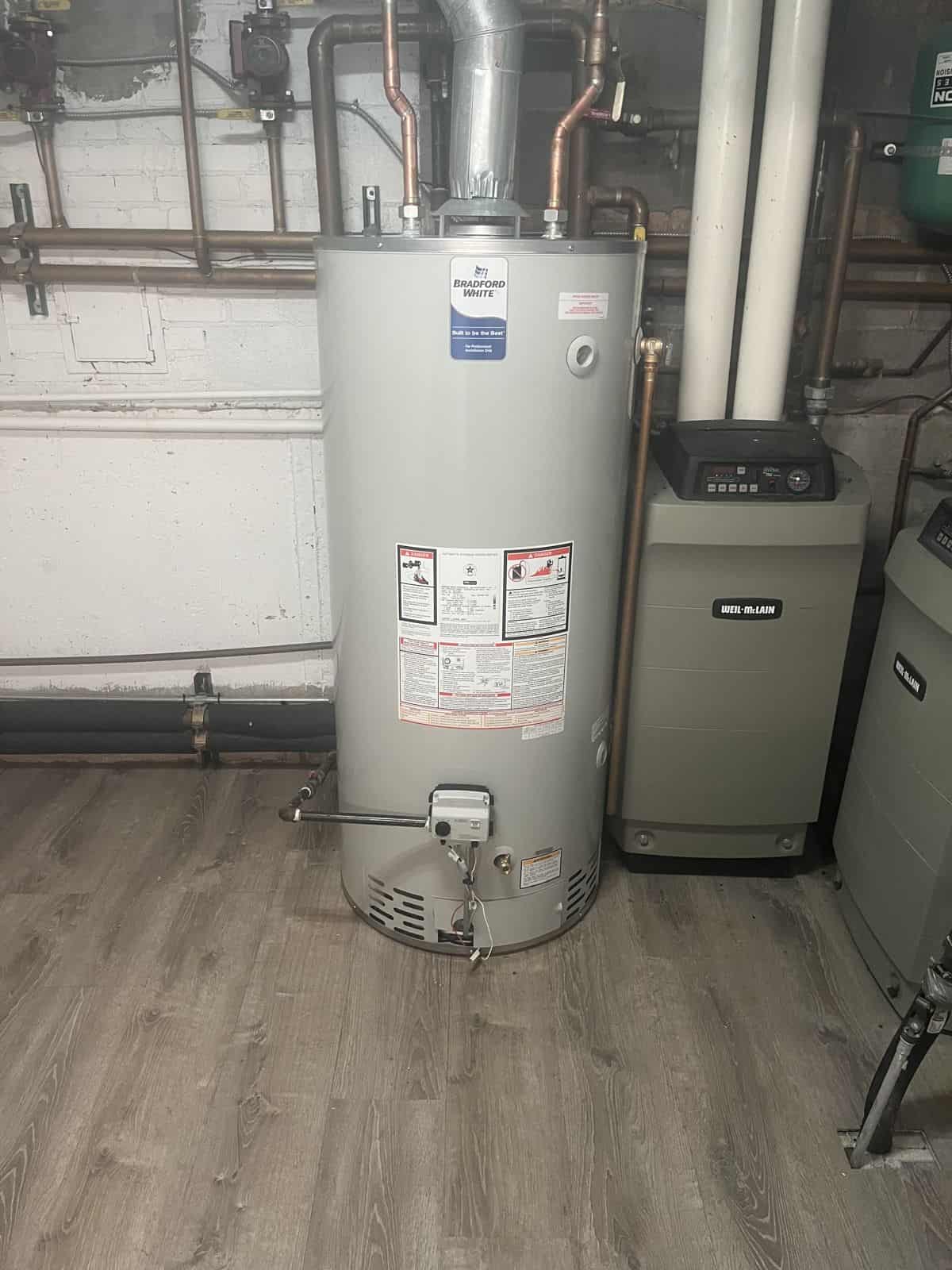

Plumbing works overtime here once the temperature drops. Between arctic air off the lake, older housing and basements that were never designed for today's water heaters and sump pumps, winter asks a lot of your pipes. A little preparation each fall prevents most of the frozen pipes and failed water heaters that fill plumbers' schedules from December through March.
Why winter is so hard on plumbing here
The frost line here runs roughly 36 to 42 inches deep, which is why water and sewer mains are buried below it. The trouble usually isn't the buried lines. It is everything above them: hose bibs, pipes in unheated garages, lines through uninsulated crawl spaces, and water lines tucked into the outside walls of older bungalows and two-flats.
Freeze-thaw swings add to it. Temperatures that bounce from the 30s down to single digits and back within days put stress on pipes, joints and fittings even when nothing freezes solid.
How cold before pipes freeze?
Water in an exposed pipe can start to freeze once the air around it stays near 20°F for several hours. Pipes in drafty crawl spaces, attics or outside walls can freeze at warmer temperatures, because wind and air leaks pull heat away from them faster. We get plenty of nights at or below 20°F each winter, plus stretches of single digits and below, so any exposed line faces real risk more than once a season.
The pipes at highest risk are hose bibs, water lines in garages and crawl spaces, and any pipe running along an outside wall with little insulation behind the drywall.
A fall-to-winter timeline
Early October: disconnect and drain garden hoses, close the inside shutoff valve for each hose bib, and open the outside faucet so leftover water can drain. If a hose bib has no inside shutoff, have one added before it gets cold.
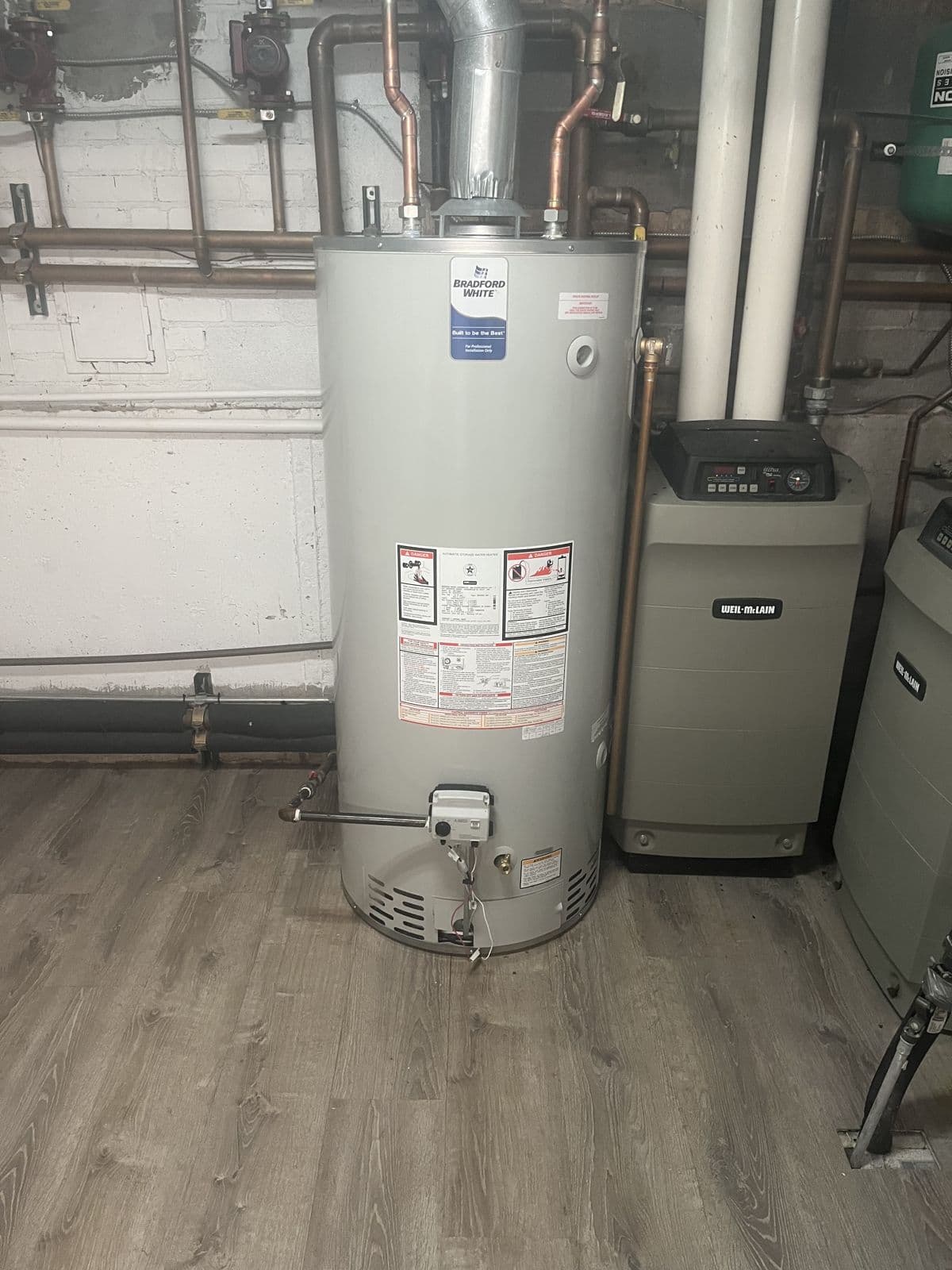
Mid-October: have the water heater flushed and checked. Sediment makes a tank work harder, and it fails more often once incoming water gets colder. Our Water Heaters page covers what a service visit includes.
Late October: test the sump pump with a bucket of water and make sure the discharge line is clear of leaves and drains away from the house.
November: seal gaps around the rim joist and anywhere pipes or wires pass through the outside wall, and insulate exposed pipes in the garage, crawl space and along outside basement walls. During any cold snap below 20°F, let faucets on outside walls drip and open the cabinet doors under those sinks.
Insulation, heat tape and the permanent fix
Foam pipe insulation is cheap, easy and genuinely effective on exposed lines in a basement, crawl space or garage. Sealing the drafts that hit those pipes matters just as much.
Heat tape is oversold. It has a real job on a pipe crossing a truly unheated space, but wrapping it around pipes that are already inside the heated part of the house adds an electrical cost and a part that wears out, for little benefit. If you need it, use a listed self-regulating cable on a GFCI-protected outlet.
For a line that freezes every winter, the lasting fix is moving it off the outside wall and inside the heated space. That kind of rerouting is everyday Plumbing Repair work for us.
Signs a pipe is freezing
One fixture with weak or no flow while the rest of the house works normally is the classic sign. Frost on an exposed pipe, banging or whistling when a faucet opens, and an unexplained jump in the water bill are others. A pipe that is frozen but hasn't split can often be thawed and protected. One already leaking behind a wall needs attention right away to limit the damage.
A two-flat in a January cold snap
Picture a two-flat with a garden unit whose kitchen sink backs up to an outside wall, with the line to an old hose bib running just behind it. Most winters it is a minor weak spot. During a multi-day stretch of single-digit cold with wind off the lake, it is the weak point of the whole building. The fix isn't dramatic: an inside shutoff for the hose bib, a sealed wall penetration, insulation on the exposed run and a cracked faucet on the coldest nights.
Before the first hard freeze
If your home has a history of slow drains or an old clay or cast iron sewer, a fall camera inspection is worth adding, since a partial blockage that is manageable in summer can back up completely in winter. And if a pipe does split, shut off the main and call. We answer (224) 567-2501 24/7, give you a 2-hour arrival window, and put tarps down before we start.
Frequently Asked Questions
Should I let my faucets drip during a cold snap?
Yes, but only a thin trickle on faucets fed by pipes in outside walls or other cold spots, on nights below about 20°F. Moving water is less likely to freeze, and the drip relieves pressure as ice forms.
Do I need a sump pump battery backup for winter?
Most local basements benefit from one. Winter storms that knock out power can arrive with fast snowmelt, which is exactly when the sump pump is working hardest.
Can a pipe burst somewhere other than where it froze?
Yes. Pressure builds between the ice and a closed faucet, and the pipe often splits at a weak joint or fitting away from the frozen section. That is why a pipe can look fine where the ice is.
When should I flush my water heater before winter?
Mid-October is a good time. Clearing sediment before incoming water gets colder helps the tank keep up and reduces the chance of a midwinter failure.