
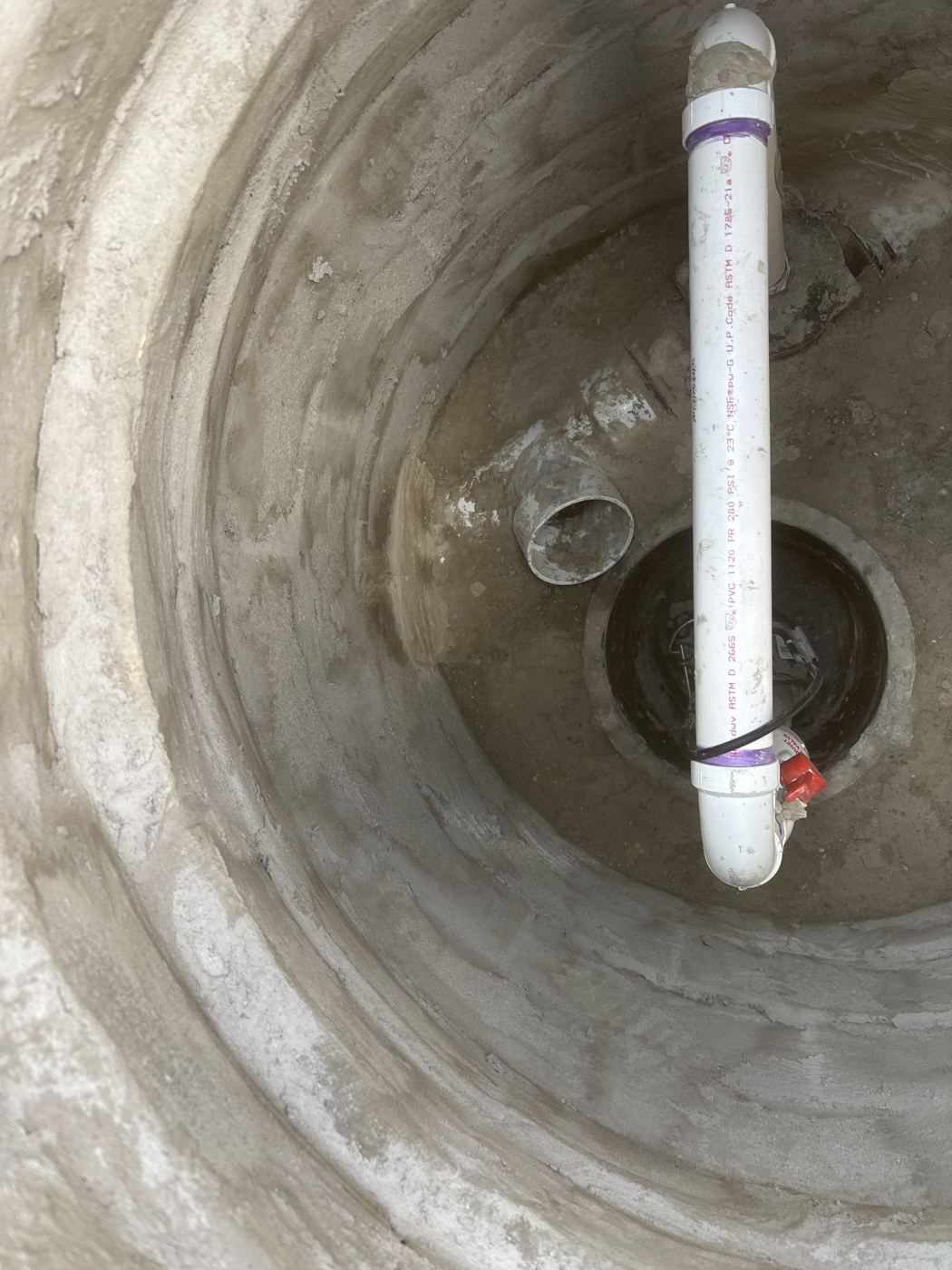

If your basement has a bathroom, laundry or bar sink, there is a good chance a sealed tank in the floor is doing quiet, important work every time someone flushes. This post explains what a sewage ejector pump is, how it differs from a sump pump, the signs it is wearing out and what to do when its alarm goes off.
A sewage ejector pump is a pump in a sealed, vented basin that lifts wastewater from basement fixtures up to the main sewer line, which sits higher than the basement floor. Master Pro Plumber in Des Plaines, IL installs, repairs and replaces ejector pumps for homes and businesses across the northwest suburbs and North Shore.
How does a sewage ejector pump work?
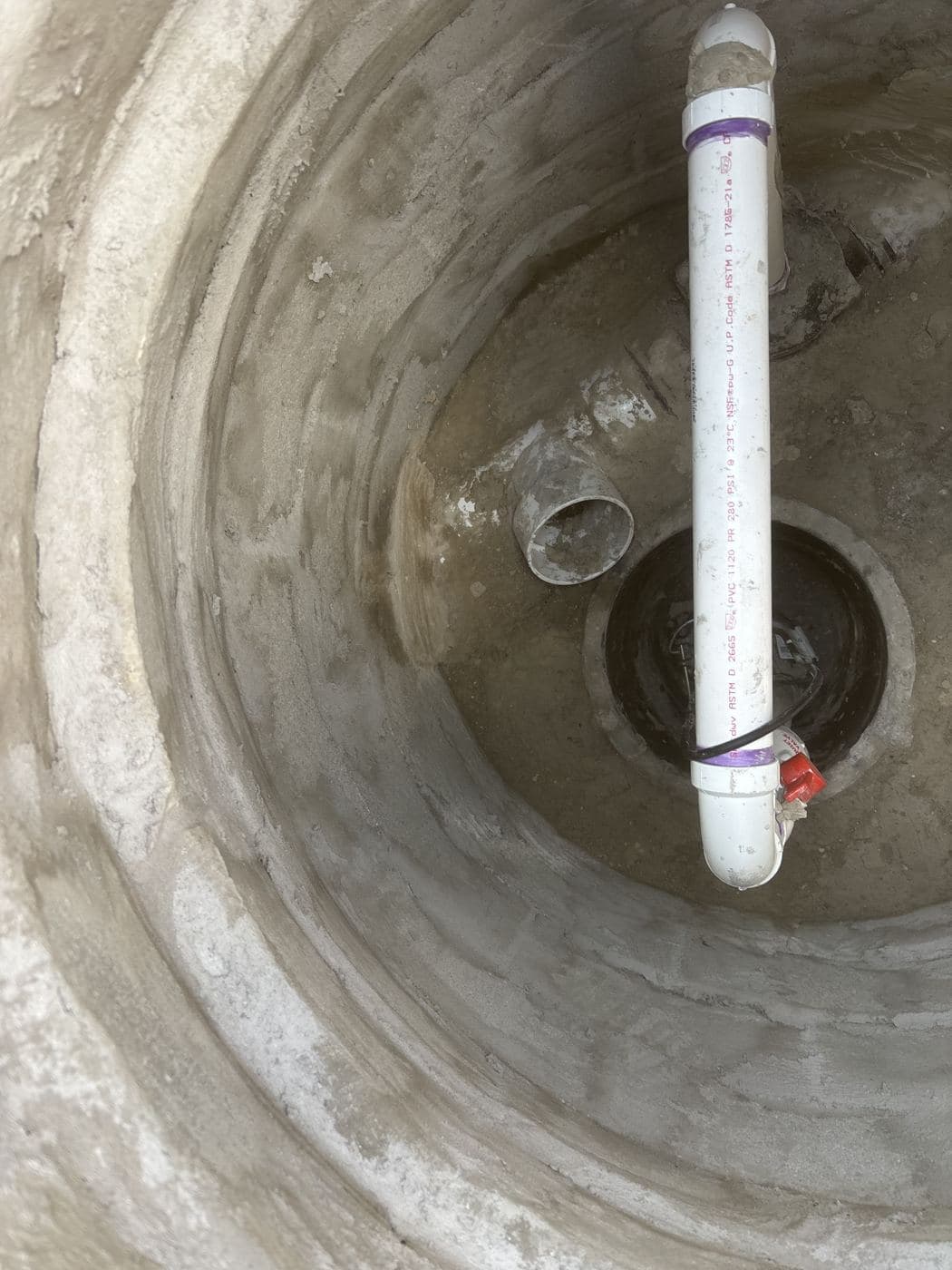
It collects waste in a basin until a float switch turns the pump on, then pushes the waste up a discharge pipe to the sewer. Most of the plumbing in a house drains by gravity. Fixtures below the sewer line can't, so the ejector does the lifting for them.
- Water and waste from the basement toilet, shower, sink or laundry drain into a sealed basin set into the floor.
- As the level rises, a float switch lifts and starts the pump.
- The pump pushes the waste up through a discharge pipe and into the main sewer line.
- A check valve on the discharge stops the waste from falling back into the basin when the pump shuts off.
- A vent pipe lets sewer gas escape through the roof instead of into the basement.
Ejector pump vs sump pump: what's the difference?
A sump pump removes groundwater from around the foundation, while a sewage ejector pump moves sewage from basement fixtures. They do different jobs, and one can't stand in for the other. Many basements around here have both, in separate pits.
| Sump pump | Sewage ejector pump | |
|---|---|---|
| What it moves | Groundwater and rain that seep in around the foundation | Wastewater and solids from basement toilets, showers, sinks and laundry |
| Where it sends it | Outside to the yard or a storm sewer | Up to the home's main sewer line |
| Basin | Open or loosely covered pit | Sealed lid with a vent to the roof |
| Busiest | Spring snowmelt and heavy storms | Every day the basement fixtures are used |
| Biggest risk if it fails | A flooded basement | Sewage backing up into the basement |
If you aren't sure which pit is which, look at the lid. A bolted, sealed lid with a pipe running up toward the roof is almost always the ejector. Our guide to the five-minute sump pump test covers the other pit.
What are the signs an ejector pump is failing?
The clearest signs are an alarm, a sewage smell and slow basement drains. Call for service if you notice any of these:
- The high-water alarm sounds, even once.
- A sewage odor in the basement, which can point to a failed lid seal or vent.
- The basement toilet, shower or laundry drains slowly or gurgles.
- The pump runs constantly, or turns on and off every few seconds.
- Grinding, rattling or a loud hum from the basin.
- The pump hasn't been looked at since it was installed.
What wears out an ejector pump early?
Most early failures come from what goes down the drain and from parts around the pump, not the motor itself. Wipes, including ones labeled flushable, paper towels, hygiene products and grease wrap around the impeller or jam the float. A float that hangs up on the basin wall or its own cord can leave the pump running dry or not running at all.
A check valve that no longer seals lets waste fall back into the basin, so the pump restarts again and again and wears out sooner. A blocked vent can cause odors and slow draining. If the basin keeps filling but the problem seems to come from the main line instead, Drain Cleaning with a camera shows what is going on.
What should you do when the ejector alarm goes off?
Stop using every basement fixture right away, then call a plumber. The alarm means the waste level in the basin is higher than it should be, and every flush or load of laundry adds to it.
- Stop running water in the basement: no flushing, showers or laundry.
- Check whether the pump's breaker has tripped or its outlet has lost power, and reset it once if it has.
- Don't open the sealed basin yourself. It holds raw sewage and sewer gas.
- Call a plumber, even if the alarm stops on its own.
How we repair and replace ejector pumps
We install and replace Pro Series sewage ejector pumps in sealed, vented basins, and we check the float, check valve, discharge and vent on every visit. Our Sump & Ejector Pumps page covers how we set these systems up. If the alarm is sounding after hours, our 24/7 Emergency Plumbing line is answered by a real person.
Master Pro Plumber in Des Plaines has been fixing plumbing since 1989, from Arlington Heights to the North Shore. There is no service fee to come out and look, you get a flat-rate written estimate before any work starts, and every repair carries at least a 1-year warranty.
In short, a sewage ejector pump is what lets a basement bathroom drain uphill to the sewer, and an alarm, odor or slow drain means it needs attention now. Why call an amateur when you can call the master? Call (224) 567-2501, day or night.
Frequently Asked Questions
What is a sewage ejector pump?
It is a pump in a sealed basin that lifts wastewater from basement fixtures up to the main sewer line. Basements need one when a toilet, shower, sink or laundry sits below the level of the sewer.
What is the difference between a sewage ejector pump and a sump pump?
A sump pump moves groundwater out of the basement, while an ejector pump moves sewage up to the sewer line. They are built for different jobs and aren't interchangeable.
Why is my ejector pump alarm going off?
The waste level in the basin is higher than it should be. The usual causes are a stuck float, a failed pump, a tripped breaker or a clog, so stop using basement fixtures and call a plumber.
Can I flush wipes into a toilet connected to an ejector pump?
No. Wipes, including flushable ones, wrap around the pump's impeller and jam the float, which is one of the most common reasons ejector pumps fail early.
Why does my basement smell like sewage near the ejector pit?
Usually the basin lid seal or the vent has failed. Sewer gas should leave through the vent pipe, so an odor means the system needs to be checked.
Do you repair ejector pumps for businesses?
Yes. Master Pro Plumber installs and services sewage ejector pumps for commercial buildings as well as homes.